The Seminary and Global Mission Today: Hard Questions and Real Challenges

The Seminary and Global Mission Today: Hard Questions and Real Challenges

In recent years there has been a conspicuous trend in North American theological education: small, residential seminaries with strong denominational identities are those most likely to be in institutional decline, while large, interdenominational seminaries that permit online coursework are fully ascendent.

Furthermore, now that higher education is staring down the rise of an Artificial Intelligence so formidable that it can find, analyze, and synthesize biblical and theological information at the push of a few buttons, the decision to seek a seminary degree and to endure the sacrifice required to pursue it can seem outdated, even illogical. Why not simply serve in one’s local church and turn to a nearby mentor – or the Internet – for guidance and training?

This new environment is forcing seminaries in North America onto their back foot, as it were, to justify their mission to students and donors. And for missionaries abroad laboring to make the case for offering robust, in-person theological education for church leaders from all around the world, promoting a traditional seminary model can be challenging. Why form these leaders in ways that demand so much time, money, and human resources?

The people I speak with regarding my family’s upcoming ministry, teaching students from around the world through Tyndale Theological Seminary in the Netherlands, routinely question the need for pastors to attend seminary – and even the idea of seminary itself. However, when I was discerning a call to ministry several decades ago, I never questioned the basic premise that I would need to relocate my life to a brick-and-mortar theological college to prepare for a lifetime in ministry. Nevertheless, today that basic premise has largely gone out the window. I regularly meet pastors who have not studied at a seminary, and many of those who have undertaken theological studies have done so part time, and often online.

Let me suggest that a look at some context – where seminaries came from, and what they offer students in residence – may help explain why they remain crucial for training leaders for the global church. Seminaries were designed as “seedbeds” for new ministers, and emerging leaders lose out when they have no affordable access to such formation.

Seminary in Years Past: the “Seedbed” for New Ministers

In his 2015 The History of Theological Education, Justo González observes that in early Christianity, theological education was not reserved for specialists alone. Rather, the church as a whole saw its own vocation as theological and educational: when people came to faith in Christ, they were taught to study the Scriptures, to speak of God and for God, to grow into maturity as part of a community of disciples of Jesus. For centuries, training in Scripture, theology, and church history was an activity of the whole church for the whole church.

As the Western Roman Empire crumbled, monastic movements rose up that preserved Christian education amid societal chaos. However, while these communities transmitted vital knowledge, medieval universities had little to do with the training of the average clergyman. In contrast, the Protestant Reformation in the sixteenth century sought to equip preachers as experts in Scripture. Combining the medieval humanities curriculum – the liberal arts and sciences – with a Protestant theological curriculum, universities began producing graduates who were not only well-rounded scholars, but who also aimed at being faithful pastors. At the same time, Roman Catholic seminaria – literally, “seedbeds” – were being developed that offered what Protestant colleges in Europe and evangelical seminaries in North America were providing as well: a community of teachers and learners who would study Scripture, doctrine, languages, and history, all the while living and worshiping together to prepare for ministry in the church.


So, Why Make Attending a Seminary a Priority Today?
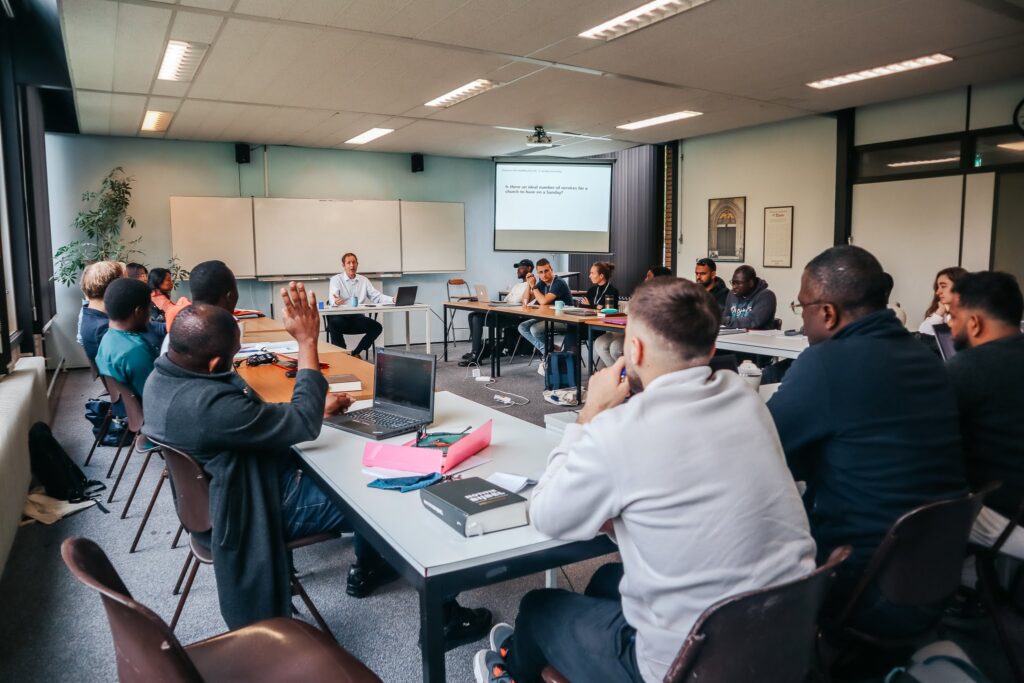
Seminary students in the classroom at Tyndale Theological Seminary, Badhoevedorp, Netherlands

This ideal of the “seedbed” remains my preferred way to prepare leaders for the church around the world. Like González, I hesitate to draw a line between catechesis and college, between Sunday School and seminary: the whole church is called to explore the things of God and make him better known! But we live in a time when the average Christian has not been formed well at home or in the pew, and certainly not well enough to take the reins of a church and lead Christ’s flock as a shepherd in His name.

Most who are called to vocational ministry need extra study, extra exposure to the Word of God, extra time spent in worship with others who are preparing. This means having access not only to professors to guide these studies, and not only to libraries whose contents can challenge and awaken new ideas, but also to a freedom from other obligations and responsibilities. Perhaps not everyone is called to spend significant time and money to access this kind of maximized education, but some are – and above all, those who will lead.

Along those same lines, few of us have experience living together with other Christians in this kind of intentional community. Seminaries were composed as a kind of monastic fellowship, devoted to a common mission and to one’s fellow missioners. The “life together” that happens in such fellowship while preparing to serve Christ’s church is difficult, painful, bewildering, and yet profoundly sanctifying. While a local church can and should offer the same opportunity to go deeply into this kind of intentional Christian fellowship, many do not. For most of us, our first experience of forming part of a daily fellowship of worshipers, students, and servants of Jesus Christ comes when we arrive at seminary.

Yes, the conventional seminary model is expensive to run, and the strain of study can deprive students of the leisure and space required to absorb the ideas and skills being fostered. But the models of professional formation that are increasingly replacing the old residential seminary model of academic rigor and community life cannot measure up to the older ideals of relational mentorship and skillful mastery. In some cases, new models for pastoral training are needed for economic reasons. And in others, churches may not wish to send away their best young people to receive an education far from home with little chance of their returning. Better to train them in-house for free, they might conclude, or to send them online for asynchronous coursework or AI-assisted queries, than to pay for three years of study living at a college far from the parish.

However, I am convinced that the Lord honors what we give away with no expectation of a return on the congregation’s investment. Planting a young person in a “seedbed” far away is to store up treasures in heaven rather than build the kingdom on earth, to cast one’s bread upon the water in hope that it will somehow return. I myself have witnessed the Lord bless the (Baptist) church that first encouraged me to go to seminary, and I have seen the Lord prosper those in the (Anglican) church who helped sustain me while I was studying at a (Presbyterian)
seminary. Which is to say, to commission a seminarian to study is a group effort, not unlike sending a missionary to unknown lands. In both cases, we should be confident that obedience to Christ’s command and trust in his promises will yield a plentiful harvest of righteousness that will redound to those who scattered those seeds.

Seminary Life and the Call to Global Mission Today

I am now looking forward to teaching as a missionary at Tyndale Theological Seminary, a college that is equipping new missionaries to serve Christ around the world by giving them full access to an affordable postgraduate education. Most of my missionary work until this point in South and Central America has been in areas that lacked affordable access to this “seedbed” model of ministry formation. God was visibly at work, but the barriers to leadership were visible too. It was especially hard for cash-strapped congregations to send ministry candidates to a seminary far from home. For Anglicans, this difficulty meant that fewer people were sent to train for ministry, and so smaller and more rural churches (like ours in Belize) rarely enjoyed having resident clergy. For others, this meant that many pastors never received the fuller formation
that seminaries provide. Beyond certain unintended errors in doctrine, we found that these under-equipped leaders were at greater risk of emotional burnout and vocational shipwreck. As missionaries, we came away convinced that while a seminary education is not the only path to effective ministry, it is still ordinarily the best way to equip Christians to serve as leaders in Christ’s church.

All this feeds my excitement to serve at Tyndale Seminary! I look forward to teaching students from Ghana and Cameroon, Ethiopia and Pakistan, Guyana and Hong Kong, and from so many other places, who, despite differences in nationality and denomination, desire to seek God’s face together. Each one who comes has seen the value of theological education in community, and each is making sacrifices to show up in person, becoming present not only to the professors in class, but to one another as well. Each has left family and loved ones, career and income, heart language, comfort food and cultural music, all to prioritize these crucial years in the “seedbed” before being transplanted back as missionaries into their native soils. My prayer is that this dedicated time and space with one another will have formed healthy roots that will serve them well throughout the years of ministry to come.
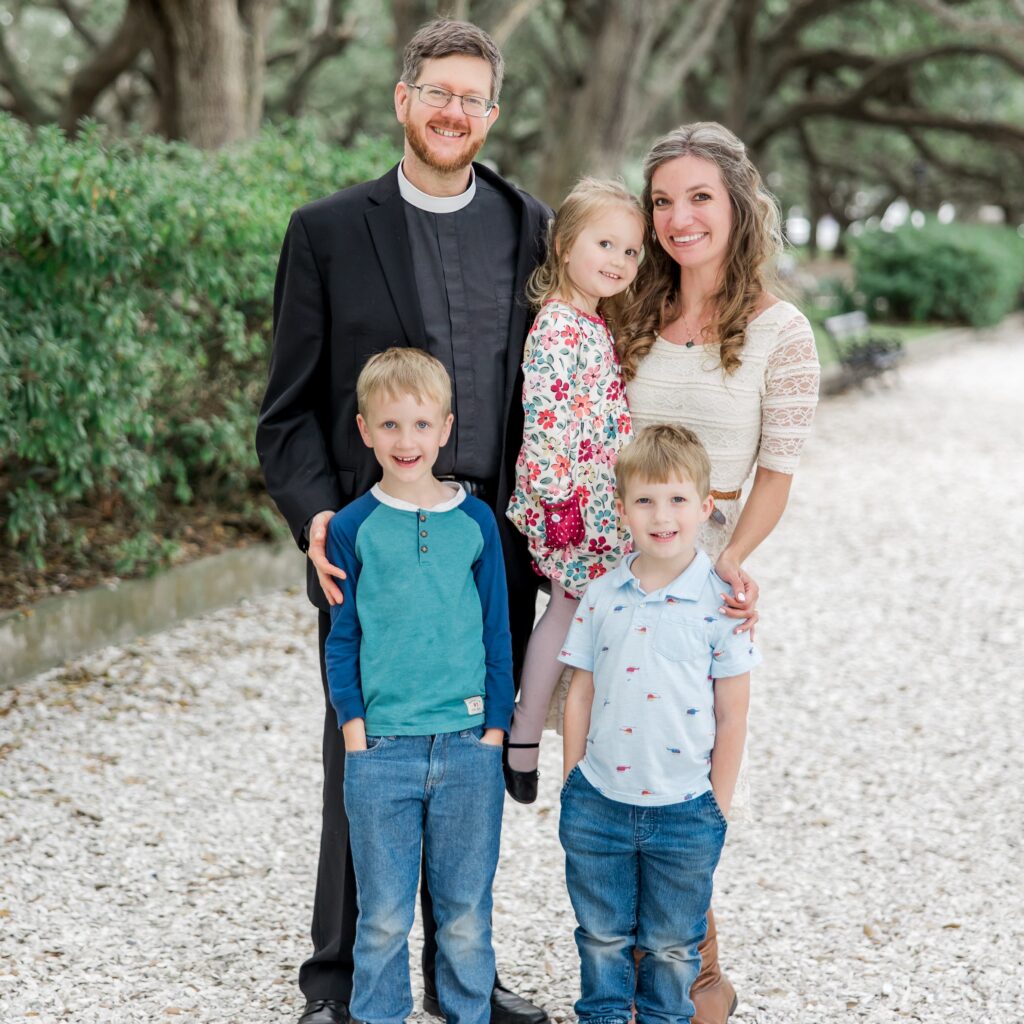


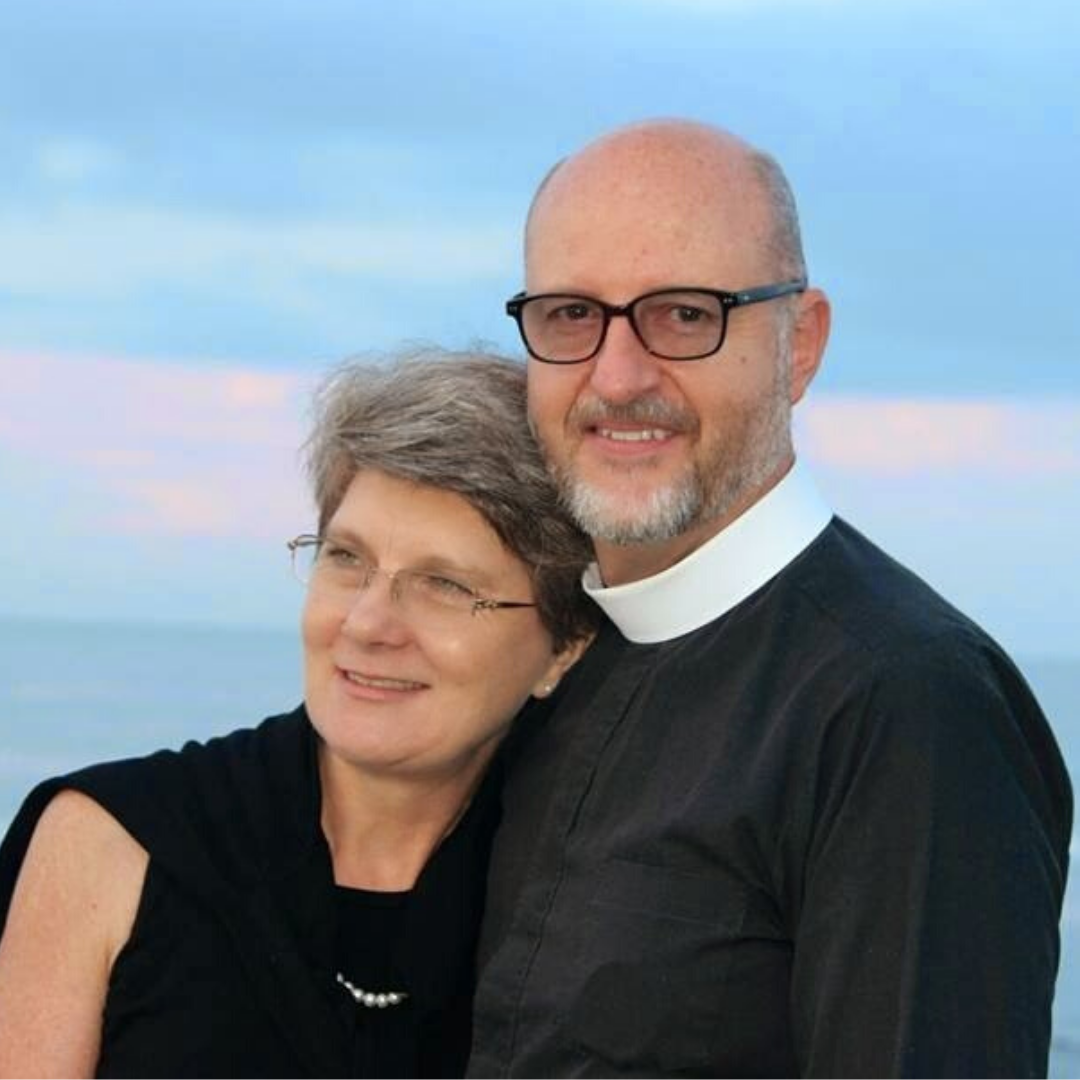
David and Mary Beth Alenskis previously
served as SAMS Missionaries providing
pastoral leadership in churches and
schools throughout Latin America and
the Caribbean, and they are currently
preparing to serve at Tyndale Theological
Seminary in the Netherlands. At Tyndale, David will have the opportunity to offer Christian theological
instruction to seminary students from all over the world, thereby contributing
to building up well-trained leaders for service within the global Church.
David recently completed his PhD at Wycliffe College and the University
of Toronto, and David and Mary Beth, along with their three children, are
currently U.S.-based as they seek Senders to walk alongside them in order
to fulfill their calling to the Netherlands and the nations.
 

Being Carried Along According to His Purposes in Indonesia

Being Carried Along According to His Purposes in Indonesia

by James Long, SAMS Associate Missionary to Indonesia

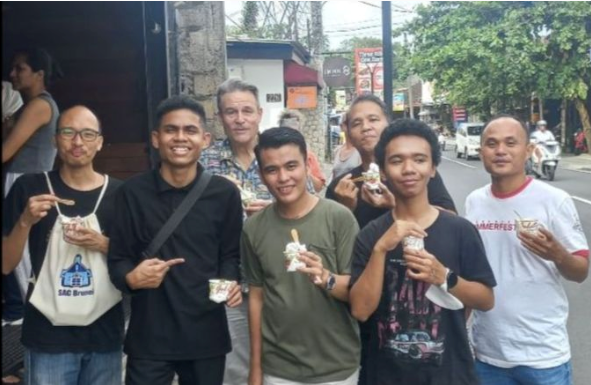
One old theologian used to describe ministry as “watching God work,” and that comes awfully close to the nub of it. The Lord is not only the wind in our sails, but also the hand on our rudder.  He sends us where he wants and when he wants, and on this recent mission I felt that old familiar sense that I was being carried along according to his purposes.

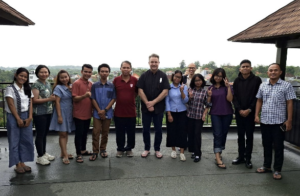
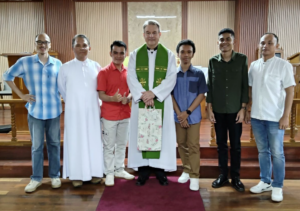
I spent the end of January in Bali at the school I had seen go from an old ruin into a beautiful seminary.  The seminary aims to draw students from every Island of Indonesia, then send them back to minister all across the archipelago. Dean Stevanus had asked me to teach church planting, something I had never taught before.  With much help from the Holy Spirit I focused, not on human strategies, but upon the patterns found in Acts.  The invisible purposes of God were powerfully on my mind, as I considered how many miracles had been made manifest in the planting of Providence Anglican Church in Pluit, Karawaci, and Canggu.  With the Pluit congregation being the only one to survive the pandemic fully intact, the point is pressed home that God’s ways are unsearchable.  He is sovereign and our role is simply to do what he gives us to do with the gifts he gives, and with the time and energy he allots.  The results are up to him.  I knew these students were likely to face similar challenges, and that they need to see that from the biblical perspective that faithfulness is success.

The following week I spent at St. Paul’s seminary in Bandung.  Bandung is home to the Sundanese, the most unreached people group of Indonesia.  St. Paul’s draws mainly local people and has provided ministers for the churches planted in its region, and beyond.  I was assigned three courses to teach in one week, and once more the Spirit guided, and the work was blessed.  Not only students but staff and parishioners from the local Anglican churches came to participate.   My lectures never went over time because the public prayers from directly across the street from St. Paul’s rang out at six o’clock each evening and were so loud that class had to come to an end!

Sundays were filled with preaching engagements and other days I was running from meeting to meeting, but the highlight was my final day in Indonesia when I met with the son of one of the members of our congregation.   I was invited to share the good news about Jesus with him, and together with a small group gathered in my hotel lobby, we went from Genesis to Revelation.  This teenage boy’s face was receptive, and the miracle only God can do, appeared to be done for him as he prayed to embrace Jesus as Savior and King.  What a privilege to be able to share Christ in Indonesia!

“Now to him who is able to do far more abundantly than all that we ask or think, according to the power at work within us, to him be glory in the church and in Christ Jesus throughout all generations, forever and ever.  Amen.”  (Eph. 3:20-21)


Whose Plan Is It, Anyway?

Whose Plan Is It, Anyway?

“A man makes his plans, but God directs his steps.”

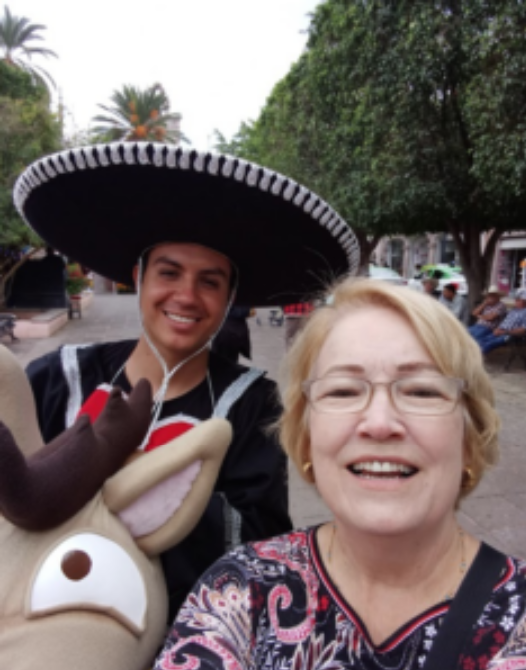
Since January 2019, Roger and I have been living full time in Aguascalientes Mexico. Most of Roger’s service in that time has involved an unplanned appointment to the office of the Dean of Mexico. It wasn’t even imagined in our strategies, but God, through the ACNA Diocese of the Southwest, had His own.


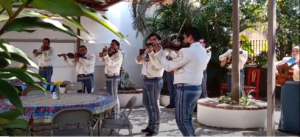
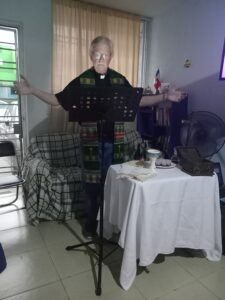
Then, Roger was ordained as a priest in ACNA, which also was never in our plans! Best of all, the ordination was in the lovely palapa-church in Puerto Vallarta– complete with mariachis!  Priestly ordination means Roger now works in the supply-side of available priests for the congregations in Mexico. It provides more opportunity to visit churches, to assist pastors, and to financially support them in their work and seminary studies.
Trinity Church in Guadalajara

Practical Plans

Whatever the plans, SAMS is our compass point of unflagging support with their prayers and care for us. That, too, wasn’t exactly planned, but the Diocese of South Carolina arranged that at the beginning of our journey. We have found out how wise that step was! To have a sending organization that is tuned in, available, and effective makes all the difference for length of service. And length of time in-country counts toward lasting fruit. The long vision is in the bones of SAMS’ founding, and we’re blessed –and challenged– to be part of that lengthy presence in missions.

44 Years as Supportive Sidekick

My plans? Well, for the last 44 years of marriage, I’ve been the blogger, the chronicler, and the chief cook and laundry queen of my happy little domain of support. I am tasked to be the social-butterfly of outreach, to make connections with new neighbors, and find new events and opportunities to bless Mexico. Roger says it’s like I’m his social crash-test sidekick. (Heh. My plans are coming together!) We are growing lasting friendships here, as permanent residents. I write about it all, and more, in our Facebook group, The Griffins in Mexico, and will share more here in the coming year.

Certainly, in five years we have had many unplanned events, most of which turned out miraculously well!, may God be praised! We do depend on God to direct our steps to where He is working. We love His church here in Mexico and hope to help you love it, too.

Blessings in Christ,
-Joanne

Let Us Eat Cake!

Let Us Eat Cake!

In a letter to her Senders, Jessica Hughes reflects on the power of community and relationships, giving thanks to God for 10 years in Uganda and her recent graduation. – Kate Ulrich, Communications Coordinator

Hi friends,

There is much to celebrate this month. July is the month in which I returned to Uganda to serve as a lecturer, and it’s also the month that I became a SAMS Missionary. That happened way back in 2012, which now feels like a lifetime ago. By God’s grace, and your love, support, encouragement, and prayers, I have been serving at Uganda Christian University for 10 years. Thanks be to God! It has been an amazing decade, full of students, teaching, discipleship, growth, depending on the Lord, and being stretched in more ways than I can count. I am so grateful for how you have poured into me so I can pour into my students here. UCU trains students from all across East Africa, so we truly have a global reach. A friend commented that serving for ten years is having a generational impact, which I thought was an astute observation. That is also my prayer – that I would be able to impact my students, who will then in turn go and impact their congregations.

The second reason for celebration is that I actually graduated with my PhD from University of South Africa (UNISA) on July 1.  Back in March, it looked like UNISA was live-streaming the graduations, but not keeping the individual ceremonies on their YouTube page, and since I have multimedia experts on my eLearning team, I asked Mark to record my graduation for me.

So Mark dutifully recorded, and then sent the recording to me on WhatsApp. He also did the very Ugandan thing of putting it in a WhatsApp chat with members of the Academics team. At least one of them did the very Ugandan thing of putting it in all her WhatsApp groups. Next thing I know, students past and present are sending me the video along with their congratulations. The introvert in me is horrified, but the African in me is honored.

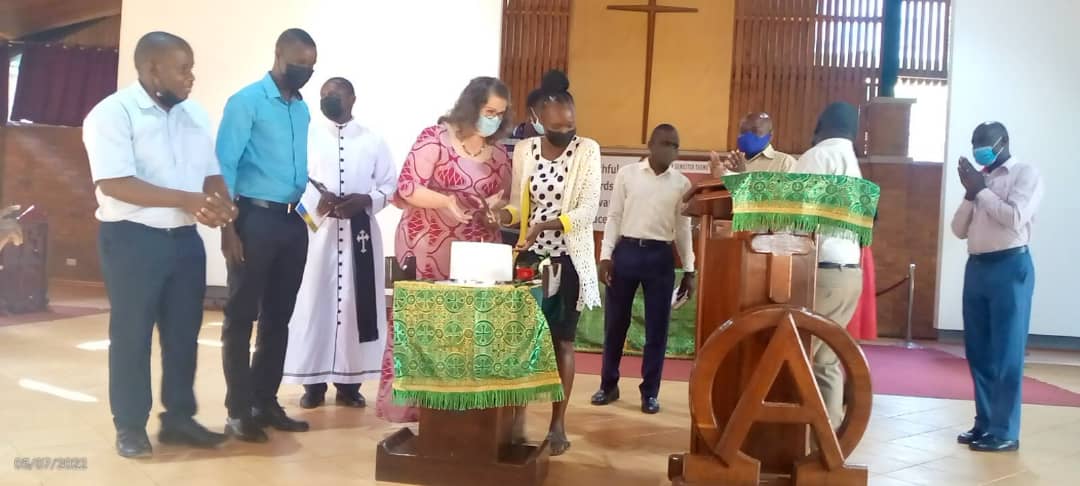
If you’re interested in seeing it, my graduation is here, and I appear at the 55:00 mark. The MDiv 2 students at UCU had a cake for me after chapel when I returned, which was incredibly sweet. It is all the more precious to me since I’ve not taught this group of students. The video of cutting the cake and singing praises to God is below.

Living in Uganda for so long means that one meets different people, and I’m always surprised when they remember me. On the flight back from graduation, I was chatting with the woman behind me: she’s Australian, and is on an epic holiday across several countries in Africa. She showed me her three-week itinerary, which sounded lovely. We ended up getting our luggage together and proceeding to the x-ray machine on the way out together. The officer saw her GoPro camera, and wanted to examine the suitcase. I stayed to help my new friend, and used my little Luganda to soften the exchange with the officer. To convince the officer that the GoPro wasn’t a drone (which are illegal), I told her that my friend would be using it to record herself floating down the Nile. The officer laughed, and then peered at me and said, “it’s as if I know you,” so I reminded her that I had an epic load of vitamins in December. We laughed about that, remembering how I talked myself out of her inquisition, and I told her that I would do the same this December, and that when she saw me, she’d say, “mukwano gwange!” [my friend]. We had a good laugh about that, but I really hope she does remember me in December.

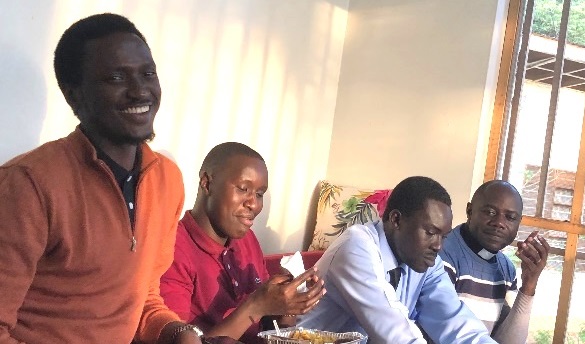
What all this has shown, and continually reminds me of, is the power of relationships and social capital. Everything moves by relationships here; I knew that my knowledge of the culture could help my Australian friend. The MDiv 2 students who came for pork and fellowship (see the picture below) told me that they had heard that I am a tough lecturer, which is true. But they’ve also heard that I’m fair, and that I’m the lecturer who is on the ground with them. That’s given them the boldness to approach the muzungu (white) lecturer sooner than they normally would. I have been greeted by name and titles by complete strangers because they’ve seen me preach somewhere. But since they “knew” me, we weren’t strangers. This familiarity has opened doors for ministry and relationships much more quickly than if they had to open traditionally, and for this I’m so grateful. My friend’s comment about generational impact is really what I want to have, and that obviously happens through relationships. Relationships are what builds social capital, and social capital makes the world turn. I am grateful to have had the ability to meet and build relationships with so many. It is a privilege, and I do not take it for granted.


The MDiv 2 class asked to come and have dinner and fellowship; apparently they’re doing this with all the lecturers on campus. We had a delicious pork dinner, and it was a wonderful time of sharing. A group that seeks out its leaders to learn from them and grow together is a group that gives me great hope for the church.
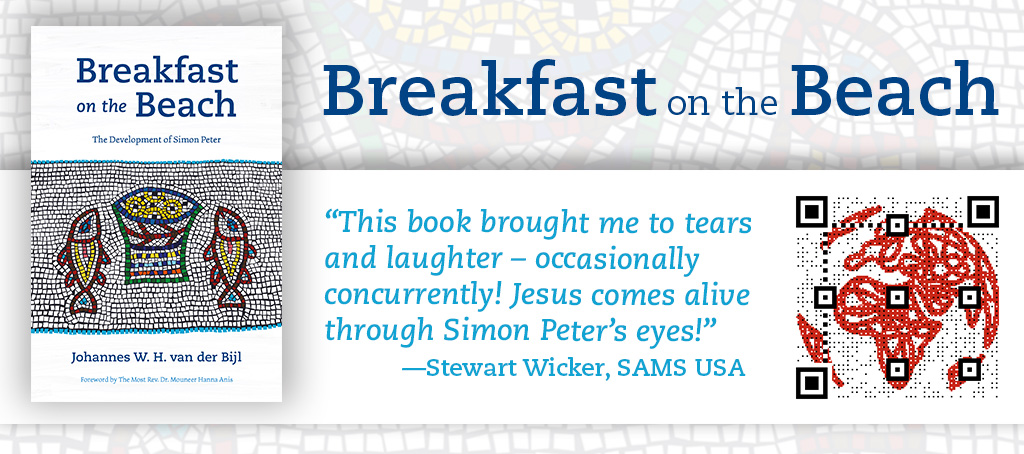
Breakfast on the Beach – a new book about Simon Peter by Missionary Johannes van der Bijl

Breakfast on the Beach – a new book about Simon Peter by Missionary Johannes van der Bijl

One of the outcomes of pandemic quarantine was the publishing of a new book by Missionary Johannes van der Bijl in June 2021! The book is the fruit of much research and meditations on the scriptures about Simon Peter and his relationship with Jesus. It is also reflects Johann and Louise’s approach to ministry for many years in Southern Africa. They follow Jesus’ footsteps in disciple-making. – Kate Ulrich, Communications Coordinator

SAMS-USA President and Mission Director Stewart Wicker is pleased to offer an endorsement of Breakfast on the Beach

“Join in the journey of Simon Peter–with all his doubts and failings—in encountering Jesus. As Jesus draws Peter with restorative love, you will be attracted, too, through the power of this fresh, Biblically-grounded narrative.

Through meticulous and sound Biblical research, the Rev. Dr. Johann Vanderbijl fleshes out the story of Simon Peter. As his walk comes alive on these pages, the reader encounters Jesus anew in a profound, heart-changing manner.

With inviting ease, Johann tells the story of the discipleship of Simon Peter. In crossing cultures and centuries, accessing Jesus is simple, yet expansive. The love of Jesus permeates Simon’s personal journey of life transformation.  The call to cross all boundaries with this Good News reverberates throughout the pages.

Johann  tells Simon Peter’s story with passion and affability. As Peter’s life slowly changes through his time with Jesus, may others also partake in this transformative promise of love and extreme forgiveness.

Drawing from the whole Biblical narrative, Johann introduces the reader to Jesus through the eyes of the simple fisherman Simon Peter. In this journey of questioning and discovery as well as failure and restoration all may witness the deep, deep love of Jesus.

Brought me to tears and laughter—occasionally concurrently! Jesus comes alive through Simon Peter’s eyes!”

You may purchase Breakfast on the Beach: The Development of Simon Peter at various booksellers, including Amazon and Langham Publishing. 

Belong in Christ at Uganda Christian University

Belong in Christ at Uganda Christian University

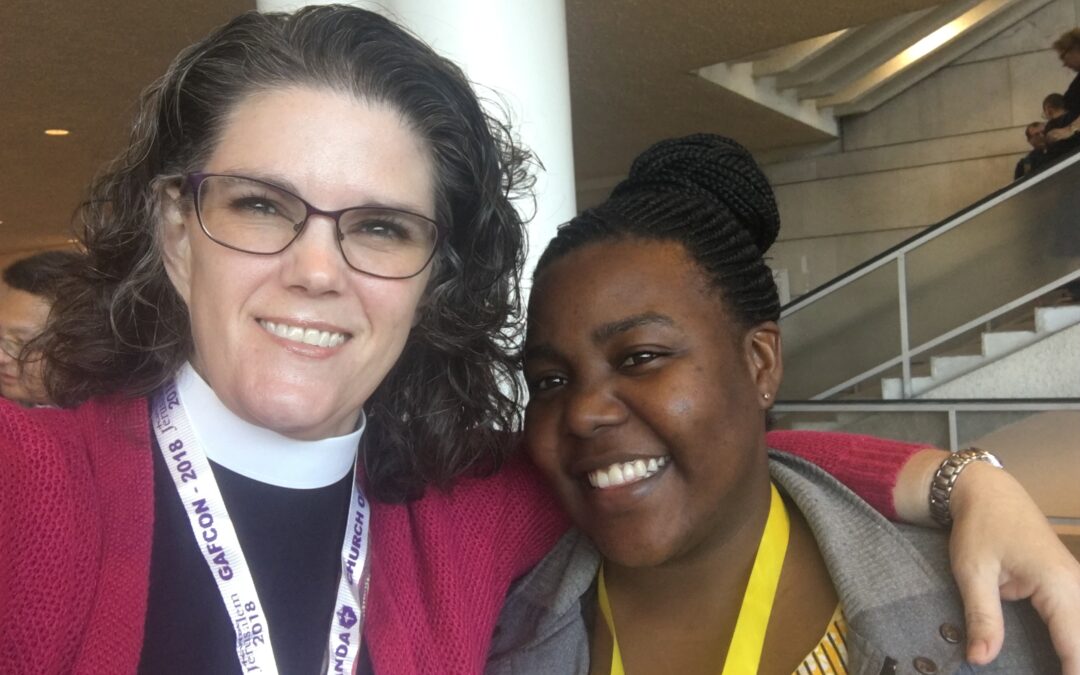
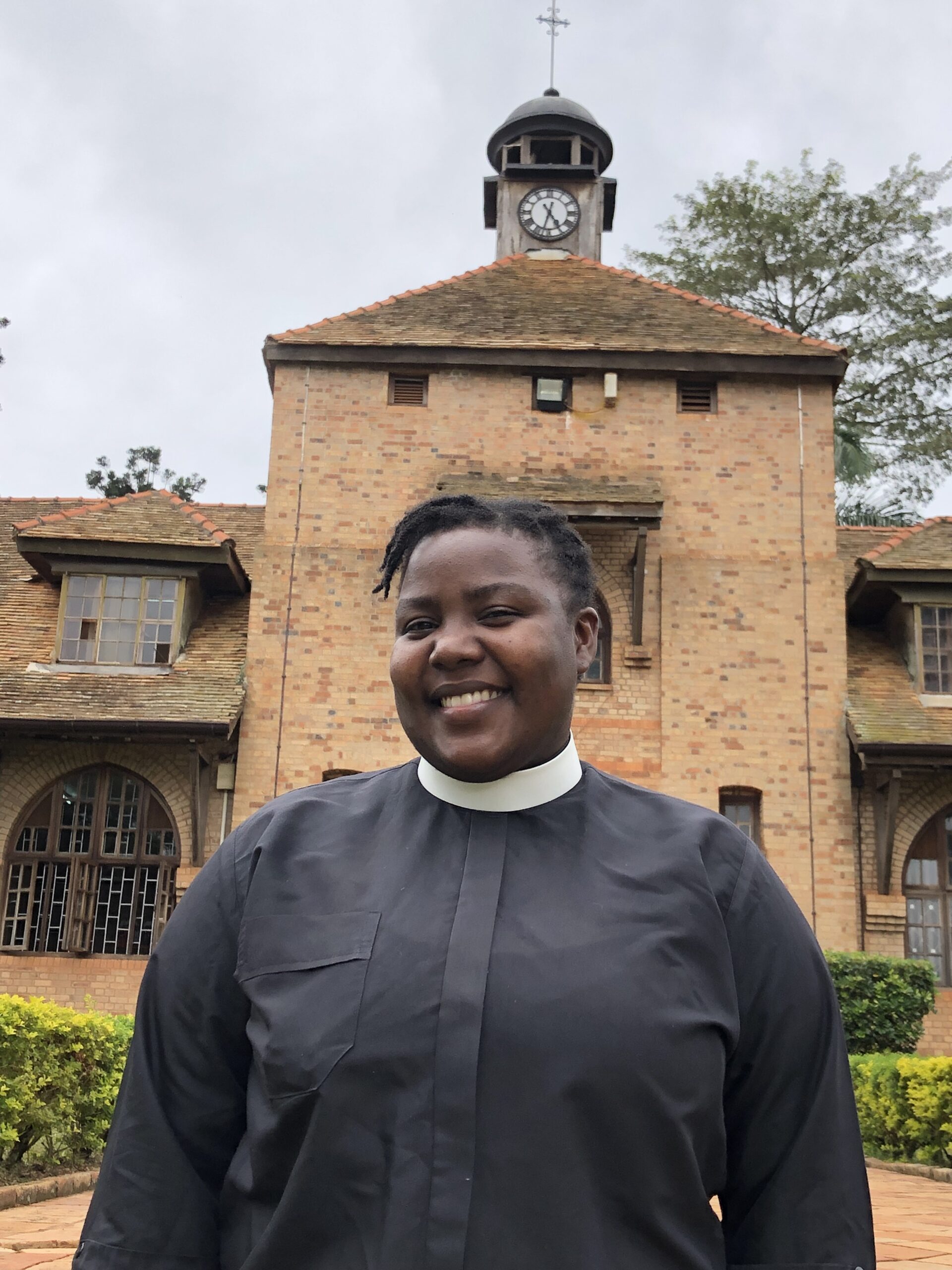
Above: SAMS Missionary Jessica Hughes and her theological student Lovincer Katana at GAFCON 2018 in Jerusalem. Jessica teaches at Uganda Christian University (UCU), and Lovincer serves in the UCU Chaplaincy while continuing her education to serve Christ’s kingdom. Lovincer shares below the impact that UCU has had on her. – Kate Ulrich, SAMS Communications Coordinator

My name is Lovincer Katana, a first-born-child of six children. I was born and raised in Kalerwe, one of the slums on the outskirts of Kampala, the capital of Uganda. My parents loved God and served in the church as wardens, and I came to faith while in Sunday School because our parents faithfully raised us in church.

I grew up and started serving in the youth ministry. Having graduated from university by God’s grace, I was placed as a teacher in one of the best girls’ schools in the country, Gayaza High School. The Lord used me to minister to the girls as I taught and engaged with them through various activities.

I received a call from the Lord to join full-time ministry, which I must confess I wrestled with for two years. I was inspired to study for my Masters of Divinity at Uganda Christian University (UCU) by my priest at St. Nicholas Church, the retired Rev. Kisitu Frederick. He used to talk fondly about Bishop Tucker Theological College, the College from which UCU was launched. I was particularly inspired by the way he taught and engaged the Scripture, and I was certain that I wanted to study where he had.

Having said yes to the Lord’s call, I joined the Bishop Tucker School of Divinity and Theology at UCU in 2015. I found the University’s atmosphere calm and enabling in that both students and staff were able, on a daily basis, to know Christ, to grow in faith, and to make Christ known in their different fields of specialty. I don’t remember a single day that any of my lecturers came to class to teach and we did not say an opening prayer, closing prayer, or share in the grace (2 Corinthians 13:14) at the end of class. Of course, even during the lectures themselves one would vividly see faith integrated in whatever we were learning, something which blessed my heart since I got my undergraduate degree from a government university.

There were two days in the week I always looked forward to: Tuesdays and Thursdays from 12-1pm. On these days, all students and faculty members pause whatever they are doing (including classes) and come together at Nkoyoyo Hall for Community Worship, where we are fed on God’s Word. I felt a unique sense of belonging in Christ during this time that transcended class, age, expertise, and our distinct backgrounds. This is the community’s way of paying attention to what God is doing in our lives, and it is an opportunity to study His Word.

The University setting itself makes anyone grow closer to God if only they pay attention to their surroundings. Apart from the time set aside for community worship on Tuesdays and Thursdays, UCU has a beautiful compound which is always green and clean. If you are walking around, you notice Scriptures mounted on almost every building. I remember a time I was feeling so low and discouraged, and as I walked through the compound, I stumbled on this Scripture on a building, “Therefore I tell you, do not worry about your life, what you will eat or drink; or about your body, what you will wear. Is not life more than food and the body more than clothes?” (Matthew 6:25). I had always passed this spot, and I had probably seen the passage many times, but this time I read the Scripture and it came afresh to me and I was encouraged.

I graduated in 2018 with my Masters of Divinity, and in 2019 my bishop placed me in the UCU Chaplaincy to serve. This was a beautiful homecoming for me. The Lord placed on my heart a passion for biblical languages, especially Hebrew, and a desire to help other students through sharing knowledge with them. I enrolled to study at Bishop Tucker again in 2020, this time in the Master of Arts in Theology (Biblical Track). The Bishop Tucker faculty has great men and women (my favourite being a SAMS Missionary, the Rev. Jessica Hughes) who pass on their knowledge of God’s Word, helping us grow in immense ways. I am enjoying my work and my studies tremendously, and I am always looking for ways on how to pour myself out into the lives of students so that we journey and grow together. I am grateful for each day that passes in this community.

God the Alpha and Omega, to Him alone be the Glory!
Rev. Lovincer Katana Kanyike