The Missionary Lifecycle: Part IV – Re-Entry

The Missionary Lifecycle: Part IV – Re-Entry

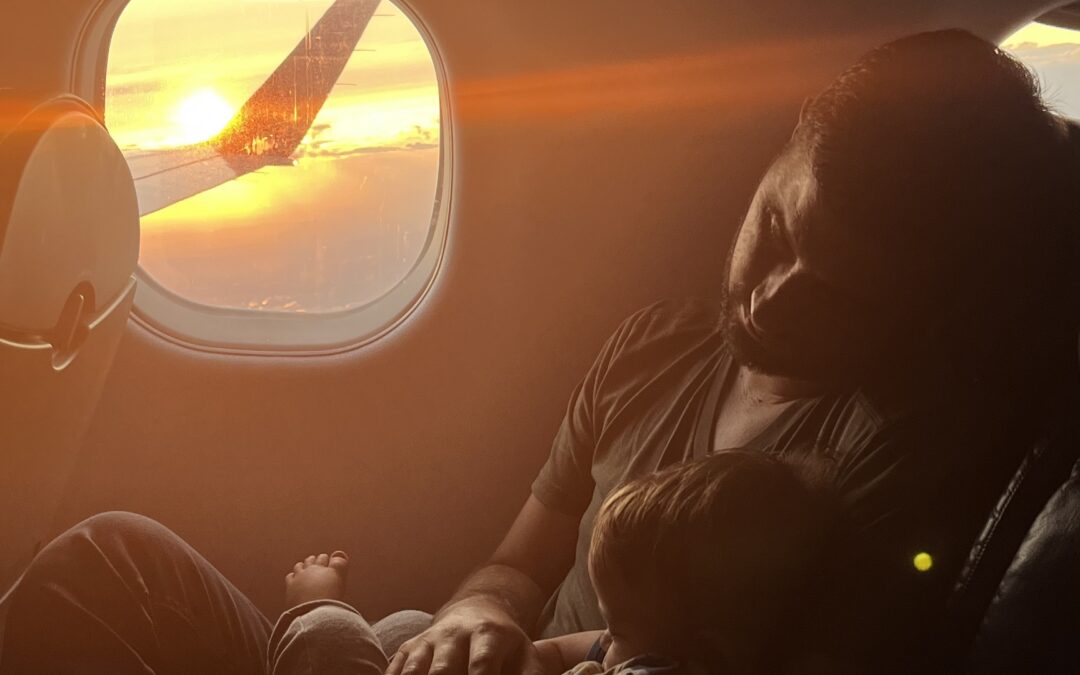
NYC to Pittsburgh – the last leg of our journey from Rwanda to the U.S.

Re-Entry: Transitioning with Grief and Joy

This is the fourth and final perspective in the series covering the various stages of missionary life. In this final stage we hear from SAMS Missionaries Chelsea and Wade Weeldreyer, who with their two children Evie and William, returned to the U.S. in 2025 after serving in Rwanda for several years. Both of them have transitioned to the U.S. to join the SAMS Home Staff in Ambridge, PA, to serve as Co-Directors of Missionary Care and Mission Engagement. 


I was so emotionally worn out that my writings no longer had the energy for long sentences and I switched to poems. 

— SAMS missionary Patsy McGregor, TAMANA: At Home in Africa 


My experience returning to the U.S. after serving in mission in Rwanda paralleled Patsy’s at first: there was a lot swirling around in my mind and heart, and it was all pretty soup-like in terms of organization of thought.

My family had moved from indirect communication to direct; from house staff to American privacy; from a multilingual setting to monolingual; from living porously between indoors and outdoors to properly sealed, four-season homes; from censorship to freedom of speech; from a world where doing things last-minute signified cultural adaptation to a world where doing things last-minute just made you look silly. The list goes on.

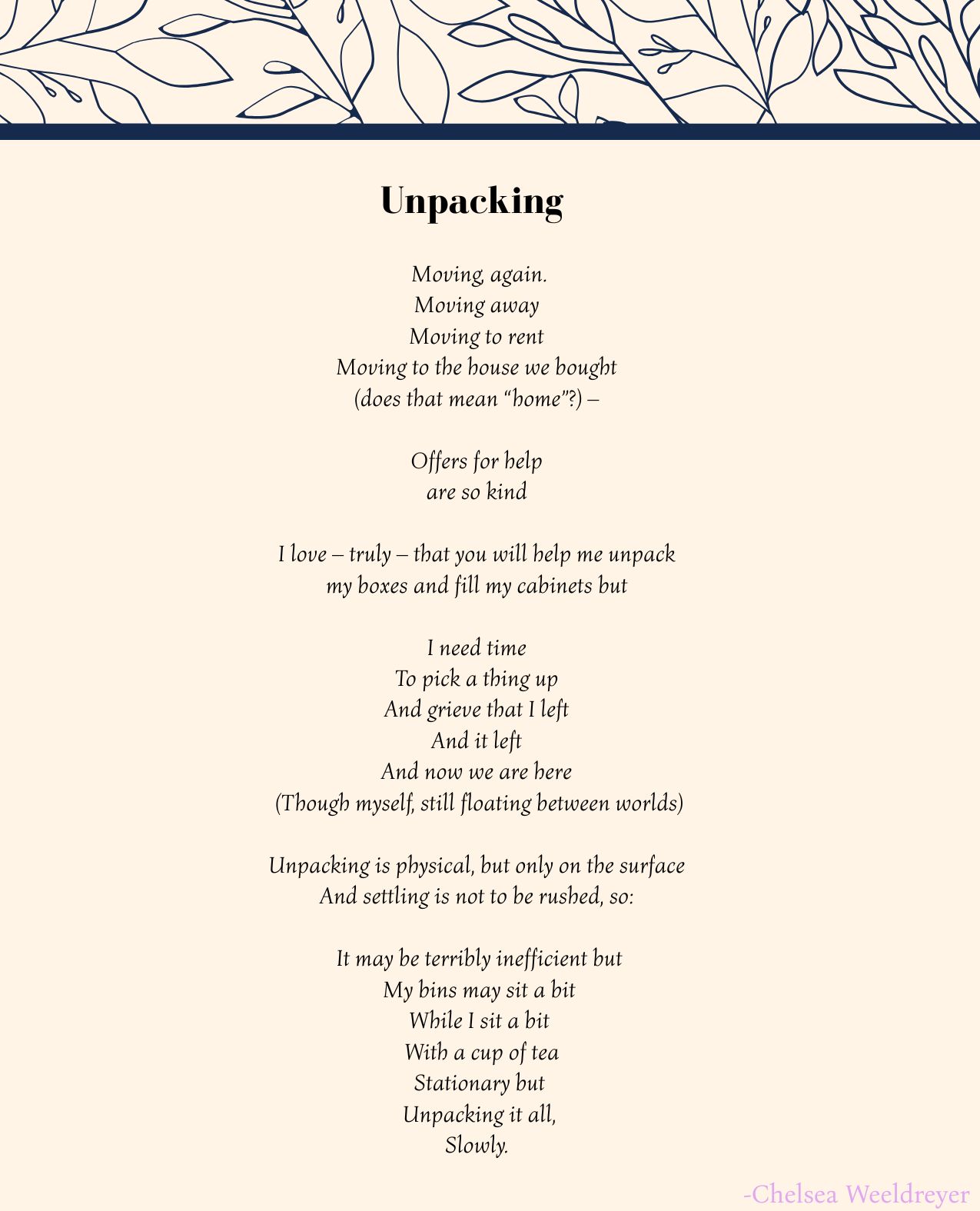
Like Patsy, I wrote poems. The two below are from my family’s early months back in the U.S.  Even though my husband and I were transitioning to an exciting globally-focused ministry (and had the blessing of agency in the decision to leave our location of service), re-entry was draining and full of mixed feelings. Every missionary’s experience is unique – indeed, not everyone returns to their passport country after serving. However, some patterns seem universal, whether that’s needing time to grieve and not rush resettling (‘Unpacking’), or wrestling with raw emotions up front and later encountering God’s gifts of joy and security more deeply (‘TCK World Traveler’):

After several months back in the U.S., I sensed my thoughts slowing, settling, percolating. I became aware of the emergence of more mental and emotional space and capacity (amazing!). Here are just a few of my reflections from the first year of re-entering life in the U.S.:

Resettling was not linear

There were suggestions of linear progression: we bought a house, started new ministry roles, and the semblance of regular rhythms began to emerge. This was wonderful (indeed, something of an oasis experience) after so much uprooting and a packed summer connecting with supporters. I started to relax as I let go of the load of hypothetical futures that I’d long toted around.

At the same time, re-adjusting to the U.S. was not smooth and linear. A global move triggers a shift in all categories of life, from cultural norms to annual markers like holidays and birthdays. At any given time, some “buckets” felt full (e.g., a dependable schedule) while others felt empty (e.g., community) in relation to the life we’d left behind in East Africa. I loved my work, yet I missed living abroad. There was joy watching my daughter bravely enter kindergarten in a new place, but “Culture Night” at the elementary school put me to tears in an instant. And just when I started to think, I’ve got this, major holidays made me feel disjointed all over again, like another wave rolling in to knock me down. Our first Christmas back in the States was special, yet there was such a gulf between our “remember last year?” (or the last few years) memories and everyone else’s.

As a missionary going to serve, I recall feeling a sense of permission from others to have a topsy-turvy, non-linear experience. Many people have a category – perhaps even a dramatic imagination – for the unpredictability that comes with entering a different country and culture. But as a missionary returning from serving abroad, there was a sense that I should be able to fall back into step in the U.S. easily. That just wasn’t the case.
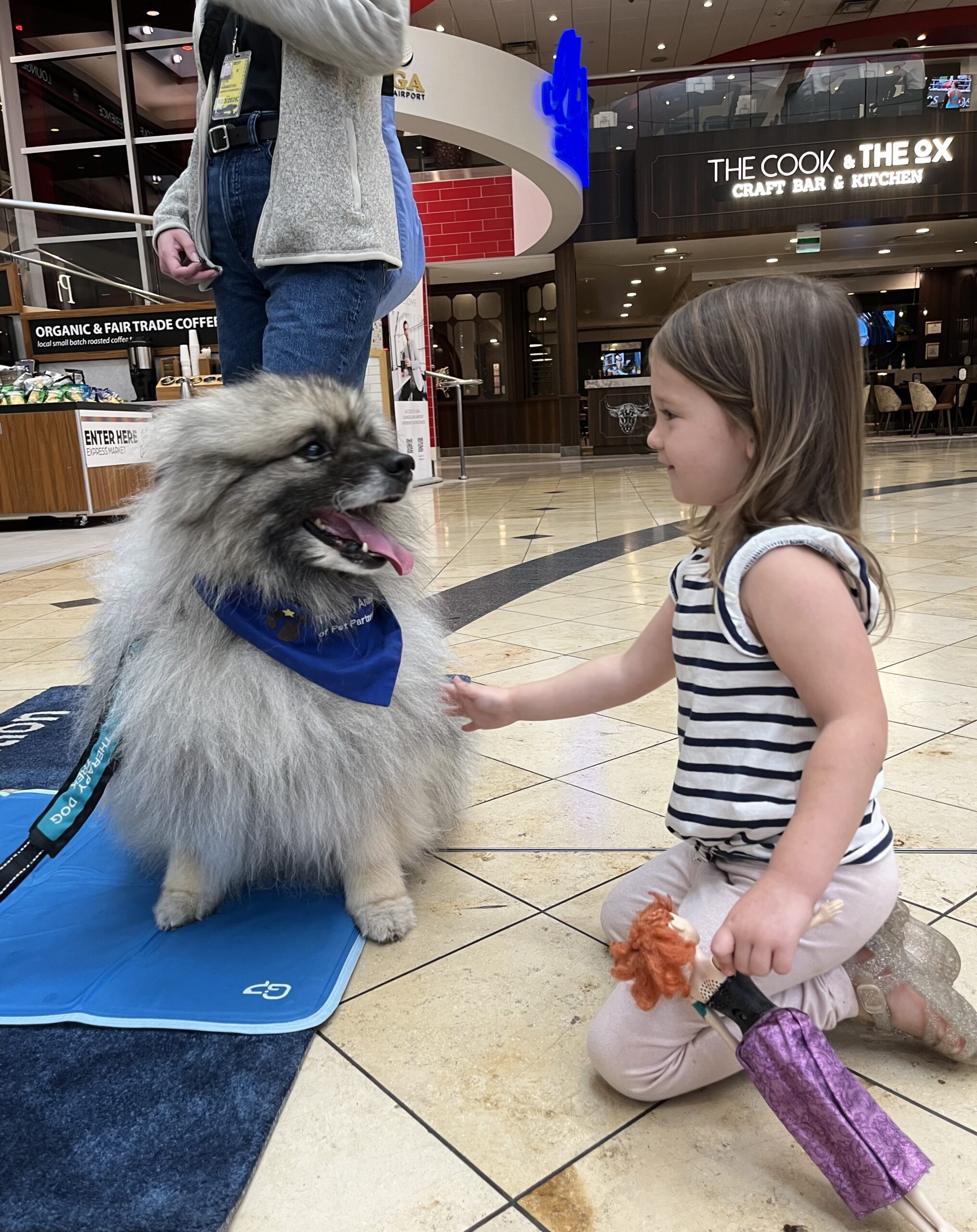
Emotional support dog in the airport: a sweet gift for a child making a global move!

I started thinking about linear progression from a cultural standpoint. U.S. culture loves a nice, straight, upward line of progress (we also like to believe we can achieve it!). In certain contexts, a linear model is a great framework. But that doesn’t mean it is always the best lens. A smooth, upward ride is also not the pattern we most see in the lives of God’s people in Scripture or throughout history. I have often found it helpful to think in terms of cycles as I’ve made transitions: move, enter, settle, “unsettle” to prepare for departure, move, enter, settle… By design, a cyclical journey leaves space for feelings and experiences to resurface and repeat in various ways. This model helps us see the bumps along the way as part of our progress, as God meets and anchors us again and again. It allows for more transparency with my children as we explore how different feelings can exist at the same time. It seems truer to life.

When my family reached our one-year anniversary of moving from Rwanda back to the U.S., I was pained by what felt like a final severance from our location of service. A linear model of progression may have said, Look how far you’ve come in twelve months! Where is your year’s worth of ‘upward and onward’ adjustment?! But the cyclical framework of thought said, Of course, you’ve arrived back to the same time of year, but everything’s different; there is joy, but grief makes sense too.

Building community was slow

Building community was slow, and not for lack of wonderful people around us. It’s simply the way relationships work. In the early months, it took a massive amount of emotional energy to (1) hunger for connection in our new location, but (2) simultaneously lack the capacity to pursue it. In part, this is because I was occupied by the lonely effort of redefining the friendships I’d left behind in East Africa. The identity of a missionary who’s just transitioned is still wrapped up in relationships with nationals and ex-pats from their location of service, but that’s largely unseen. This relational redefinition is more hidden, existing in the treasured but bittersweet space of calls and WhatsApp messages. (As it turns out, half of re-entry is indeed entering a new space, but the other half is leaving the old space – the land and the people and the ministry which all continue without you when you’re gone.)

Ironically, in the very midst of craving community, there can be a temptation to withdraw – especially if the missionary has already made several geographical shifts over the years and said lots of good-byes along the way. Painfully honest thoughts arise:

    I can’t move on – I’m not finished grieving the loss of my old friendships.
   No one can understand where I’ve come from.
   If I become friends with him/her, what will happen if they move away?
   No one knows me, or my memories.

Missionaries are not the only people who think these thoughts, but they can feel them in an accentuated way.  I did.  C.S. Lewis, in The Four Loves, gives voice to our fears around moving on: “To love at all is to be vulnerable. Love anything and your heart will be wrung and possibly broken.”

Ultimately, a question of trust emerges: Do I trust the Lord to sustain me in any season, in any place, in every way?  

We know that it is worth it to say “yes”! Thankfully, God doesn’t ask us to handle self-preservation by ourselves (and missionaries are far from superhuman). Rather, He invites us to be living testimonies that His power is made perfect in our weakness. The call to life in Christ is always a call to community – life with and in the Body of Christ, life for the sake of the world that God has created. Because He promises to sustain (and his Body plays a role in this), we can open ourselves to rejoice and weep with others, to lean into new friendships, to step into new callings and new places. True, many people will not understand where the missionary is coming from (and it’s important to have designated individuals to process with along the way). That’s both an opportunity to grieve and, if others are keen to listen, an opportunity for the missionary to pour him or herself out in a new way, sharing about the Lord’s faithfulness in another corner of the globe and enhancing the local church’s ability to engage missionally.
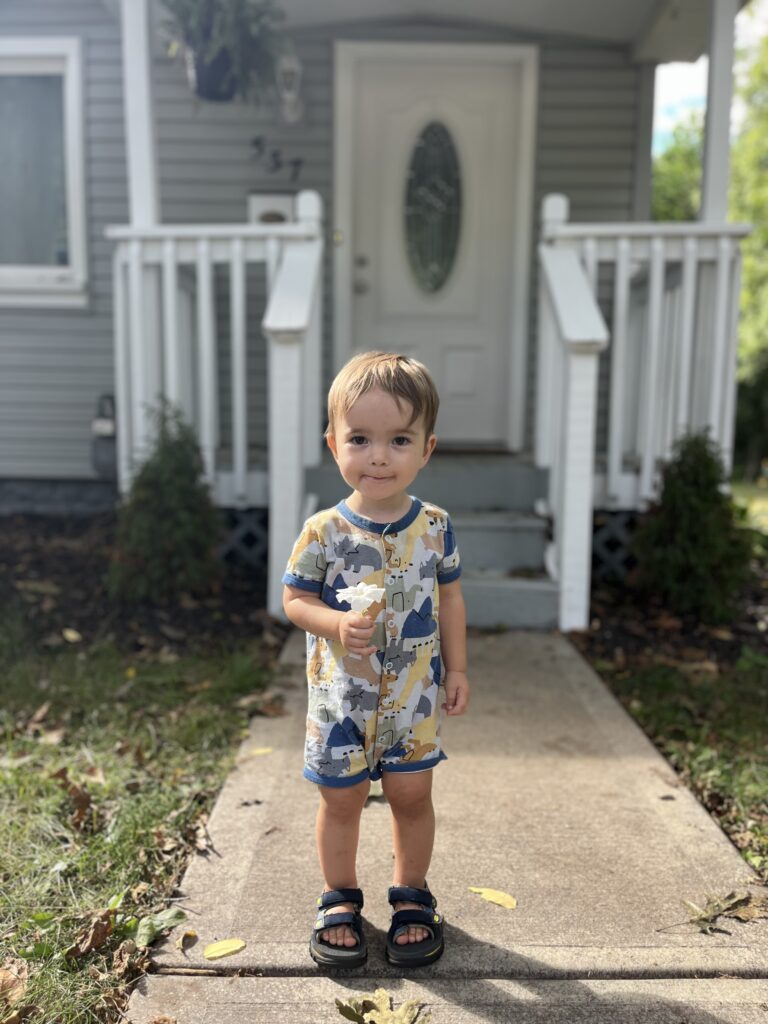
Outside our family’s new house (does that mean “home”?)

There is no way to wrap this up neatly with a bow: re-entry was a season where my husband and I rooted ourselves in conversations with each other, with God, and with key individuals in our lives as we dug our heels in and waited for the emergence of new relationships. We committed to a local church, showed up at the bus stop and met other parents, leaned into our new ministry roles, and waited, like seeds, for the slow growth of community.

God was constant

These days, I think often of the contemporary worship song Constant, which begins, “Just like the sunshine, you have been our light – leading us into beautiful places,” and later reads, “Just like the star light, you shine in the black night – leading us into beautiful places.”

Indeed, God has been my family’s light on both bright days and cloudy days, leading us into beautiful places (with a recognition that sometimes “beautiful” includes “hard,” too – is this not what the life of Christ shows us?). He has been our Constant in each season, showing us that all across His world, there is beauty in his creation, amazing individuals made in His image, and abounding opportunity to love him and love our neighbors. Though it’s so bittersweet, it’s a tremendous privilege to hold so much grief and joy in my heart at the same time for the sake of the Gospel.
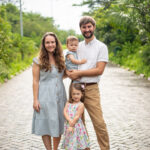


After serving a fruitful missionary term in Rwanda, Wade and Chelsea have launched into a new ministry by serving as Co-Directors of Missionary Care and Mission Engagement as part of the SAMS Home Staff Team. As Co-Directors they have been walking alongside potential missionaries, candidates, and current missionaries to join with God in global mission. They also serve as a resource for Anglican Churches as they raise up and send these missionaries throughout the world. They will focus on missionaries, supporting these families and individuals who share the Gospel of Jesus Christ in word and deed across cultures. They will also seek to encourage churches and all senders go deeper in their mission callings. You can read more about them here.
 

Connecting with Women in Mexico as a SAMS Bridger

Connecting with Women in Mexico as a SAMS Bridger

by Adrienne Salyards

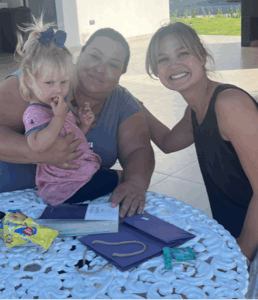
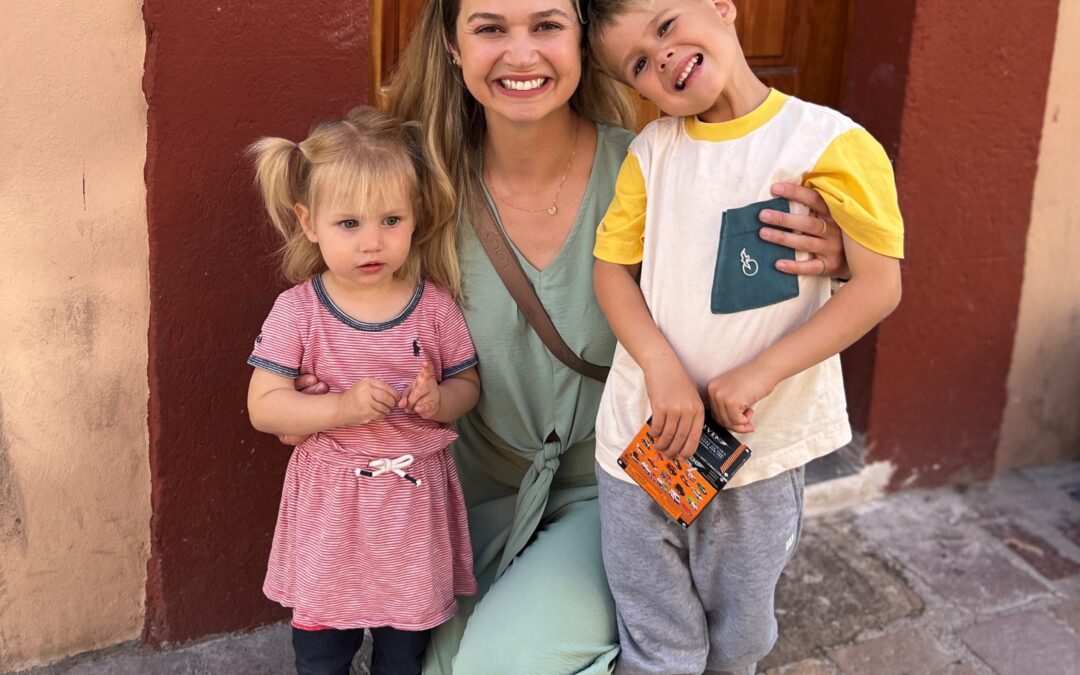
I had the opportunity to spend the majority of my summer in Aguascalientes, Mexico with my two young children, serving as a SAMS Bridger alongside two seasoned missionaries. I had 3 goals for my time there: evangelism, encouraging the missionaries, and increasing our cultural fluency. God answered all three in beautiful ways. I was amazed at how quickly I was able to meet other moms in my neighborhood (maybe it’s a universal pattern that moms tend to seek each other out). One mom, whose 5-year-son loved playing with my 5-year-old son, took us to get haircuts for our boys at her favorite local barber (I never learned his name, because everyone only called him “flaco” aka “skinny guy”).

Another mom discovered that our toddlers shared a July birthday, and neither of us had planned anything. Together, we threw a thoroughly Mexican birthday party, with street corn, tacos, giant piñatas and a bounce house. The whole neighborhood came out and partied well past bedtime. As I got to know both women, I was able to share my testimony of God’s incredible goodness in my life and found that both of them had recently begun exploring Christianity.

On my very last day in Mexico, one of them reached out and wanted to do a Bible study with me. Not only was I able to read the Word with her, I was able to connect her with the local missionaries and a church with a strong Sunday School program. As we said goodbye that day, she told me, “God puts the right people in our lives.” We’ve stayed in contact via WhatsApp. As I reflect on my summer in Mexico, I’m grateful to have been able to glimpse, even if briefly, the work of the Missionary. I look forward to continuing to invite neighbors to know Christ, no matter where I live.


Adrienne Salyards lives in the Washington D.C. Metro area with her two children and attends Falls Church Anglican. God led her to explore being a Missionary intern this summer while being placed with SAMS Missionaries, Roger and Joanne Griffin in central Mexico.

SAMS Retreat for the Americas

SAMS Retreat for the Americas

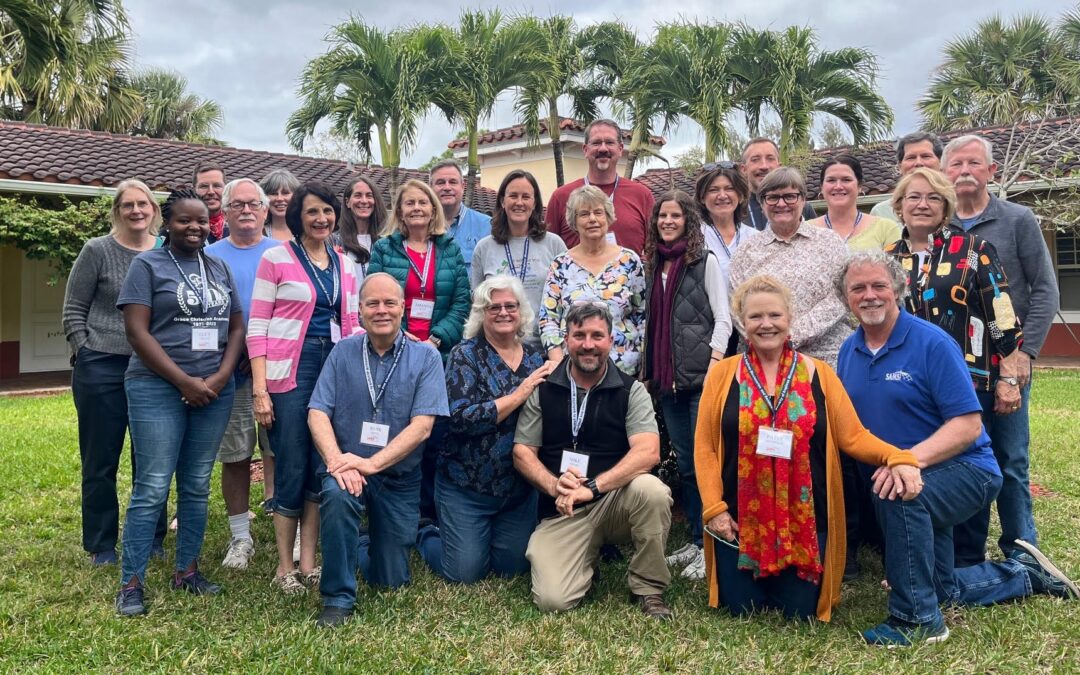
SAMS Missionaries and home office staff gathered last week at the Casa San Carlos Retreat Center in Delray Beach, Florida, for a time of refreshment and rejuvenation. The four day retreat provided the Missionaries time to connect with each other and to share what the Lord is doing in their lives. We were led in worship by Hunter Van Wagenen, a SAMS Associate Missionary. Hunter led the group through a series of reflections from his time over the last fifteen years on the Camino de Santiago. Hunter compared and contrasted his experience walking the 500-mile pilgrim’s path in northern Spain to the various stages of missionary service: Preparing to Go, Starting Out, Lost in the Middle, and Finishing Well.

Mike and Kim Miller, SAMS Associate Missionaries who live in St. Petersburg, led the group through the TCK (Third Culture Kids) Care Program that has launched this month to provide resources for Missionary Parents whose children are in the field with them. Mike Miller also led the group through a time of listening to God and thinking about Spiritual Discernment while helping the group apply those disciplines to their current ministries.

His reflections were received very well and were interspersed with break-out groups for times of sharing, listening and prayer. There was plenty of time to walk around the Retreat Center, play games, take group walks at nearby wetlands, soak in the jacuzzi, and talk over meals. On the last day some of the missionaries headed to the beach. Most importantly, God was present and active in the conversations, in the times of prayerful discernment, and in the one-on-one time that each missionary had with the Lord.


Healing Dreams During A Pandemic

Healing Dreams During A Pandemic

By Denise Cox, SAMS Associate Director

Early in the pandemic I awoke startled by my vivid dream – a dream in which I was once again talking and laughing with a dear friend who has been dead for several years. It seemed so real and so wonderful that I immediately wondered what was the meaning of this night reverie.  I turned to God in contemplation and prayer. At once I knew. I was missing very important people in my life. I was longing for close relationships, for church family and work family. This “covid-dream” revealed my deep longings.

Soon I found out that I wasn’t the only person having dreams that God was using during COVID-19 isolation. A missionary in Africa told me he dreamed that he and his wife were in a road race. They felt excitement to be at the head of the race until they ran low on gas and pulled over to a gas station. The pumps were closed and they watched in dismay as the other racers sped by. Then they looked up to see that there had been an explosion ahead on the road, and they had been spared driving right into it. The missionary awoke feeling God’s protection and providence. He rested in the knowledge that God provided guidance and that God was aware of his frustrations in the midst of a pandemic.

Yet another missionary related a reassuring dream that she had during the pandemic. She had formerly served as a missionary teacher in Latin America. Currently in the U.S., she longed to return but wondered if she was even wanted. She received an invitation to judge an international spelling bee on a virtual platform. The school at which she had taught was the host of this competition. In the midst of the preparations for the event, she dreamed she had returned to the school. The students were waiting for her and welcoming her. She awoke, feeling that God sent her a message. She had a renewed sense that her time of missionary service wasn’t over.

What about you? Has God spoken to your spirit during the pandemic with a meaningful dream? Let me know.  I will share these encouragements with others.


Following God’s Agenda: Todd and Patsy McGregor’s Journey in Missionary Service

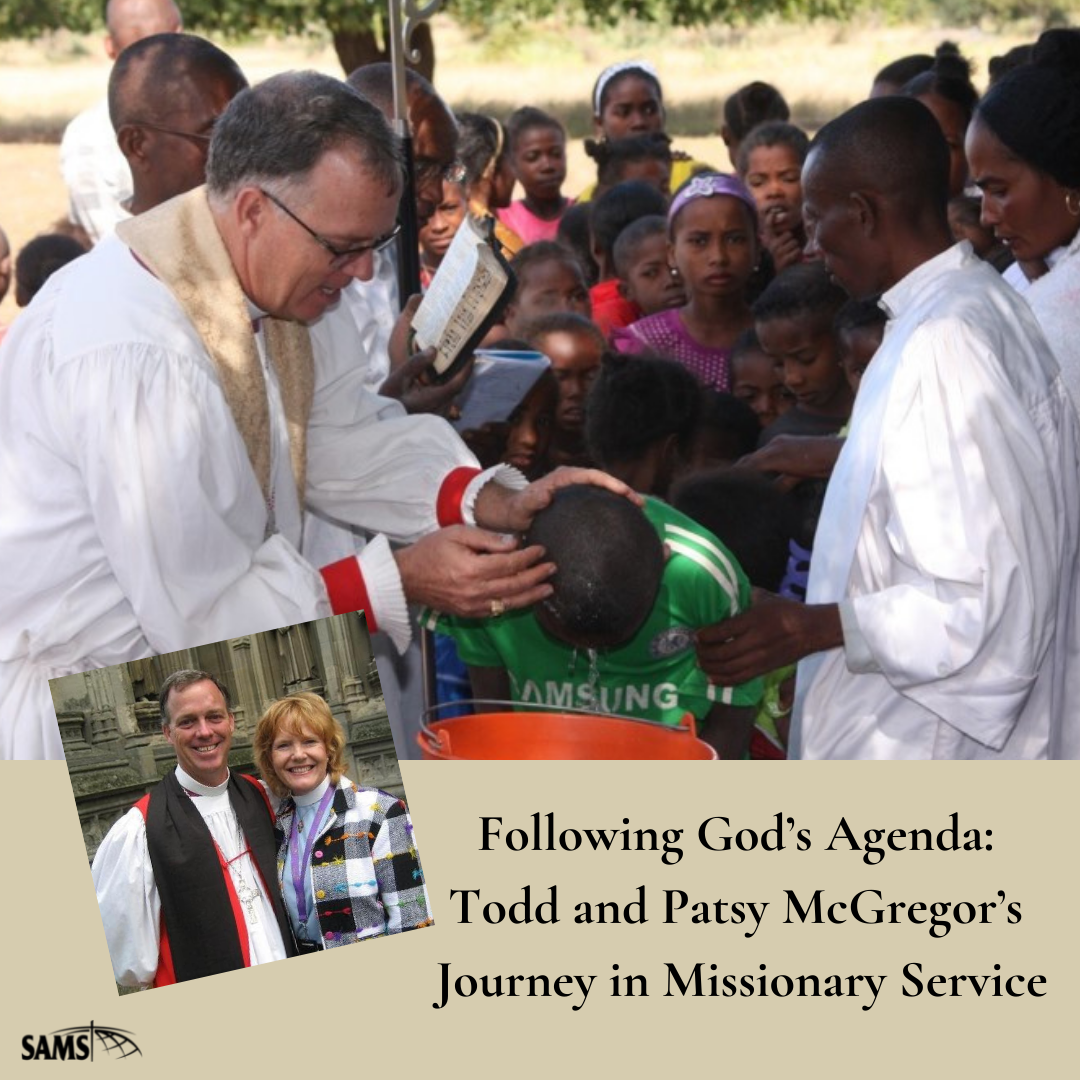
Following God’s Agenda: Todd and Patsy McGregor’s Journey in Missionary Service

SAMS is excited to announce the availability of two Missions Coaches for prospective missionaries seeking counsel in their discernment journey. Missions Coach Sarah Blaine is a former missionary to Cambodia who now lives in Colorado, church-planting with her husband, Jesse. Missions Coach Bishop Todd McGregor is a former missionary to Madagascar, and now lives in Florida with his wife Patsy.

Missionary service always has its share of ups, downs, and surprises. All in all, God is faithful and has a beautiful purpose for all who surrender themselves to Him. Read about the journey God has had for Todd and Patsy McGregor below.

The one chapel service Todd McGregor missed in college turned out to be the one that changed his life. A chapel speaker at his Bible college had invited students to go to Nepal on a mission trip. The speaker caused such a buzz on campus that all his friends were talking about this call to go to Nepal, to minister in a place where it is against the law to share your faith and baptize. Despite his not going to chapel that day, the invitation caught Todd’s attention. He encouraged his friends to go, “That’s really good, you guys should do that.” He said he wasn’t interested. Yet the Lord kept bringing this back to him. Todd had felt a pull towards ministry as a teenager while exploring a remote, roadside graveyard with his father. The following words drawn from scripture were on one of the stones: My friends of mine hear my voice, you are my friends if you do what I command. “I sensed that the Lord was calling me to serve him,” Todd recalls.

He felt the call again in college: “Isn’t it interesting that the Lord showed me something earlier in life, and that He kept bringing it back. I kept hearing about Nepal, and I said no, no, I’m not going to do this, and eventually I made a deal with God. I thought it was impossible and would never work out. I said to God, ‘If you can convince my parents to say “yeah, you can go to Nepal and do what’s illegal and there’s a possibility you might get thrown in prison,” if they’ll approve it, and Lord, if you can raise this money, I will go.’ Wouldn’t you know, that the Lord worked this all out: that when I called my parents, they were very encouraging. People started giving, and the money all came in. So, I went to Nepal, trusting and really believing that it was the Lord who was calling me. I was open to whatever he wanted me to do. That was the neat part of experiencing missionary life: being open, not coming with any agenda.

“We knew there was a big risk; we knew there was a big chance we would be thrown into prison. But we trusted in the Lord. If he opened this door, then he would show the way. I was with a group that travelled through Western Nepal — we were able to pray for people, and miracles happened. We saw people come to faith. We were stopped and put in prison, but our trust was in the Lord during this whole time.” The Lord opened doors for Todd to go to Nepal, his release from prison, the Gospel to be spread, and seeds of future calling to be planted in his heart.

After Todd got back from Nepal, finished college, and met and married his wife, Patsy, the Lord continued to tug on his heart for overseas missions. As they both studied at Trinity Evangelical Divinity School in Illinois, Dr. Bill Taylor’s teaching on missions brought Todd’s mind back to his experiences in Nepal. Todd sensed a call from God to serve overseas as he studied for a Master of Divinity. Patsy, happy to take advantage of opportunities where the Lord led Todd, studied for a Master of Arts in Religion. Meanwhile, the Lord blessed them with two daughters. As they looked to the mission field, neither Todd nor Patsy could see the discouragements they were to face or the unexpected developments in their callings — but they followed their Good Shepherd.

At the time, Patsy felt one clear calling — to be married to Todd, supporting him in his calling as a missionary. Yet this was not a shallow commitment on her part. As they prepared to go to Madagascar, she brought her whole self to the support-raising process with Todd. Not all their loved ones wanted to let them go overseas, and some even opposed their plans. Yet for Todd and Patsy the call became clear. With their departure date approaching soon, they still needed to raise significant funds. They went on a bike ride to pray and process the challenge facing them. Patsy was confident: “I just believed that if God was going to have us go to the mission field, that he would raise up [the support]. We got on the phone and asked people: ‘If you believe this is what God has called us to do, then can you please send us something just to confirm that? And if you don’t, that’s all right, because we’re seeking God’s will.’ And everybody [we called] was very, very much in favor of it. But we had to ask: ‘Do you believe God’s called us? And if so, send something in. It could be 20 bucks, but it’s just saying you believe.’” After these prayerful efforts, God brought in $45,000 in 10 days! Todd and Patsy headed to Madagascar with their two young daughters, ages 11 months and two years.

Todd encourages prospective missionaries: “If God calls you, He will open up a means for this to happen. One thing we have learned over the years — A lot of people say, ‘Lord we want you to open the door.’ Maybe part of it is saying, ‘The door’s already open. Lord, if you don’t want us to go, close it.’ It means we have to step out in faith and trust Him.”

Todd originally shrank back from the idea of ordination. He wished simply to serve as a lay person among the Malagasy people. Yet during the first three years, the archbishop in Madagascar, The Most Rev. Remi Rabenirina, (who was also his bishop on the field) pushed him to get ordained. Todd submissively entered into the process. He expected to get a lot of pushback from his home bishop back in the USA, The Rt. Rev. Calvin Schofield, and thought that might be the silver lining to sidestep this calling. Indeed, Todd did experience a lot of pushback, and he was doubtful he would become ordained. He was in for a surprise, however. When Todd met with Bishop Schofield back in the USA one last time, the bishop opened up the door and said, “We’re gonna make this happen.” What a shock! The Lord had the door to ordination open, and by His grace, Todd walked through it.

Together, Todd and Patsy spent their first 11 missionary years in the capital city of Madagascar, Antananarivo (Tana), opening up health clinics, starting churches, and training leaders in evangelism. Life in a poor city required self-sacrifice and endurance. They saw Christ’s hope transform people’s lives, and the communal culture of the Malagasy began to change the McGregors deeply.

Patsy had her own share of surprises in her calling. While in Madagascar, Patsy had a dream that she was supposed to become a priest. She woke up a bit befuddled, telling Todd about it. Todd responded, “Yeah, I think so. I think that’s right.” Patsy pocketed that dream, unsure of what the Lord was doing in her. In 2002, the McGregor family moved to southern Kenya to enroll their daughters at an international high school. Patsy served at St. Julian’s Centre, an Anglican retreat and conference center, where she experienced great joy serving and equipping the Christian community.  The archbishop of the Anglican Church of Kenya, The Most Rev. Benjamin Nzimbi, saw Patsy’s ministry and encouraged her to become ordained. Patsy was already prepared for this step thanks to God’s leading in her graduate education 15 years prior. When she had studied for her Master of Arts in Religion, she didn’t have a clear purpose for it. Today she says: “I needed that training, and I didn’t know exactly why I needed that training, but I was glad for it. There’s never a scrap wasted. God will always use it, however he is equipping you.” She also followed Todd into doctoral studies through Gordon-Conwell Theological Seminary. Patsy’s attitude was: “I’ll just sort-of tag along and do the same thing. And it ended up being good because the Lord was always allowing me to be trained in ways that I wouldn’t necessarily have pursued in my own self.”

Todd was uncomfortable in Kenya at first. The ministry environment at St. Julian’s was unlike what he had been used to during their first 11 years in Madagascar. After nine months of searching for purpose, he was given the opportunity to travel to northern Kenya for a few days per week, helping with church planting and evangelism in a primarily Muslim territory. His name was put on a hit list and he needed armed guards, but the lives changed in Christ were worth it.

Rev. Todd and now Rev. Patsy were quite content and fulfilled ministering in Kenya. Yet God had more plans for them. One day, Todd got an email from a delegate of the Diocese of Antananarivo in Madagascar. They wanted him to submit his name for election to be Assistant Bishop, in view of starting a new diocese in Toliara, southern Madagascar. Todd reflects: “One has to be open minded on the mission field. Whatever you think you’re going to do — my experience has been — very seldom does it turn out that way.” Todd did submit his name and was elected. Patsy was stunned. She had just reached an exciting ministry season in Kenya. Her ministry would have to look very different in Madagascar. Their daughters were reaching adulthood, and Patsy was on the verge of empty-nesting. What would be her purpose in Toliara? How would she cope with living in an even more destitute part of Madagascar than before?


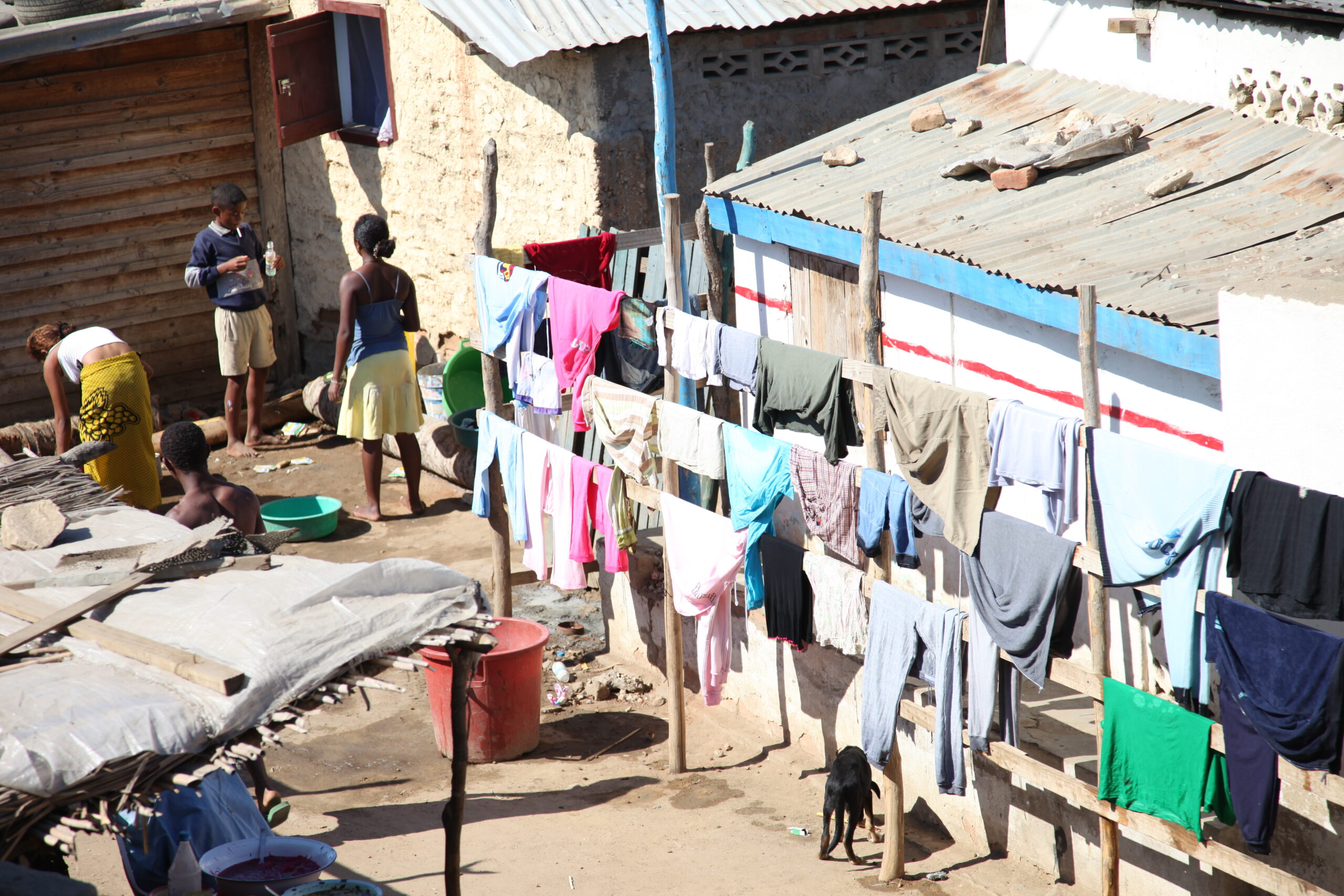
You will need to read Patsy’s book, Tamana: At Home in Africa (Xulon Press, 2013), to get the full answer to that question. However, we can put a snapshot here. Residing in Toliara tested Patsy with dramatic changes to her lifestyle. They lived in a cramped apartment, which they nicknamed “the box.” Conditions of heartbreaking poverty surrounded them in a hot, humid slum with many strange odors and activities. Yet when the joy of surrender to God’s will found Patsy, she was able to say: “Looking back on the first weeks and months in Ankilifaly [the slum in Toliara], things that had made no sense at the time became vividly clear. Had I not lived in ‘the box’ I would not have understood God’s complete calling on my life.” (Tamana, p. 102)

The McGregor's neighborhood in Ankilifary

Todd and Patsy found it exceedingly worthwhile to live among the Malagasy people again. The friendly, open-souled people of Toliara were hungry not only for food but also for the Lord. In her book, Patsy shares about one Malagasy woman:

“It wasn’t a Mercedes or even a two-wheeled bicycle. She was saving for a prayer book. Having just been given a Bible, her smile spread from ear to ear. ‘Now,’ she said in Malagasy, ‘all I need to save for is a Book of Common Prayer.’ Its equivalency in U.S. dollars would be a cup of gourmet coffee – a grande latte at a specialty shop. For her, it was a week’s wages, that is, if she had a job. In the meantime, she hoped to gather and sell a few used discarded plastic water bottles and save for a Book of Common Prayer. I don’t know how she did it. Perhaps she was able to wash some family’s clothing to bring in a few earnings. A while later, I saw her turning the crisp pages in her prized new Book of Common Prayer. I had been shown through her sacrifice and perseverance the precious value of prayer.” (Tamana, p. 110)

The Holy Spirit was poured out on the Malagasy of Toliara. When Todd and Patsy began ministering there, the diocese started with 11 churches and about 300 people. As of December 2020, when the McGregor’s moved to Florida after 14 years in Toliara, there were 110 churches and 10,000 communicants (people partaking in Holy Communion). Clergy of the Diocese of Toliara, now led by the recently installed Malagasy Bishop Samitiana Jhonson Razafindralambo, baptized 1,189 people in February 2021! [Read more, from SAMS Missionary to Madagascar Jacky Lowe, here.]

Bishop Todd and Rev. Patsy are now serving Christ’s kingdom from Florida after 30 years overseas. Patsy is Director of Spiritual Formation at St. Mary’s Episcopal Church in Stuart, a sending church that supported them on the mission field. Looking back on her challenging experiences, Patsy sees how God has equipped her to show pastoral care to American parishioners struggling through the pandemic.

Todd is continuing as a SAMS Missionary in multiple roles as a coach, discipler, and mentor. If the Holy Spirit is tugging on your heart to serve His kingdom as a missionary, then Todd, in his SAMS Missions Coach role, would love to talk with you. He is here to help you in the missionary discernment process. You may reach him at: toddmcgregor@sams-usa.org.

Get to know our other Missions Coach, Sarah Blaine, here. You may email her at sarahblaine@sams-usa.org.