Teaching Men to Build (and Fish)

Teaching Men to Build (and Fish)

Ugandan Healthcare Projects Advance thanks to Apprentices Guided by Good Leadership

For the past nine years Patrick Lutalo, a Denver-based commercial carpenter and a SAMS Bridger, has spent many nights huddled over blueprints while on a video call with his construction workers and apprentices working in Uganda. This close coordination has been the key to his leading others in the work to construct the kind of healthcare facilities that are much needed in this rural part of sub-Saharan Africa. Patrick and his team of construction workers have been so busy building its meant that Patrick travels back to his native country up to three months out of the year. In partnership with the Church, Patrick’s organization has already completed a maternity clinic near Mityana, called the Naama Maternity Clinic, a much-needed facility in a country that annually tops the ranks with some of the highest birthrate populations in the world. In its first year of operation in 2022, the clinic had already helped mothers deliver over 400 children there, and today it is in constant use.
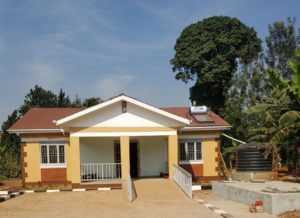
Naama Maternity Clinic was finished in 2022. It is in constant operation today.

Outpatient Healthcare Center

Today Patrick and his team are beginning the final phase of a building project to construct the 18,500 square foot, two-story Outpatient Healthcare Center in nearby Myanzi. It’s been a three-year project that Patrick and his team of workers plan to finish in December 2026. The ultimate goal of the facility is to serve the surrounding rural communities with outpatient care in this region of central Uganda currently with a population of over 100,000 people. The Anglican Diocese of Mityana is partnering with Uganda Christian University to staff the healthcare center once it’s completed with nurses and other healthcare workers. It will provide and enable much needed preventive healthcare and annual exams, women’s healthcare combined with public healthcare, radiological and lab services, as well as immunizations and disease research.

 Water and power needs

Even though the plans are to begin occupancy of the Healthcare Center this December, water and electricity are crucial next steps for the Center to be fully operable. Patrick and his team are currently looking for those with expertise in establishing a well-water system as well as a power system for electrical generation. There is no current piped water supply anywhere near the healthcare center, but fortunately, the water table in this part of Uganda is very high and so the team doesn’t anticipate that finding water will be a problem, especially with the rivers and the Lake Wamala watershed close by.  However, they are looking for someone with the resources and the expertise to construct a well water and filtration system to connect to the hospital’s tanks.

Additionally, the healthcare center will require either an off-grid standalone Solar Photovoltaic (PV) system with battery storage or a hybrid system that combines solar panels with a backup fuel-based generator in order to reduce the size and cost of the battery bank, ensuring continuous power during low sunlight periods. Patrick and the board members of Teach Men to Fish, the non-profit enabling these projects, are seeking resources and expertise to build and install this kind of standalone power system.

Apprentices Sustain the Projects

Over the past 30 years Uganda has placed much emphasis on healthcare and education across the entire country. This has significantly improved health outcomes for many people, and the young people of Uganda are better educated now than they have ever been. And yet this has created a problem with many well-educated young people available and desiring to work and support themselves, but who cannot find jobs. Uganda’s economy simply can’t supply the kind of labor demand needed to employ its young people, regardless of their education level.
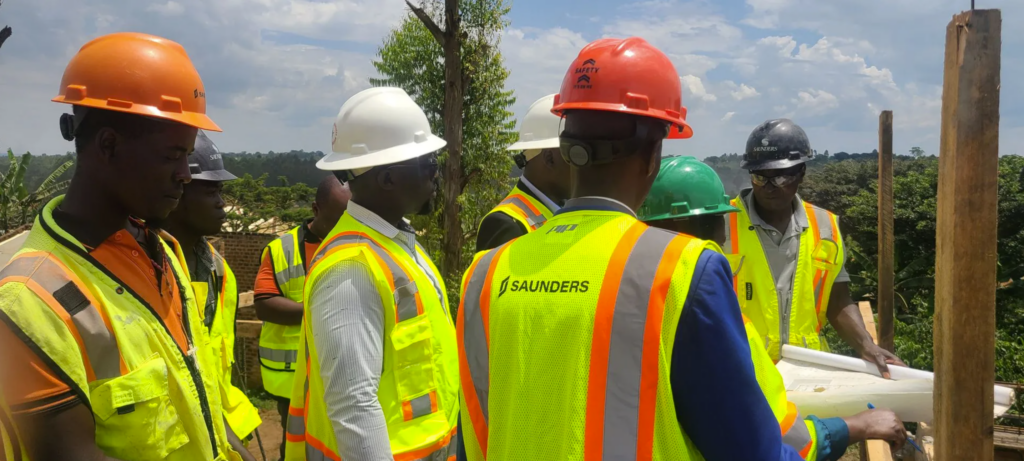
Patrick experienced this firsthand while in Uganda in 2017. He was worshipping at the Cathedral in Mityana one day and met some young people there. They were mostly teenagers with some who were in their 20’s who needed work. What they shared in common is that they hadn’t had the opportunity to go to school. Patrick listened to their stories and afterwards he asked himself, “What can I do to help? How can I begin to address this situation?” He also heard how many of these young men’s friends were migrating to urban areas in Uganda with no skills, but in search of work. Many were making the wrong choices and getting in trouble.

Patrick’s Call

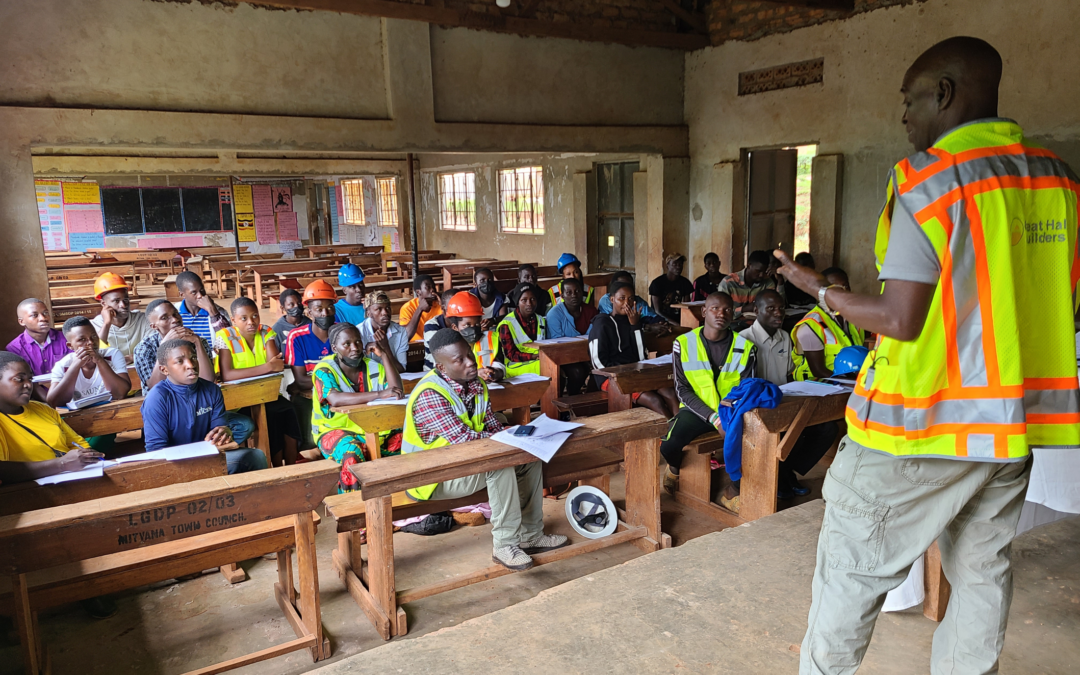
Patrick realized that the Lord had blessed him with a family and a good job in the United States. He’d had an opportunity to go to school, acquire skills, and even apprentice in the U.S. Yet he had continued to travel back to his homeland to visit family and friends. One day while in Uganda he found himself in the town of Mityana where God began laying in front of him an opportunity to help those in need. God didn’t ask Patrick to start something he didn’t know how to do. He called him to start the same kind of relational apprentice program that brought young men into fellowship with one another centered on the Gospel and learning a trade together. He began the program in 2017 and designed it so that it took three years for the participants to complete. They began by learning the fundamentals: How to use a carpenter’s square and a tape measure, and they progressed from there learning how to use power tools, work with concrete, masonry, rebar, to conduct field surveys, read blueprints, render plaster and many other skills. They took field trips to building sites. In their third year they put their skills to the test by building the Naama Maternity Clinic, and with just apprentices and other workers and with Patrick travelling back and forth to train and oversee, they completed construction in 2021.
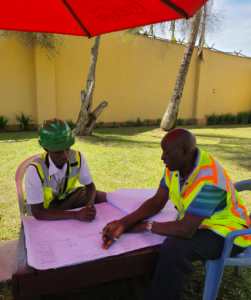
The fruit of all this vocational training is the Lord’s doing. The Diocese of Mityana benefits the community with new healthcare capacity. The people of the region benefit with better health outcomes. Healthcare professionals benefit from gainful employment by treating the sick. The young apprentices benefit by learning skills as part of a trade that will help them become self-sufficient. And Patrick – how does he benefit? Patrick says, “The Lord led me in all of this, and has surrounded me with people who have been willing to help me. It has been the highlight of my life. Hard work, travel, and many long hours, yes, but to see young people come alive to Jesus and to make fishers of men themselves while learning how to build with skill, integrity and hard work in supporting themselves and their families – that has brought me such joy and gratitude to God. All glory to him! He has been so, so good to me, and I know he has many, many more good things in store for his faithful people in Uganda.”
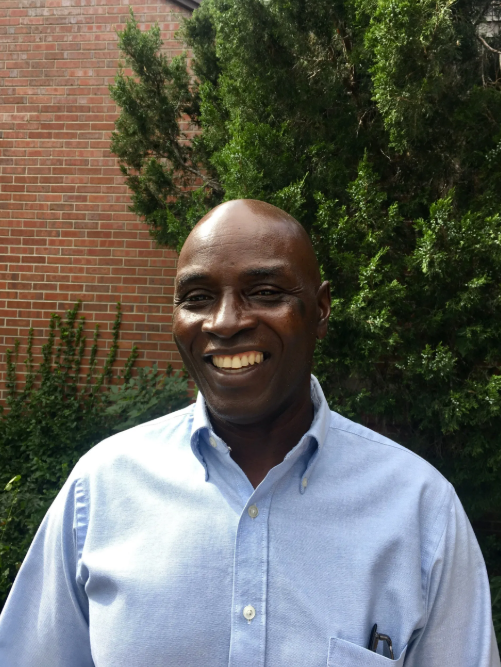
 

Patrick Lutalo is called to fulfill Jesus’ Great Commission by spiritually mentoring young people as they learn construction skills. He moved to the United States for higher education and began a career in the construction industry. As he reflected on the poverty and hopelessness of many youth in Uganda, God inspired him to share his skills in his home country in the context of Christian discipleship. With the support of his church family in Colorado, of which he has been a part since 1993, Patrick started the non-profit Teach Men to Fish. The program focuses on spiritual growth of young people to bless their community with hard work. As he equips young people to live a responsible life, he exhorts them to share with others instead of accumulating wealth. He does not want them to miss out on understanding the inheritance of the kingdom of God. Patrick travels to Uganda for three months annually. He is husband to Miriam and father to Edith, Jennifer, Abigail, and Isaac.

Learn more about Patrick 

Teach Men to Fish website

Donate to help support healthcare and young apprentices in Uganda
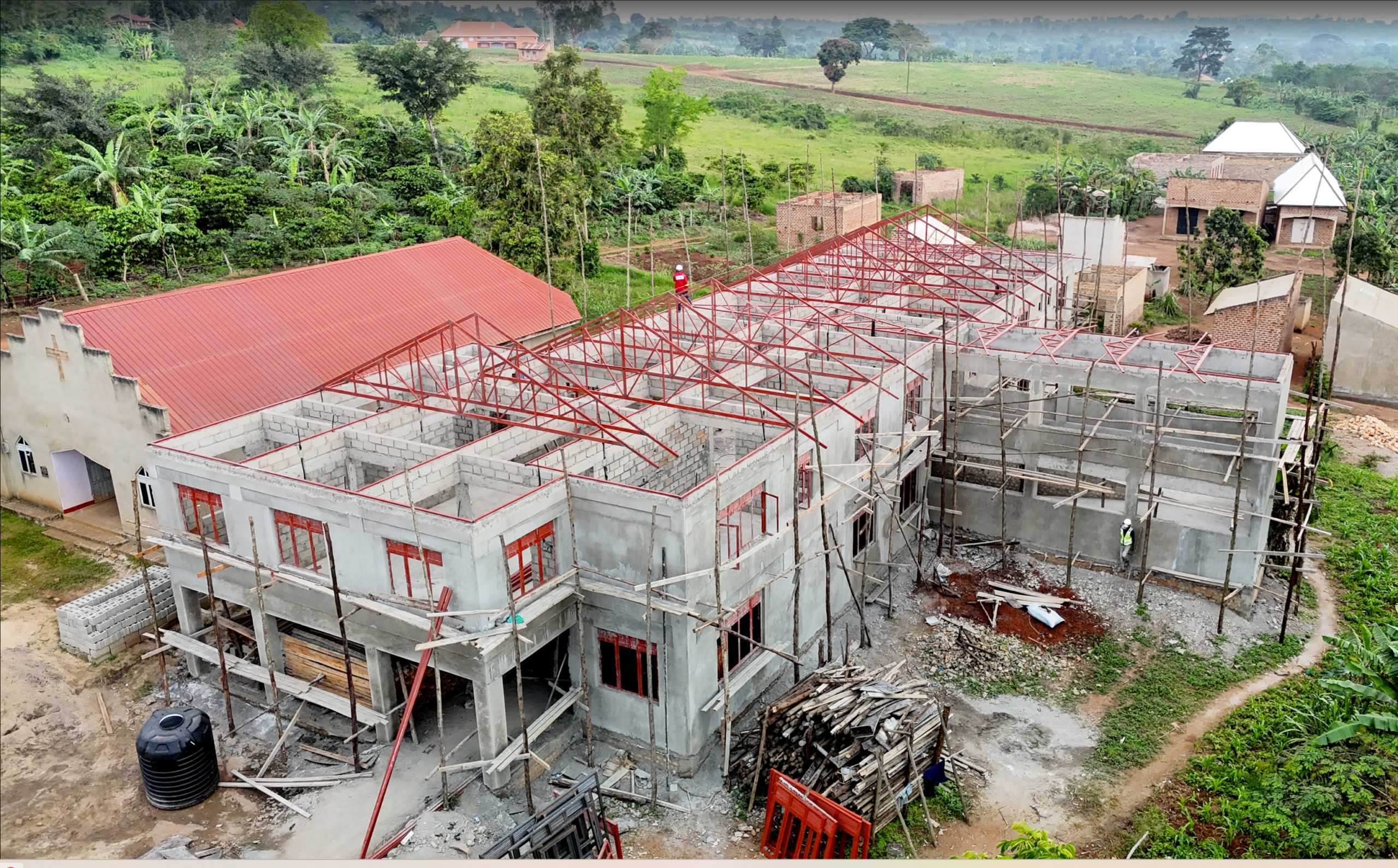
 

Exterior wall plastering, windows and roof truss construction underway last year (2025) of the Outpatient Healthcare Center
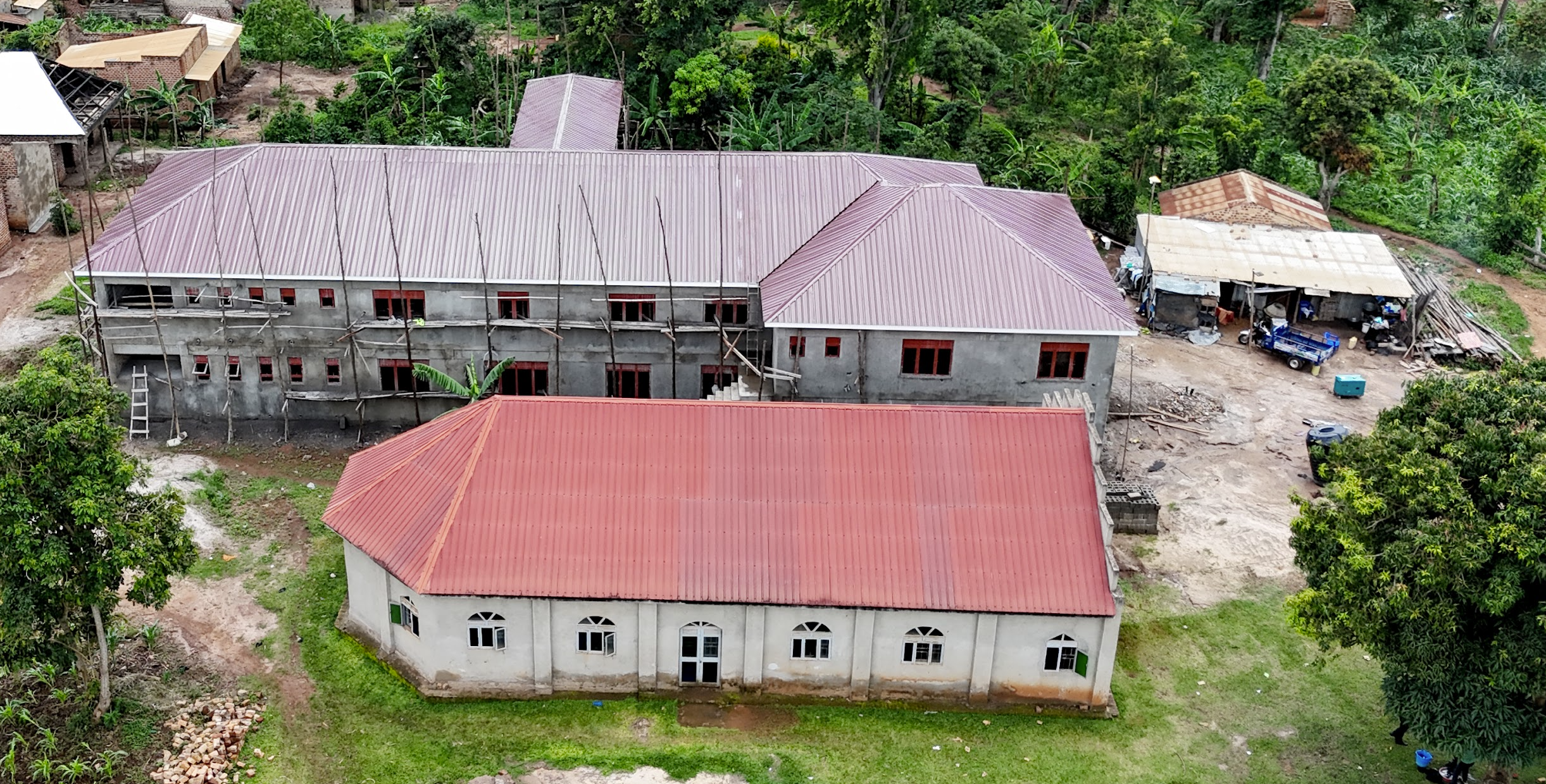


In October last year the Diocese, workers, community leaders, and people from the area celebrated the topping off ceremony when the final roof panel was placed. In 2026 workers are concentrating on all of the interior finishing work.
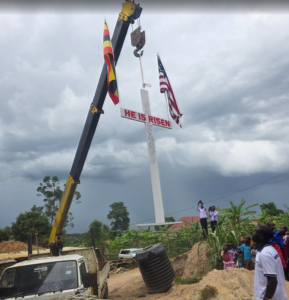


“Topping Off” ceremony October 2025 where the US and Ugandan flag and the cross of Christ are placed on the Healthcare Center
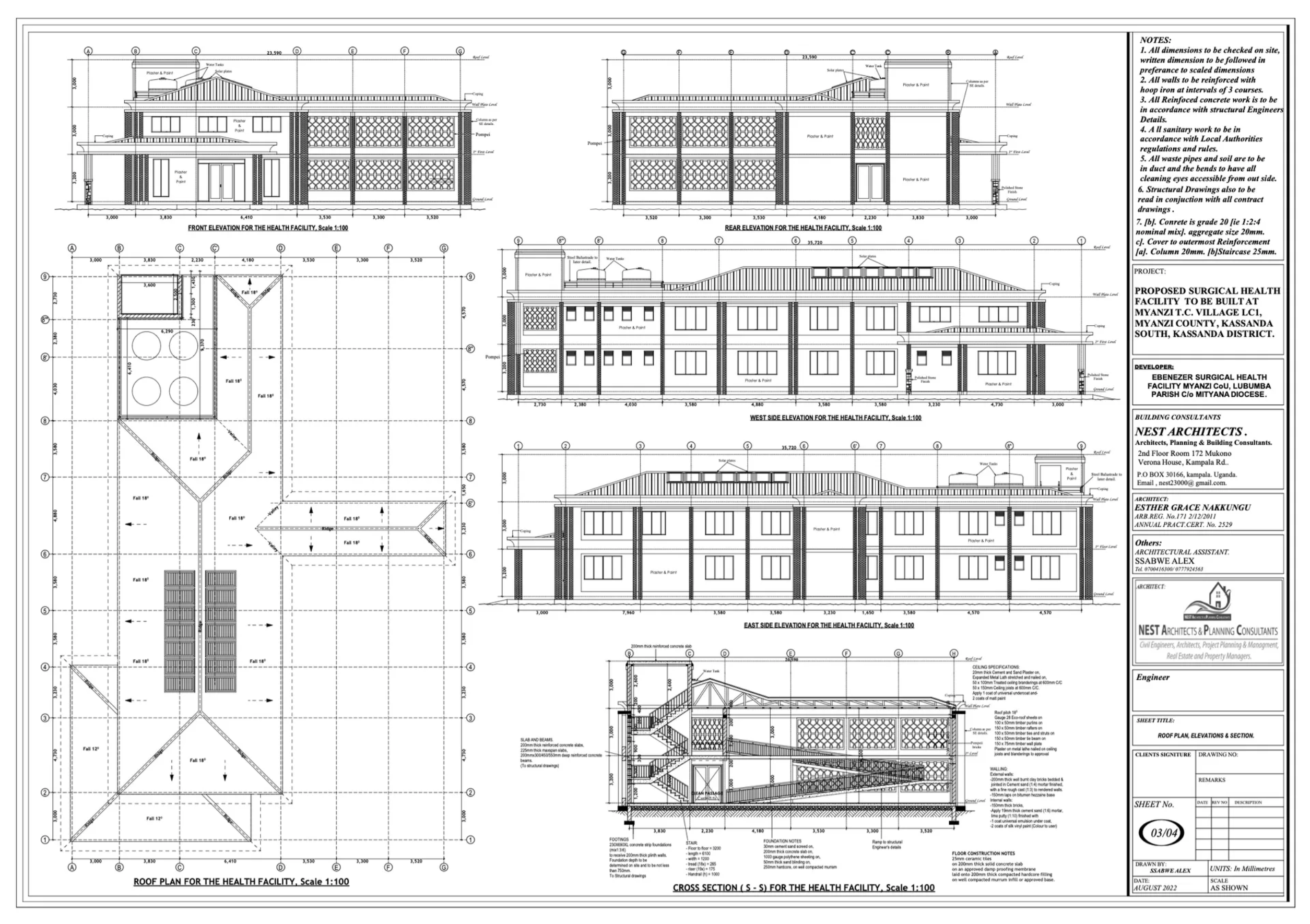


Architectural plans of the Outpatient Healthcare Center
Over 30 years of International Ministry Experience Added to SAMS Home Staff

Over 30 years of International Ministry Experience Added to SAMS Home Staff

Society Catalyzing Growth in Sending and Supporting Missionaries

by Stewart Wicker, SAMS President and Mission Director

This summer SAMS is undergoing some exciting transformations, and by God’s grace our capacity is growing.  SAMS Missionaries Wade and Chelsea Weeldreyer are joining the home staff and are launching into a new ministry in their role as Co-Directors of Missionary Care and Mission Engagement. The Co-Directors will empower potential missionaries, candidates, and missionaries to join with God in His global mission. They will also resource Anglican Churches as they raise up and send these missionaries throughout the world.

As Co-Directors, the Weeldreyers will be focused on missionaries, supporting the servants who share the Gospel of Jesus Christ in word and deed across cultures. They will also seek to encourage churches and all senders to go deeper in their mission callings.Wade and Chelsea bring complementary gifts and experiences to this role combined with a clear passion to multiply ministry through fostering missionaries who make disciples of Jesus, who, in turn will make more disciples.

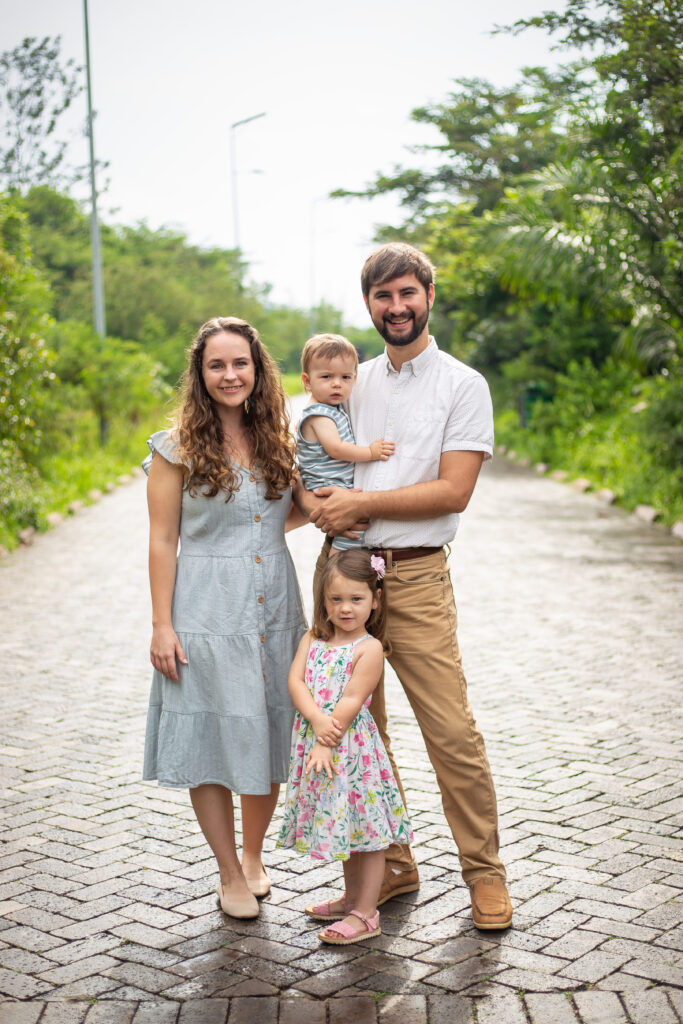
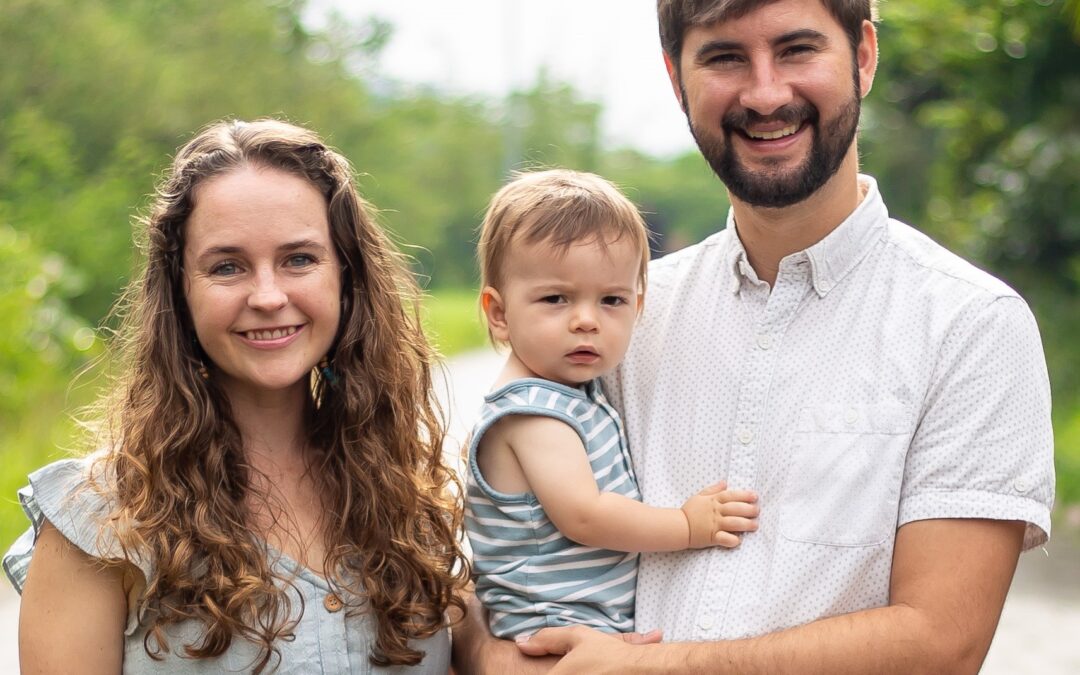
Wade and Chelsea concluded their initial missionary term in Kigali, Rwanda, two weeks ago.  Wade served as a lecturer at the theological college of the Anglican Church of Rwanda. Chelsea came alongside the Rwandan-led ministry Word Made Flesh, reaching out to vulnerable women and children in the name of Christ.  Wade holds a Master of Divinity and Chelsea a Master of Arts in Intercultural Studies. They both have international experience beyond Rwanda–and met each other in Israel in 2015.  They were sent by their church in Highwood, IL, in 2022 with their one-year-old daughter Evelyn. Now “Evie” has a one-year-old brother William.

Wade and Chelsea will complete a brief Home Ministry Assignment and begin their second missionary term with your Society in their new role on August 1, serving as Missionaries on the Home Staff Team.

Learn more about Wade and Chelsea in this feature article of SAMS Messenger

Consider supporting Wade and Chelsea’s missionary ministry on SAMS Home Staff Team

COVID-19 Call to Prayer for Mission & Missionaries

COVID-19 Call to Prayer for Mission & Missionaries

A special message and extraordinary entreaty for prayer from Stewart Wicker, SAMS Mission Director:

“Keep your eyes fixed upon Jesus,” prayed Seth, after he shared with me the story of Peter walking on the water toward the Lord. As the waves of pandemic are raging across the world, my friend Seth and I prayed together this morning to respond in faith and for God’s merciful intervention in the troubled times we face. Also, I am laying before God’s throne the multitudes whom your missionaries work among, whose present extreme vulnerability lays them bare to yet another threat we collectively face. Would you join us in prayer for the spiritual and physical healing of the nations?

Your missionaries continue to minister through the doors that God opens to them. As they serve in places of risk and sacrifice, I am reminded in this season of Lent that the way of the cross is an other-centered life, even unto death. Would you join us in prayer for your missionaries sharing the love of Jesus with those in need of good news? Pray please for those who are missing community, feeling stranded, quarantined, or going through grief—especially those who have had to leave with little time to prepare. Pray for those who have difficult decisions to make because of these unprecedented circumstances.

Our home staff team has stepped up incredibly to come alongside your missionaries, though almost all of the team is working remotely now in order to protect all in our communities. We monitor the ongoing crisis as most short-term missionaries return to the USA and long-term missionaries adjust to new circumstances in their respective countries with a few needing to return for the time being. As we communicate via phone and computer to pray and coordinate care for the extraordinary needs of missionaries, would you please pray for Denise, Nita, Julie, Dana, Kate, Liz, Howard, Kristen, Lynn (retiring this week after 30+ years!), and me?

In this time when we may tend toward discouragement, may we together hold on to encouragement in the Lord calling upon his name. We invite you to join your SAMS family for Noonday Prayer on Thursdays via a ZOOM conferencing call for the next few weeks, starting March 26, 12:00-12:15 PM EST. Please email kateulrich@sams-usa.org to receive an invitation and instructions for phone dial-in or computer connection. Use the instructions to join the call around 11:55 AM, to pray a brief liturgy and to intercede before the Lord.

Our staff will also be praying together via ZOOM every weekday, and we would love to pray for you during those times. Please feel free to submit prayer requests on our website, email them to info@sams-usa.org or call Nita at 724-266-0731 (8:30 AM – 4:30 PM EST).

I thank God for each of you. Your Society is praying for you:

Prayer for Trustfulness in Times of Worry and Anxiety, Book of Common Prayer 2019
Most loving Father, you will us to give thanks for all things, to dread nothing but the loss of you, and to cast all our care on the One who cares for us. Preserve us from faithless fears and worldly anxieties, and grant that no clouds of this mortal life may hide from us the light of that love which is immortal, and which you have manifested unto us in your Son, Jesus Christ our Lord. Amen.

God is our refuge and strength,
a very present help in trouble.
Therefore we will not fear though the earth gives way,
though the mountains be moved into the heart of the sea,
though its waters roar and foam,
though the mountains tremble at its swelling. -Psalm 46:1-3 (ESV)

May our Good Shepherd be with you, rescuing, protecting, and comforting.

Stewart Wicker,
Mission Director

Daily Life

Missy here. This is a long post. Therefore, I understand if you want to jump to the IMPORTANT stuff at the bottom!

If you look at all the pictures Evan posts, you might think that we are on a year-long vacation (and I realize that Belize is a tourist destination), but the work we are doing is very real and, for me at least, it is sometimes quite intense. So, I’m going to share with you our weekly schedule after some other tidbits. If you aren’t interested in the schedule – no worries – but for those wanting a deeper feel of the rhythms of our lives, here it is.

Annabelle said to me the other morning, “it’s better living in Belize than the States, right Mom?” I replied as I often do in these sorts of situations by saying, “In some ways.” I asked what she was talking about and she described walking to school without a winter coat and instead being in our short sleeves, looking at all the greenery and bright flowers, and that we get to walk everywhere and we’re in better shape. I didn’t point out that we were walking down a dirt road, past some shacks (and some nicer houses) or the many other ways that the States would be considered “better.” We often discuss how in some ways Belizeans are quite environmentally conscious – like reusing all manner of things and parts of things – and sometimes not so much. It’s all a matter of perspective.

The following morning Annabelle said that she likes school
now that we’ve had a weekly routine for a few weeks and she’s adjusted to it.
It’s surprising in a lot of ways, but she does seem to actually be enjoying
school more than she did in the States. She still asks about homeschooling
sometimes and is still showing signs of anxiety around school in different
ways, but she doesn’t resist going like she would at times back home. The school
pace is really rigorous and there is an emphasis on handwriting that was
initially quite hard for her, but she says she’s gotten used to that. We’ll
have to send a picture of her handwriting sometime because it’s quite
remarkable how neat it is.

Another thing Evan and I are still getting used to is that
Annabelle’s school schedule is quite different. In the States we would have
almost 7 hours between drop-off and pick-up. Here, however, one of us has to
meet her for her hour-long lunch break every day. We live close to the school –
which is a very good thing – since it’s a lot of back-and-forth. It does,
however, also mean that one of us has to plan on not working for several hours
straight. We get about 3 hours in the morning when we can both get things done
and then it’s hit or miss. It is helpful that I’m working with her school
seeing kids and parents and some folks from the community.

Sunday: Church is
at 8am. Since Evan helps lead the music, he gets down there at least by 7:30am
these days. We usually end up home around 10am and then have a relaxing
morning. Once we went to St. Hilda’s with Fr. David and Ms. Mary Beth for that
service, and occasionally we will join them there although this makes for a
very long day and lots of sitting still on hard benches for Annabelle.

The afternoon is spent relaxing and getting ready for the
week because Evan heads back to church for the evening service around
Annabelle’s bedtime. He will start to lead the music for that service in a
couple more weeks.

Monday: 8:30am –
Drop Annabelle at school (I timed it and this whole process can take about 30
minutes). I meet with students/families at St. Andrews School (where Annabelle
attends) OR make phone calls and try to follow up with parents and organize my
week.

Soon I will have to start working on my continuing education
for my license during some of these morning times.

11:45am-12:45pm – Get Annabelle for lunch, try to make sure
she eats enough and gets washed up, and then it’s back to school. Sometimes
these lunch hours feel long and spacious and other times rushed.

12:45pm-2:30pm – Meet with our mentors, SAMS missionaries
Fr. David and Ms. Mary Beth, about our work here and what they need from us and
to answer any questions. While this is our formal time of meeting with them we
try to spend time with them at other times too.

After school and getting Annabelle home it’s usually close
to 3pm and we spend our time working on homework, eating a healthy snack, or
running errands if she has been told she needs anything for school the next
day. Daily homework that is due the next day has been a new thing for us. In
the States she had weekly homework and she was often resistant to working on
it. Interestingly, here she will often buckle down and try to get it done.
Sometimes she has three assignments due the next day. Like I said, rigorous.

Tuesday: See
Monday morning

12:45-2:30pm – Meet with more students and families as
necessary

Tuesday afternoons Evan meets to work on practicing and
preparing music for Sunday and then he teaches his guitar class so Annabelle is
definitely my responsibility. While Evan has been really enjoying teaching the
guitar class it is actually quite helpful to the kids too. One Mom even called
Evan after the first lesson her son went to thanking him because she has been
worried that he’s headed down a path of poor choices and this has given him a
new focus. We see him all over town riding his bicycle and he’ll stop and talk
with Evan. There is a noticeable lack of engaged men in the lives of many of
the children here and Evan fathering Annabelle, teaching the guitar class, and
engaging with many of the kids is beautiful. You can see the look of yearning
on many of their faces when he talks with them. We have learned that 60% of
Belizeans are under the age of 25. You can imagine all the implications of a
statistic like that.

Wednesday: These
are my long days. I either drop Annabelle off at school and catch a motorcycle
ride with Evan or leave before Annabelle goes to school so I can catch a bus. I
usually spend anywhere from 10-30 minutes waiting for a bus and then the bus
out to St. Barnabus or St. Hilda’s takes about half an hour. It only costs $1
which is nice. St. Barnabus and St. Hilda’s are the two other Anglican schools
that Fr. David oversees. St. Hilda’s is also an Anglican church. I have had to
walk between the schools before and it is beautiful and hot, even using an
umbrella to shade me from the sun. It is about a half hour relatively flat walk
and is a great chance for me to pray for this land and the people in it –
particularly those I’m meeting with. I pass Galen University and University of
Belize Central Farm campus, Mennonite fields of corn and other crops, cows, a
few houses and little shacks selling things.

The area where St. Barnabus and St. Hilda’s schools are
located is more rural and has a reputation for more crime and family
dysfunction. And these realities are reflected in my work there.

The trip back to San Ignacio means either waiting under a
hot bus shelter for a bus which can take anywhere from 30-45 minutes of waiting
or asking if Evan can drive out to pick me up, or once I was randomly offered a
ride by two single moms with their kids in a truck where none of the gauges worked.
They were very kind and dropped me right off by Annabelle’s school. I think I’ll
need extra deodorant on these days over the next few months as this is a long
hot one.

Thursday: Thursday
is my most flexible day as I’m usually in town and can meet with St. Andrews
families or do some of the many other things that need to be done.

Friday: Annabelle
gets released at lunch time on Fridays so we pick her up at 11:45am. While this
means we only have about 3 hours to get anything done it is really nice because
it feels like we get to start the weekend early with her. I often have parents
who want to meet on Friday morning because that’s the only time they are
available. Needless to say, my morning goes quickly. Last week I meet with 4
students and family members over the 3 hours.

Saturday: I think you all know by now that Saturday has been designated Family Fun Day – which is where most of Evan’s photos come from.

There are countless aspects to my work here which aren’t
reflected in this sort of schedule – like all the meetings and documentation
submission to the Ministry of Health (in the capital), the Ministry of
Education (in the next town over), The Department of Labour (the local office
and in the capital), the Income Tax Department, and three visits (so far) to
two different Immigration offices neither of which is in our town. And all
without a car. Our decision not to get a car is one we intentionally made, but
it has certainly made some things more challenging. Of course, it requires an
intentionality to what we do and it has also helped us to slow down which has
been very good. There are many reasons we are here living and serving in
Belize. Some altruistic and noble and some selfish. We definitely didn’t want
to come here to burn ourselves out and are trying to be thoughtful about living
more slowly, gently, and healthily.

I have also met with the local psychiatrist who spends half
her time here and half in the capital. She is a visiting Doctor from Cuba and
only speaks Spanish so her coworker had to translate for her. I also met with
the psychiatric nurse who is Belizean and has been around for some years and
knows all the ins and outs of working in this area. The psychiatrist and nurse
actually go out into the community to find homeless people if they have mental
health issues to make sure they have their medication.

And I went to the police station to meet with the Domestic
Violence Officer who is the one I report abuse and neglect to. I felt I needed
to talk with her after hearing a lot of what I would normally consider
reportable things in the States. She was helpful and clarifying. These are
amazingly dedicated Belizeans who work tirelessly, not only in San Ignacio, but
the entire Cayo District and work 8-5 but are on call all the time. They deal
with a lot of emergency situations with people who have schizophrenia, bipolar
disorder, other psychiatric issues, domestic violence, sexual assault, child
abuse, and neglect. They were very excited for me to be here and they all keep
reminding me that there are no other
counselors of any sort in the District at this time
. There was a District
School Counselor but she left at the beginning of November. Thankfully, Fr.
David has encouraged me to focus on the three Anglican Schools, but everyone
wants to refer to me once they find out what I do. We’ll see. I am prepared to
tell people “no” as necessary. I’m certainly not planning on going out on
mental health emergency calls. Actually, the police officer told me that
everyone really likes it when folks come from other countries because everyone
here is so worn out from doing this sort of work all the time. She encouraged
me to make sure I keep self-care as a priority. 😊

With doing so much walking everywhere we run into church folks and Annabelle’s classmates daily. They all love her and love to yell her name (one really likes to call her “Annabella”). There is little anonymity here which is uncomfortable for me, but can also be beautiful. One has to walk the walk or everyone knows it. We are getting into the loving our neighbors thing in a different way. We regularly talk to our neighbors (often from our porch which everyone is jealous of) and when we are walking to the grocery store (side note – it took 4 different grocery stores to find margarine the other day – butter is rarer and much more expensive). Grocery shopping is never a one-stop thing.

THE IMPORTANT STUFF

Great News – I got my Temporary Work Permit through
Immigration. For anyone who cares, this allows me to volunteer not actually
make any money working. The same will be true for Evan. Unfortunately, despite
the fact that he applied a month before mine, his has needed to be appealed
through no fault of his. Pray that his work permit can come through.

Great News – If you read the above then you already know
this but Annabelle is really enjoying life here. We are still having bumps and
she is still showing some anxiety symptoms, but when she talks about life here
she is very positive. She loves taking the bus and seeing the countryside and
the people-watching too. She also really enjoys riding the motorcycle and I
think we’ve both been impressed with how safety conscious she is about it.

Great News – Now that we’ve been here over two months (10
weeks!) I think we’re all relatively adjusted to a lot of things – not
everything of course, but most of the daily stuff. We are all finding things we
really enjoy and we’re feeling more comfortable in relationships. While we
might still be in the honeymoon phase of cultural adjustment, I think that it’s
gone far more smoothly than I expected. There are only little things so far
that we miss about the States, like being able to flush toilet paper, but we
certainly miss our friends and family more by far than missing any conveniences.

Please continue to pray for our little cottage and the
heating situation. It is not easy to deal with from a distance and a lot of the
burden falls on Evan.

Please pray for the children here. While I often heard hard things in the States in my work, it was most often from adults who were distant (at least in years) from their trauma and it is difficult to hear while the children are still stuck in some traumatic and painful situations.

Stay tuned for the exciting news about Chewie!

From every tribe, every tongue and every nation…

From every tribe, every tongue and every nation…

One of the most intriguing and different parts of life in Africa is the abundance of different languages. In Uganda alone, there are more than 30 languages spoken. I live in Mukono, near Kampala, the capital, where many people from around the country have moved to this area to work. Most it seems also keep in contact with relatives in the village they are from, go back to visit, have second homes in the village (for those who can afford it), and also continue speaking their tribe’s language, teaching it to their children at home. Most people at Uganda Christian University and other professionals here speak English and Lugandan in addition to their native tribe’s language. Many times here, friends have asked me what my language is where I’m from. They are surprised when I just say “English”. I try to share some of our Texan modifications, but “Howdy” and “ya’ll” seem to pale in comparison to the rich variety of languages in Africa.
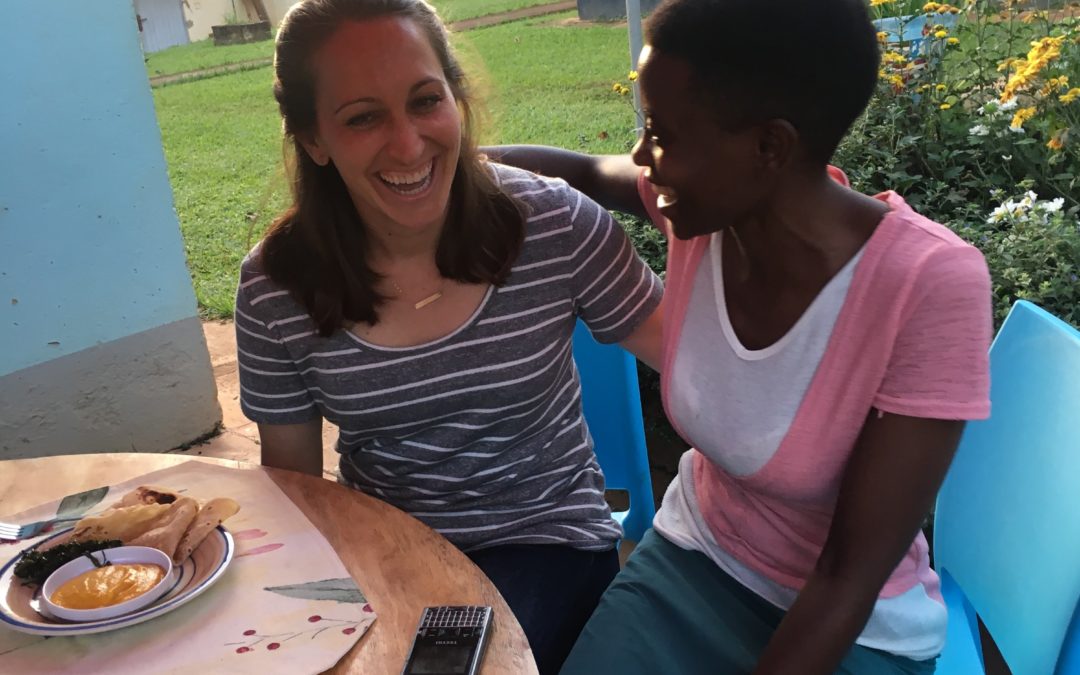
The other night, I was blessed to be invited for dinner at another lecturer’s home with his family. We had delicious traditional food, watched a World Cup game, and enjoyed good conversation. After we finished eating, I was asking about which area of the country they are from and about the language spoken there. The family’s 5 year old daughter was an eager teacher when I requested to learn a few words. She would say a phrase, then I would try to repeat. After a time or two of that, giggling, she exclaimed “she’s saying it wrongly!”. But her persistence to teach me didn’t stop there. By the end, she was walking me through the phrase syllable by syllable, “counting” on my fingers as she went for emphasis! The whole group had a lot of laughs. What a fun family dinner!
A good friend who also works at UCU has been helping me to learn some Lugandan words mpola, mpola (slowly, slowly), but this afternoon, I got a chance to expand my horizons to another language too. Our neighbor and her husband are from Western Uganda where they speak Runyankole. As we enjoyed a cool late afternoon on our back patio, she taught me some phrases. Greeting: Hello, how are you? – Agandi  / Reply: I’m fine – Nimarungi Thank you very much – Webare munonga God is good – Mukama nimurungi  – All the time – obwire bwona Because that is his nature wow – ezo nizo mberaze My Friend – munywani wangye I even got to learn a few short songs in Runyankole. They go like this:
Yesu nankunda, Yesu nankunda, Yesu nankunda, ahakuba ndyowe “Jesus loves you, Jesus loves you, Jesus loves you because you are His.”
Ruhanga akantorana… ntine karungi kona. Yanyekundirawenka yanyozyahoebibi mbwenunka…marayonta ibanja…ryangyeryona “God chose us even when we had nothing good in us. He washed away all my sins. How can I ever repay my debt?”
As I meet all these new friends, many with different native languages, these verses come to mind.
Therefore God exalted him to the highest place and gave him the name that is above every name, that at the name of Jesus every knee should bow, in heaven and on earth and under the earth, and every tongue acknowledge that Jesus Christ is Lord, to the glory of God the Father.” Philipians 2: 9-11
After this I looked, and behold, a great multitude that no one could number, from every nation, from all tribes and peoples and languages, standing before the throne and before the Lamb, clothed in white robes, with palm branches in their hands. And they cried out in a loud voice: “Salvation belongs to our God, who sits on the throne, and to the Lamb.” Revelation 7:9-10
What a beautiful day that will be when every knee bows and every tongue, from every tribe and nation and language, confesses that Jesus Christ is Lord! As we who know Christ as our Savior long for that day, may we be bold in faithfully proclaiming the Gospel that none should perish! “The Lord is not slow in keeping his promise, as some understand slowness. Instead he is patient with you, not wanting anyone to perish, but everyone to come to repentance.” 2 Peter 3:9