Teaching Men to Build (and Fish)
Ugandan Healthcare Projects Advance thanks to Apprentices Guided by Good Leadership
For the past nine years Patrick Lutalo, a Denver-based commercial carpenter and a SAMS Bridger, has spent many nights huddled over blueprints while on a video call with his construction workers and apprentices working in Uganda. This close coordination has been the key to his leading others in the work to construct the kind of healthcare facilities that are much needed in this rural part of sub-Saharan Africa. Patrick and his team of construction workers have been so busy building its meant that Patrick travels back to his native country up to three months out of the year. In partnership with the Church, Patrick’s organization has already completed a maternity clinic near Mityana, called the Naama Maternity Clinic, a much-needed facility in a country that annually tops the ranks with some of the highest birthrate populations in the world. In its first year of operation in 2022, the clinic had already helped mothers deliver over 400 children there, and today it is in constant use.
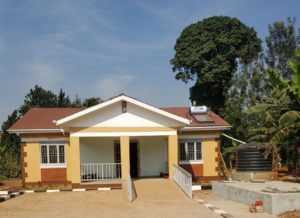
Naama Maternity Clinic was finished in 2022. It is in constant operation today.
Outpatient Healthcare Center
Today Patrick and his team are beginning the final phase of a building project to construct the 18,500 square foot, two-story Outpatient Healthcare Center in nearby Myanzi. It’s been a three-year project that Patrick and his team of workers plan to finish in December 2026. The ultimate goal of the facility is to serve the surrounding rural communities with outpatient care in this region of central Uganda currently with a population of over 100,000 people. The Anglican Diocese of Mityana is partnering with Uganda Christian University to staff the healthcare center once it’s completed with nurses and other healthcare workers. It will provide and enable much needed preventive healthcare and annual exams, women’s healthcare combined with public healthcare, radiological and lab services, as well as immunizations and disease research.
Water and power needs
Even though the plans are to begin occupancy of the Healthcare Center this December, water and electricity are crucial next steps for the Center to be fully operable. Patrick and his team are currently looking for those with expertise in establishing a well-water system as well as a power system for electrical generation. There is no current piped water supply anywhere near the healthcare center, but fortunately, the water table in this part of Uganda is very high and so the team doesn’t anticipate that finding water will be a problem, especially with the rivers and the Lake Wamala watershed close by. However, they are looking for someone with the resources and the expertise to construct a well water and filtration system to connect to the hospital’s tanks.
Additionally, the healthcare center will require either an off-grid standalone Solar Photovoltaic (PV) system with battery storage or a hybrid system that combines solar panels with a backup fuel-based generator in order to reduce the size and cost of the battery bank, ensuring continuous power during low sunlight periods. Patrick and the board members of Teach Men to Fish, the non-profit enabling these projects, are seeking resources and expertise to build and install this kind of standalone power system.
Apprentices Sustain the Projects
Over the past 30 years Uganda has placed much emphasis on healthcare and education across the entire country. This has significantly improved health outcomes for many people, and the young people of Uganda are better educated now than they have ever been. And yet this has created a problem with many well-educated young people available and desiring to work and support themselves, but who cannot find jobs. Uganda’s economy simply can’t supply the kind of labor demand needed to employ its young people, regardless of their education level.
Patrick experienced this firsthand while in Uganda in 2017. He was worshipping at the Cathedral in Mityana one day and met some young people there. They were mostly teenagers with some who were in their 20’s who needed work. What they shared in common is that they hadn’t had the opportunity to go to school. Patrick listened to their stories and afterwards he asked himself, “What can I do to help? How can I begin to address this situation?” He also heard how many of these young men’s friends were migrating to urban areas in Uganda with no skills, but in search of work. Many were making the wrong choices and getting in trouble.
Patrick’s Call
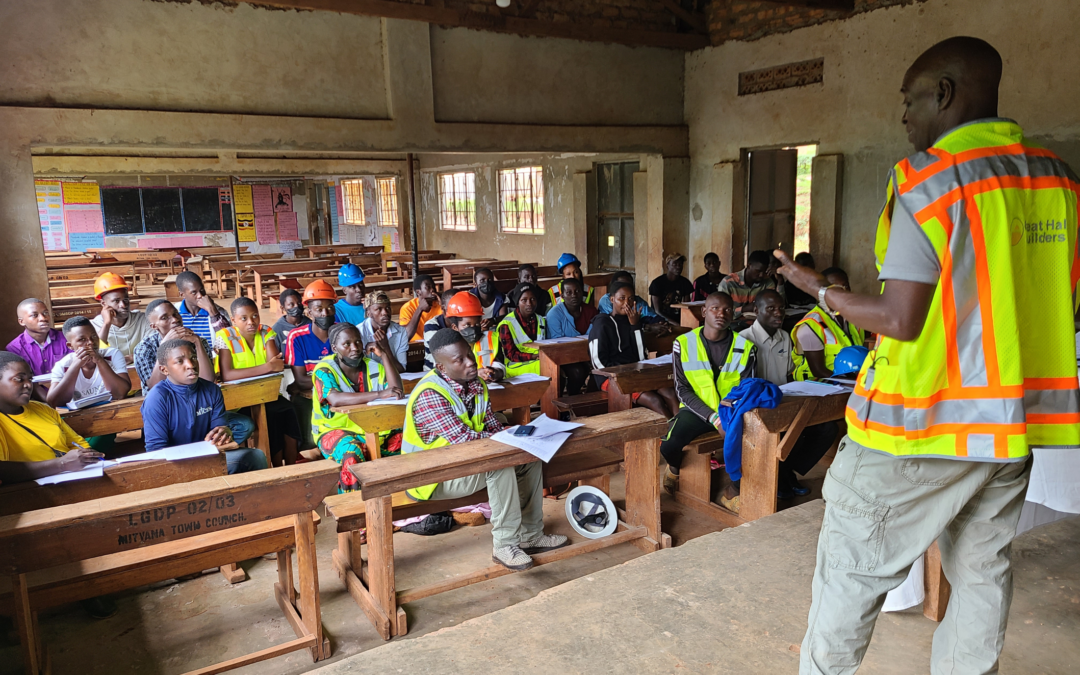
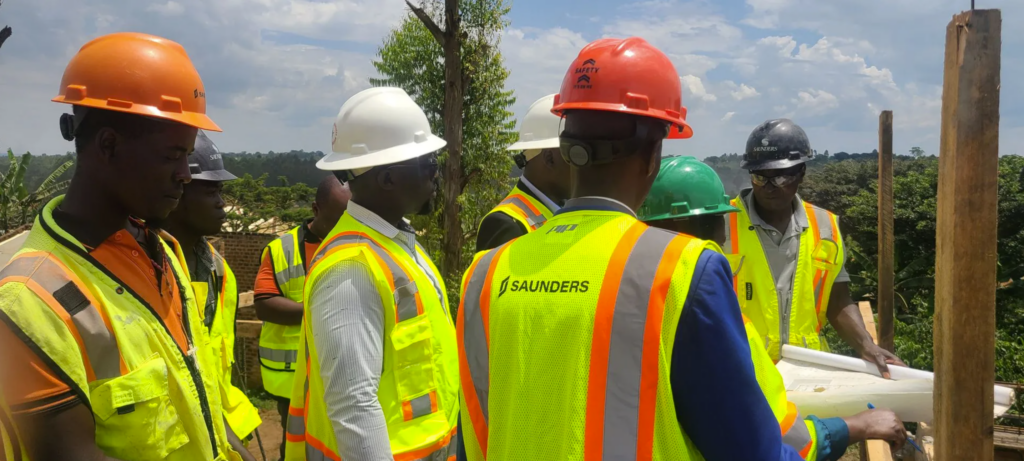
Patrick realized that the Lord had blessed him with a family and a good job in the United States. He’d had an opportunity to go to school, acquire skills, and even apprentice in the U.S. Yet he had continued to travel back to his homeland to visit family and friends. One day while in Uganda he found himself in the town of Mityana where God began laying in front of him an opportunity to help those in need. God didn’t ask Patrick to start something he didn’t know how to do. He called him to start the same kind of relational apprentice program that brought young men into fellowship with one another centered on the Gospel and learning a trade together. He began the program in 2017 and designed it so that it took three years for the participants to complete. They began by learning the fundamentals: How to use a carpenter’s square and a tape measure, and they progressed from there learning how to use power tools, work with concrete, masonry, rebar, to conduct field surveys, read blueprints, render plaster and many other skills. They took field trips to building sites. In their third year they put their skills to the test by building the Naama Maternity Clinic, and with just apprentices and other workers and with Patrick travelling back and forth to train and oversee, they completed construction in 2021.
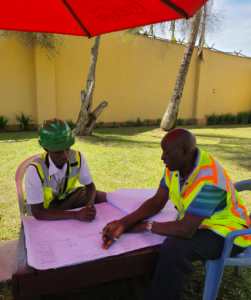
The fruit of all this vocational training is the Lord’s doing. The Diocese of Mityana benefits the community with new healthcare capacity. The people of the region benefit with better health outcomes. Healthcare professionals benefit from gainful employment by treating the sick. The young apprentices benefit by learning skills as part of a trade that will help them become self-sufficient. And Patrick – how does he benefit? Patrick says, “The Lord led me in all of this, and has surrounded me with people who have been willing to help me. It has been the highlight of my life. Hard work, travel, and many long hours, yes, but to see young people come alive to Jesus and to make fishers of men themselves while learning how to build with skill, integrity and hard work in supporting themselves and their families – that has brought me such joy and gratitude to God. All glory to him! He has been so, so good to me, and I know he has many, many more good things in store for his faithful people in Uganda.”
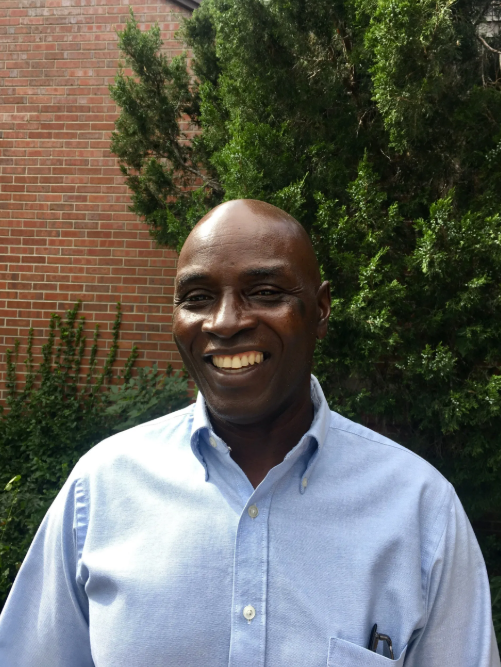 Patrick Lutalo is called to fulfill Jesus’ Great Commission by spiritually mentoring young people as they learn construction skills. He moved to the United States for higher education and began a career in the construction industry. As he reflected on the poverty and hopelessness of many youth in Uganda, God inspired him to share his skills in his home country in the context of Christian discipleship. With the support of his church family in Colorado, of which he has been a part since 1993, Patrick started the non-profit Teach Men to Fish. The program focuses on spiritual growth of young people to bless their community with hard work. As he equips young people to live a responsible life, he exhorts them to share with others instead of accumulating wealth. He does not want them to miss out on understanding the inheritance of the kingdom of God. Patrick travels to Uganda for three months annually. He is husband to Miriam and father to Edith, Jennifer, Abigail, and Isaac.
Donate to help support healthcare and young apprentices in Uganda
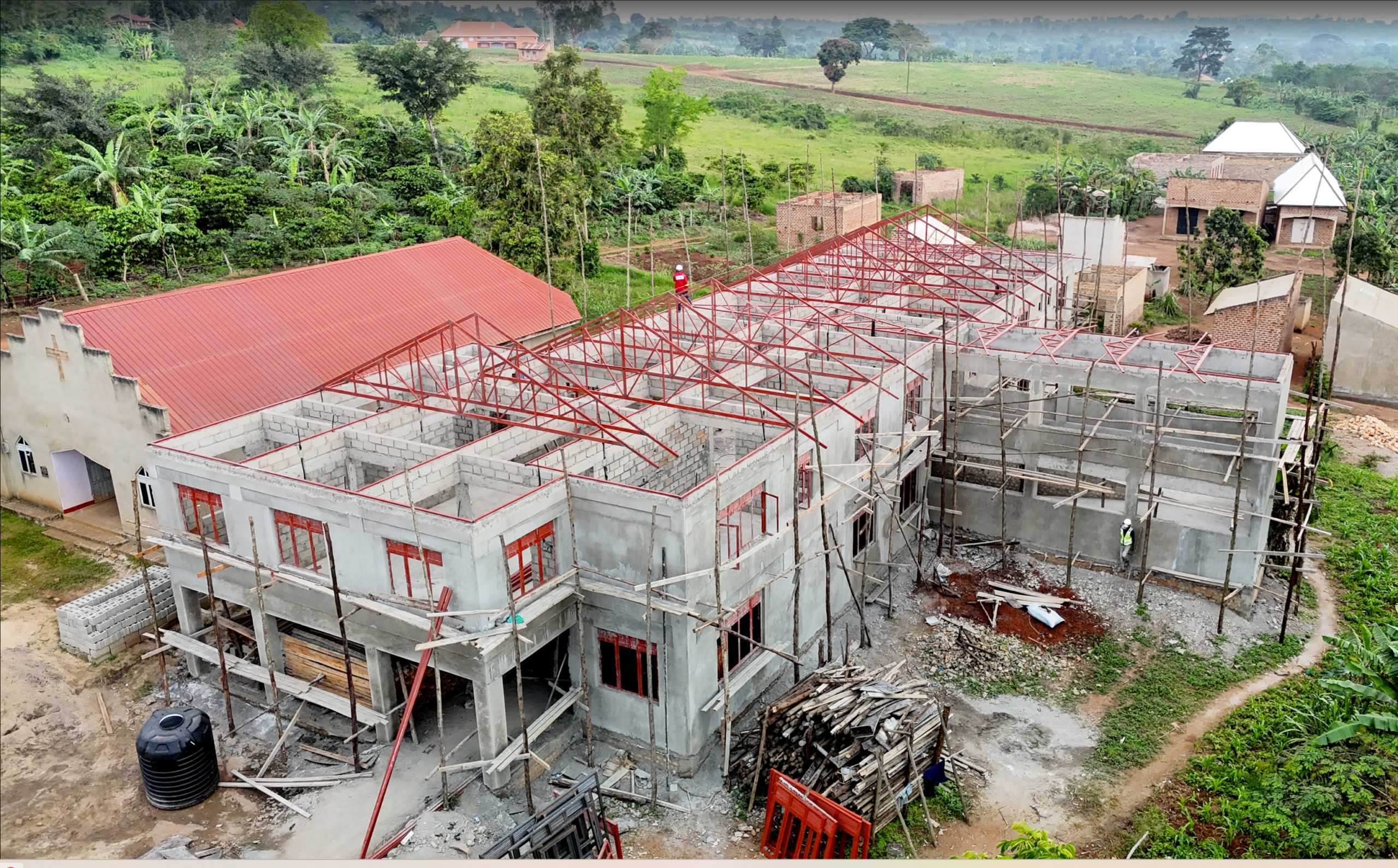
Exterior wall plastering, windows and roof truss construction underway last year (2025) of the Outpatient Healthcare Center
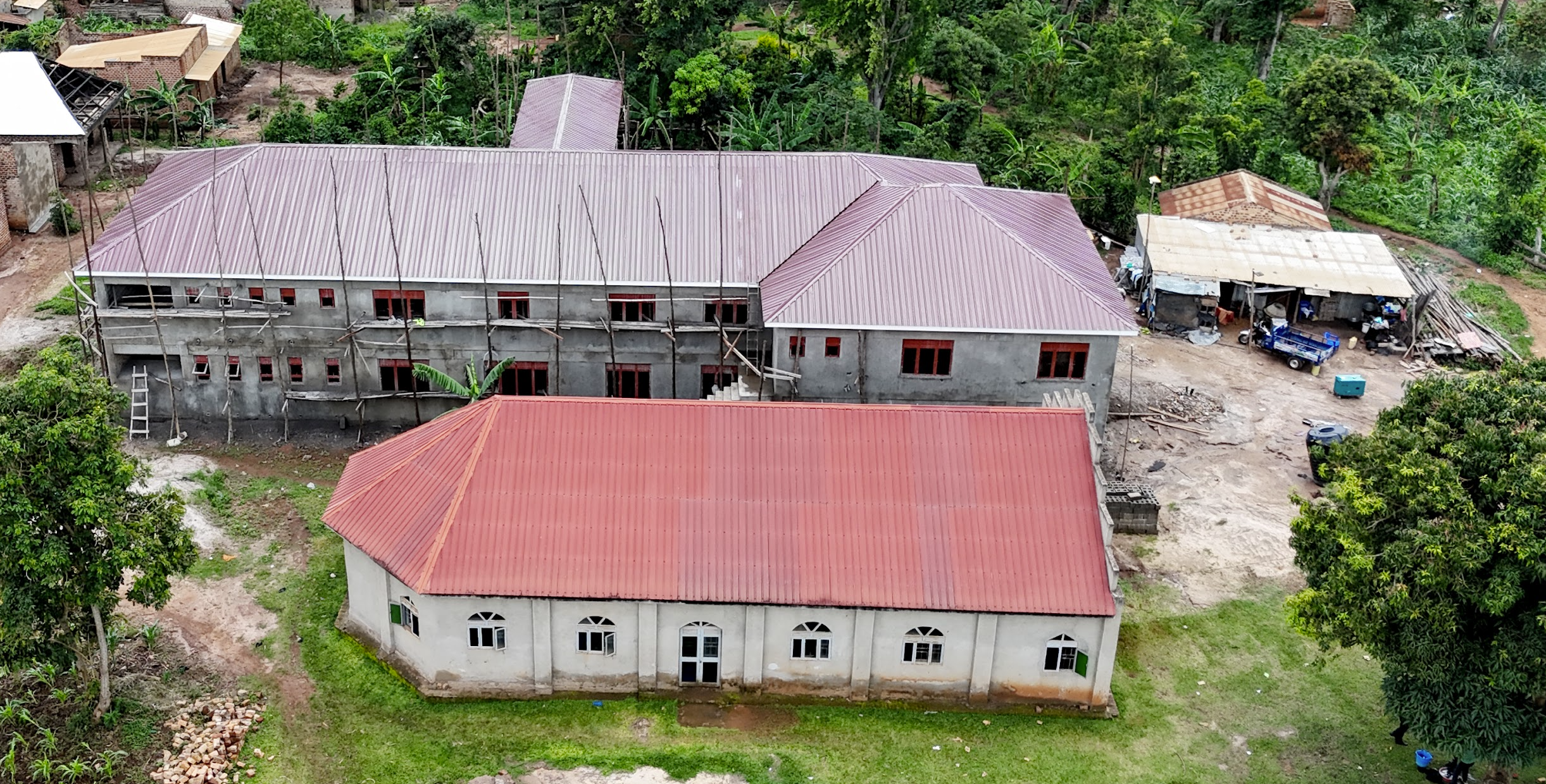
In October last year the Diocese, workers, community leaders, and people from the area celebrated the topping off ceremony when the final roof panel was placed. In 2026 workers are concentrating on all of the interior finishing work.
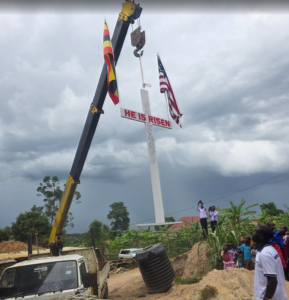
“Topping Off” ceremony October 2025 where the US and Ugandan flag and the cross of Christ are placed on the Healthcare Center
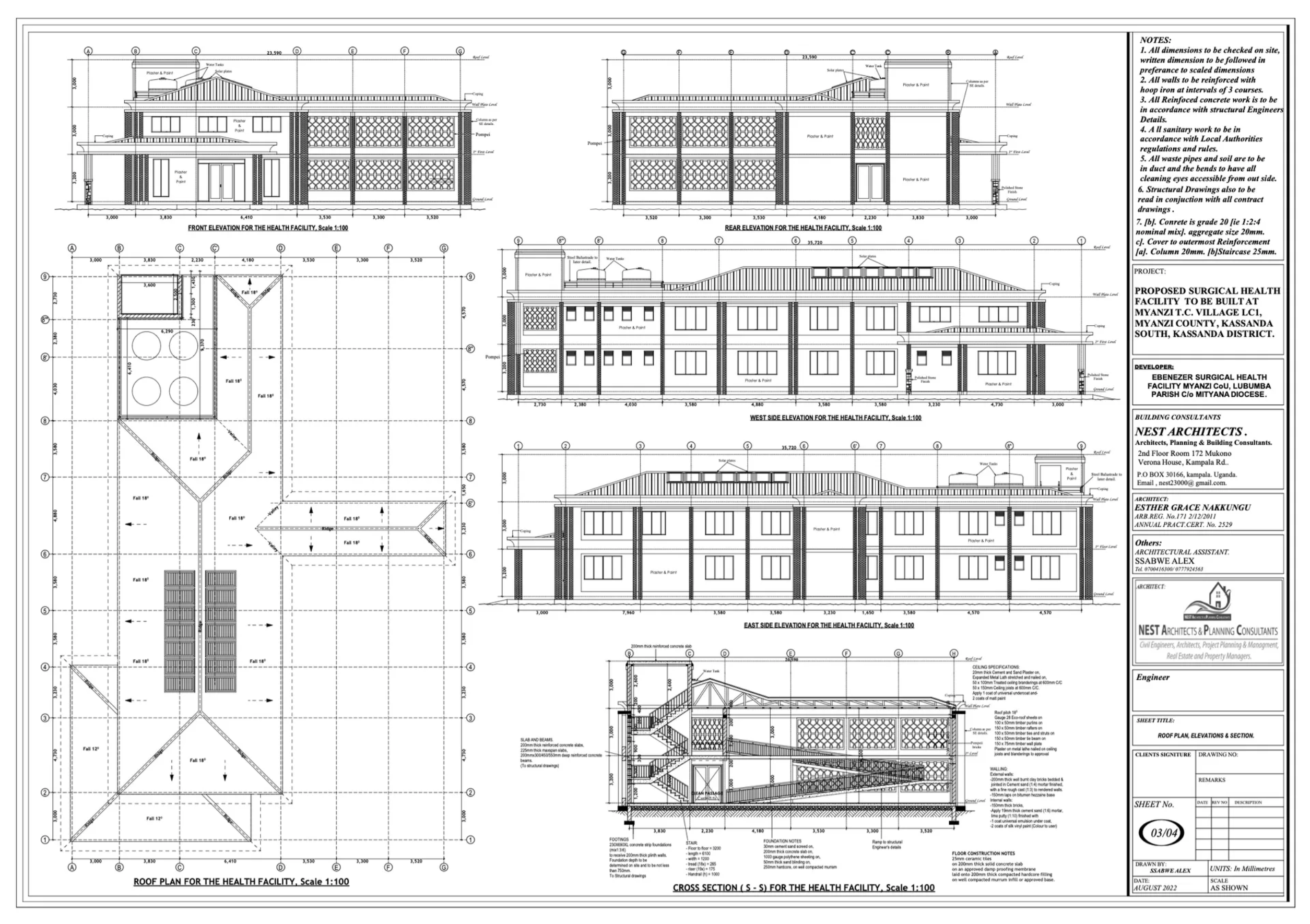
Architectural plans of the Outpatient Healthcare Center