
The Missionary Lifecycle: Part II – Getting Established in the Field
This is the second perspective in a four-part series covering the various stages of missionary life. In this 2nd stage, we hear from SAMS Missionaries Bob and Traci Gresser, who with their three special needs children Andrew, Daniel and June, have been getting established in Namibia over the last several months, where Bob has started serving as a lecturer at the Namibia Evangelical Theological Seminary (NETS).
“If I flew on morning’s wings to the far western horizon, you’d find me in a minute— you’re already there waiting!”
– Psalm 139:9 (The Message)
A Whole New Dimension
Moving is a skill set one acquires in the military. But physically moving and getting established in a new community as a Missionary takes on a whole new set of dimensions when you are doing it cross-culturally. We have been in Namibia for six months now and lately have been taking comfort in Ps 139:9: “If I take the wings of the morning and dwell in the uttermost parts of the sea, even there your hand shall lead me, and your right hand shall hold me.” Or as The Message puts it: “If I flew on morning’s wings to the far western horizon, you’d find me in a minute— you’re already there waiting!” There are always unexpected things in a new community; things one likes and things that are challenges, but we have taken comfort in knowing that the Lord leads us and was already here waiting for us.
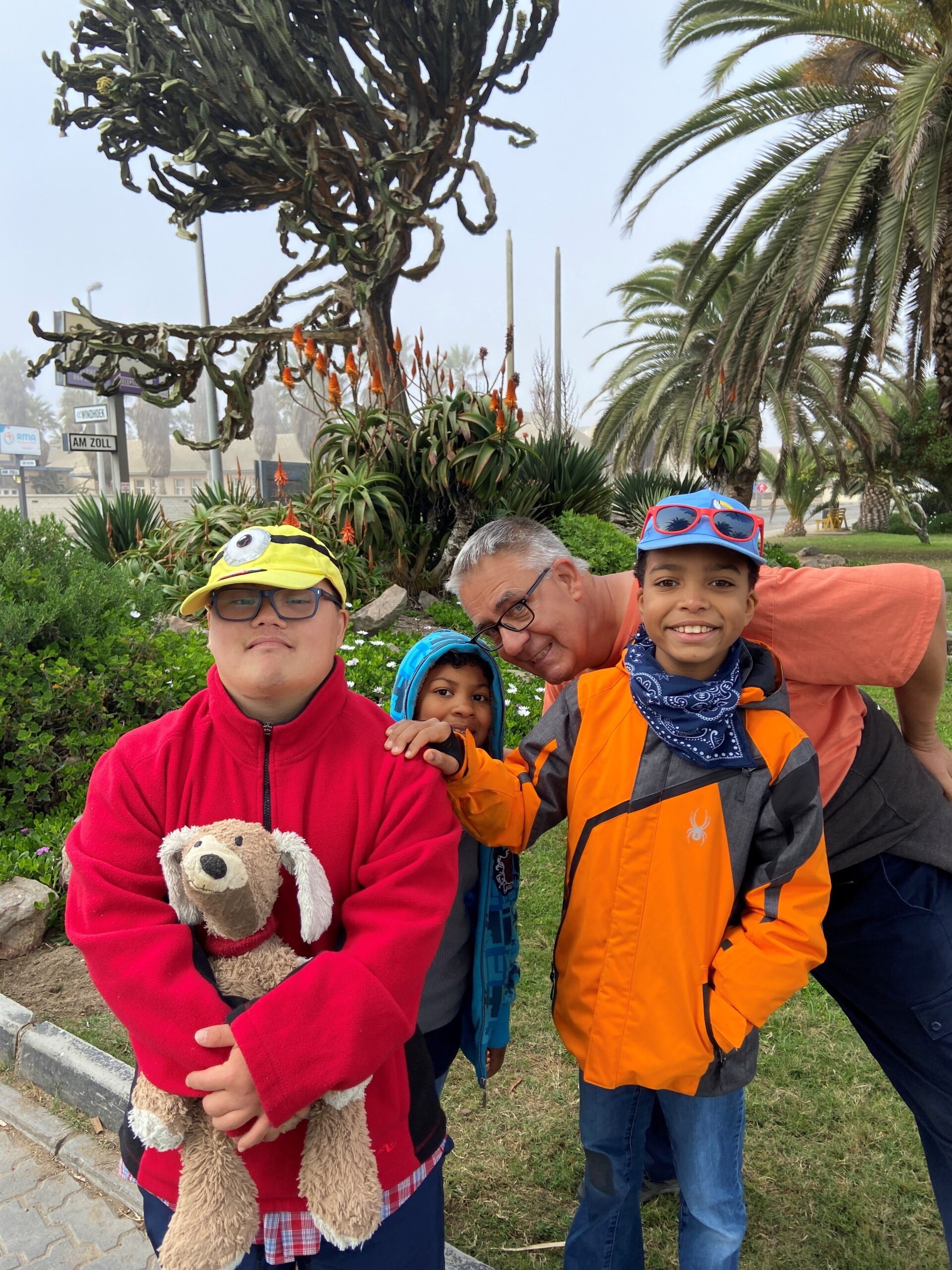
Living in a culture where you are a foreigner means that everything takes longer and requires a process. Here in Namibia, this is due to the bureaucratic government. In fact, many veteran missionaries have challenges. The system can change as rapidly as the clerks who run it. But generally speaking, if you don’t grow up knowing a community’s systems, it just takes longer to navigate them. Every country has its own history that affects its culture and its cultural systems. So, new Missionaries always have to navigate the immigration systems of their host countries. Having experienced several immigration systems over the years, including the U.S. immigration system during the adoption of our two sons, Andrew and Peter, we have found Namibia to be more challenging to navigate. Where did we get the patience? Certainly not from within ourselves.
Aside from giving us patience, the Lord has continued to meet us even in our mistakes. In America, we are free to be critical of our government; it’s almost a civic duty for some. In Namibian culture, we discovered that even an oblique fault-finding can create quite a stir. Through this process, God’s hand clearly led us to Ecclesiastes 10:4. “If the anger of the ruler rises against you, do not leave your post, for calmness will undo great offenses.” The idea here is a call to endure beyond patience with a genuine spirit of contrition, an attitude that can only come from God.
Setting up a household (from scratch)
Setting up our household has been a big job. When we got married over 41 years ago, we received wedding gifts to establish our new home. We arrived in Namibia with two suitcases per person and ended up renting a large home for our family of five with three special needs kids. Initially, we felt guilty about having such a nice home, but we’ve seen confirmation from God in the peace and beauty of this home. He shows himself here every sunrise, Masked Weaver, Go-Away bird, Red Hornbill, and Mongoose. Yet, the work involved in acquiring everything from beds to frying pans to furniture had to be found and collected in a community that has very limited second-hand resources (I haven’t quite figured out why). We have learned to view this process as a set of actual goals. It requires that we meet new people, learn our way around the community, and ask for advice about where to find things. In fact, I was proud to share my discoveries with long-time residents!
Launching Hospitality
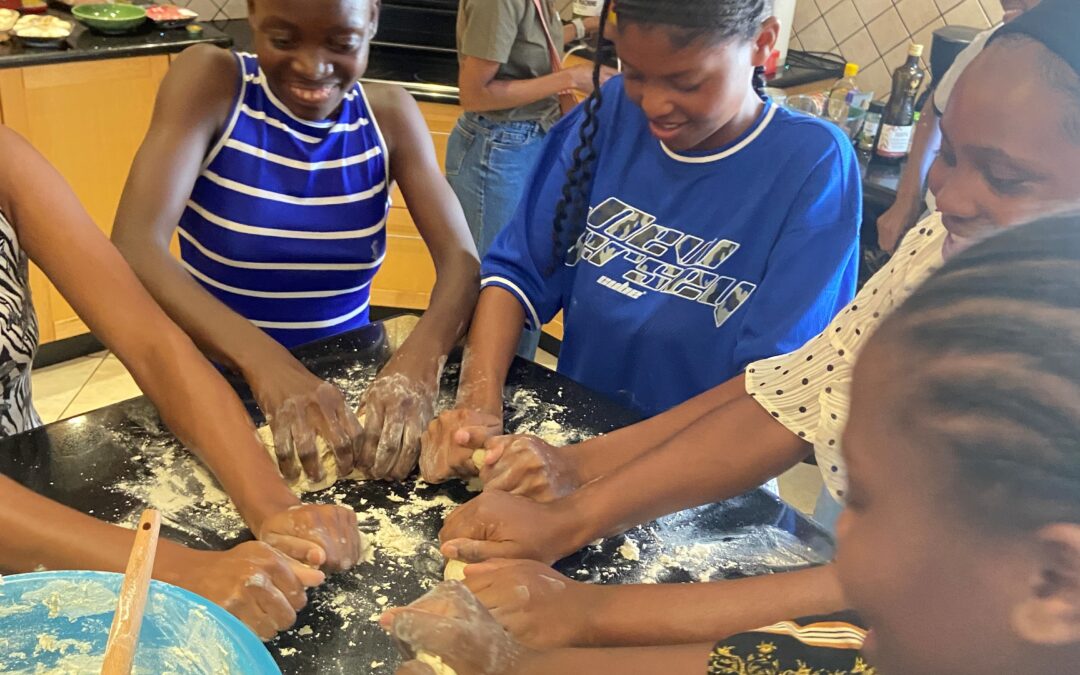
Achieving a set-up home doesn’t mean we are settled in. Our home is a launch pad for hospitality that builds relationships over time. Relationships are built on commonality and shared experiences. This is why it is initially more difficult for Missionaries. We have less in common and fewer shared experiences. And so… we build, event by event, shared meal by shared meal, and time lived together intentionally day by day. In this large house, we have already hosted visiting lecturers for the seminary. We have strengthened friendships and smoothed difficulties with fellow Missionaries. Through our doors of hospitality, we now host monthly ladies’ fellowship and a bi-weekly older ladies’ Bible study. Aside from the “spiritual” meals we are fed from Scripture, we spend time in the kitchen together and learn how to prepare meals on a budget and from scratch, a surprisingly rare skill. Some of these ladies consider a meal without meat almost inconceivable. It is a cultural oddity at which we continue to marvel.
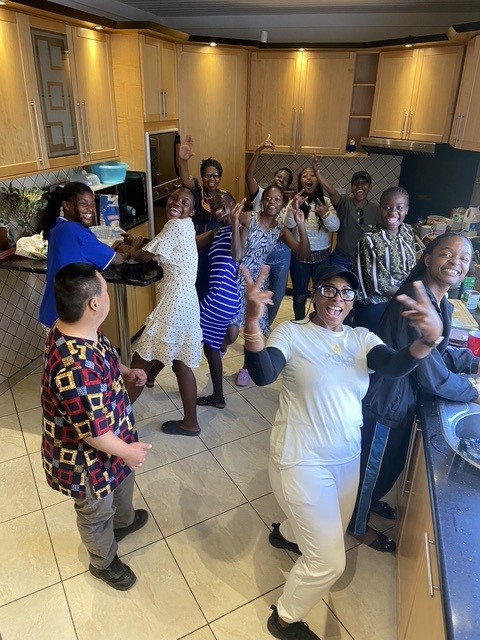
Recently, one area of hospitality has led to another. We’ve had the opportunity to host several young girls from church during the monthly Ladies Fellowship. Kristina mentioned she had a toothache, and this led to helping her receive dental care in the Namibian government healthcare system. While waiting at the government clinic, I met Aaron, a Namibia Evangelical Theological Seminary (NETS) student who left school and for whom I continue to pray. Kristina lives in the vast transitional housing area called Havana on the outskirts of town, so we visited her there. One day she didn’t have food to take with her medicine, so I hired her as a guide to take me to the market there. Slowly, our friendship is being built.
Parenting through the Paradox
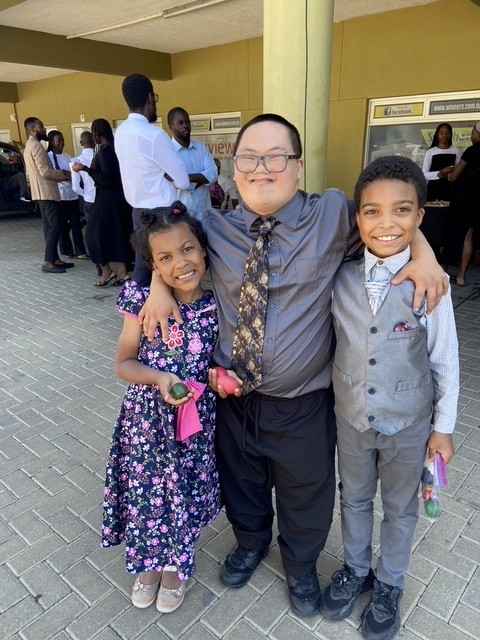 Honestly, it can be lonely and difficult work, especially as grandparent parents and special needs parents of a 23-year-old son with Down Syndrome. Even in the United States, finding a babysitter willing to take on a 23-year-old is challenging. Being aware and honest with the kids through it all has been important. We have had the kids write about what they will miss and what they look forward to. It is not always what you expect. They know it’s ok to be sad as well as excited and often at the same time. We always try to tell them what to expect in unfamiliar situations, be it visiting a family in their one-room sheet metal home in a transitional housing area or a new church in the U.S. In a recent prayer letter, we discussed the use of paradox when equipping our children to deal with the many moves. In this letter we wrote, “We once owned a children’s picture book called That’s good! No, that’s bad. It told the humorous adventures of a boy who flies off from the zoo holding helium balloons. It highlighted the fact that you never know how things will turn out, and in fact, there are good and bad in many events. Many things are not good or bad, but at the same time. Seeing paradox helps us maintain our humor and thankfulness.”
A God Who Goes Before Us
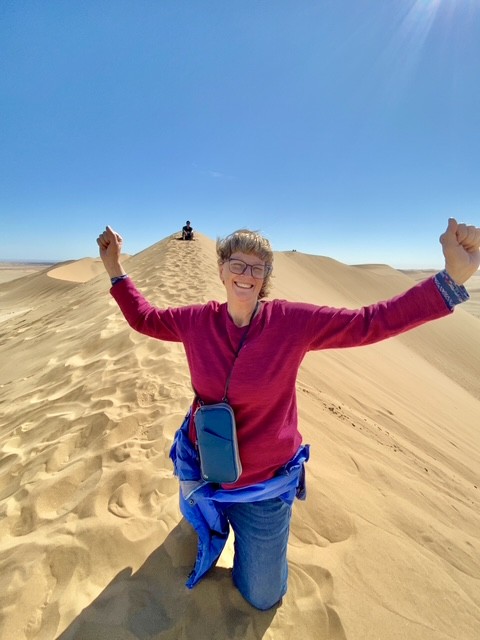
Once the honeymoon fades, being a Missionary settling into a new field is not easy. This is especially true when one starts this journey after the struggles of getting to the field in the first place. In the end, one must continually call into question the idea of a “calling.” The question we’ve asked is, “To what has God called us? Africa, Namibia, Theological Education?” Maybe, maybe not.
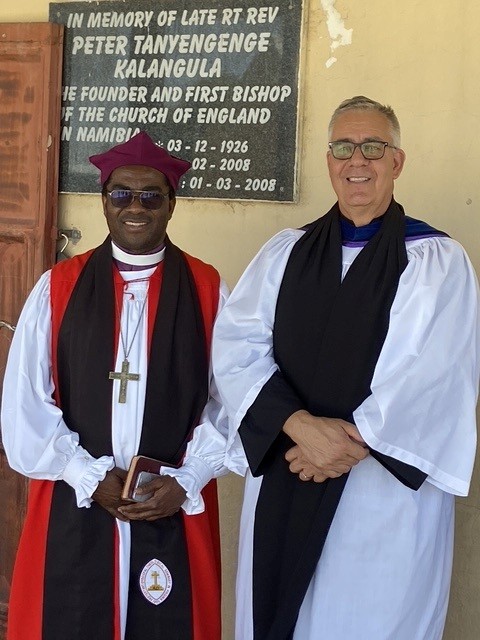
God calls people to be faithful to Him, to follow him as their desires and talents lead. When we follow the Lord, as sinners saved by grace, we realize that he has gone before us, not necessarily to make things easier, but to challenge us to draw close to him, to rely upon him, to know that he is God and we are not. In all this, we are privileged to pray that “we, reaching forth our hands in love, may bring those who do not know you to the knowledge and love of you, for the honor of your Name. Amen. Lord, your hand shall lead us, and your right hand shall hold us. Even in Namibia, you are already here waiting. Thank you.”
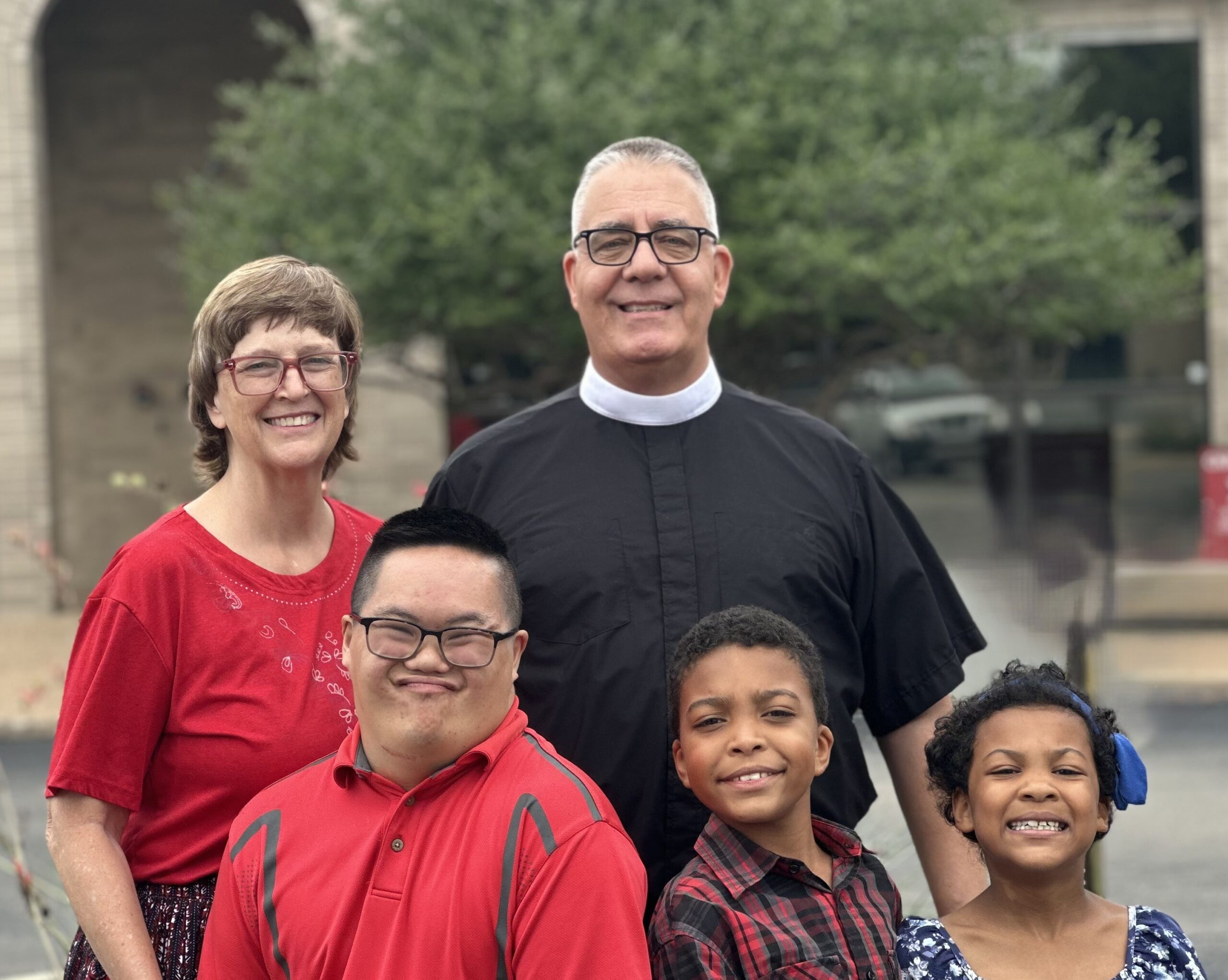 The Gressers began in ministry in 1990 and since then have served short-term overseas in Uganda and Ethiopia and as SAMS Missionaries, first as Bridgers in 2018 and then full-time in Malawi in 2024-2025, before arriving in Namibia in 2026. The Gressers serve where the need is great, and Robert has a passion to serve as a theological educator where there is a lack of qualified teachers, not to replace local leaders, but to train national church leaders so they can in turn train other church leaders. He will be teaching at the Namibia Evangelical Theological Seminary in Windhoek. Traci’s desire is to minister socially through hospitality and ministry of presence, encouraging and strengthening families to spread Kingdom change throughout the communities where they serve, as well as using her considerable skills as a mother of special needs children and as an RN. You can learn more about their ministry and sign up to receive their communications here.