by Anthony and Anna Pelloni | Jun 5, 2026 | Asia, Cambodia, Discipleship, SAMS Missionaries, Worship
One of the things that Anna and I love about the Anglican Church no matter where you are in the world is the emphasis on liturgical seasons of the church year, and daily spiritual rhythms. It is a great blessing that liturgy helps focus our sights on Christ in new ways! This year, I was prayerful about how our student dorms at Church of Christ our Peace in Phnom Penh could embody something new; something to help the leaders and students be more intentional about their faith in Christ and their fellowship with one another besides their normal rhythms of Bible studies, church attendance, and the other regular aspects of life like work and school.
One of the helpful rhythms in my own life has been adopting the Anglican Service of Morning Prayer from the Book of Common Prayer (BCP) into my daily rhythm. I have found that Morning Prayer allows me to anchor my day in communion with Christ regardless of what I may be feeling or what may or may not lie ahead that day. Unfortunately for our dorms, most of the students have irregular schedules during the day due to work commitments and study commitments, making liturgical rhythms and activities challenging. I prayed about what we could offer to help the students incorporate simple but effective disciplines or rhythms into their busy lives that draw them into daily communion with Christ.
‘…Morning Prayer allows me to anchor my day in in communion with Christ and fills me up for whatever lies ahead…’
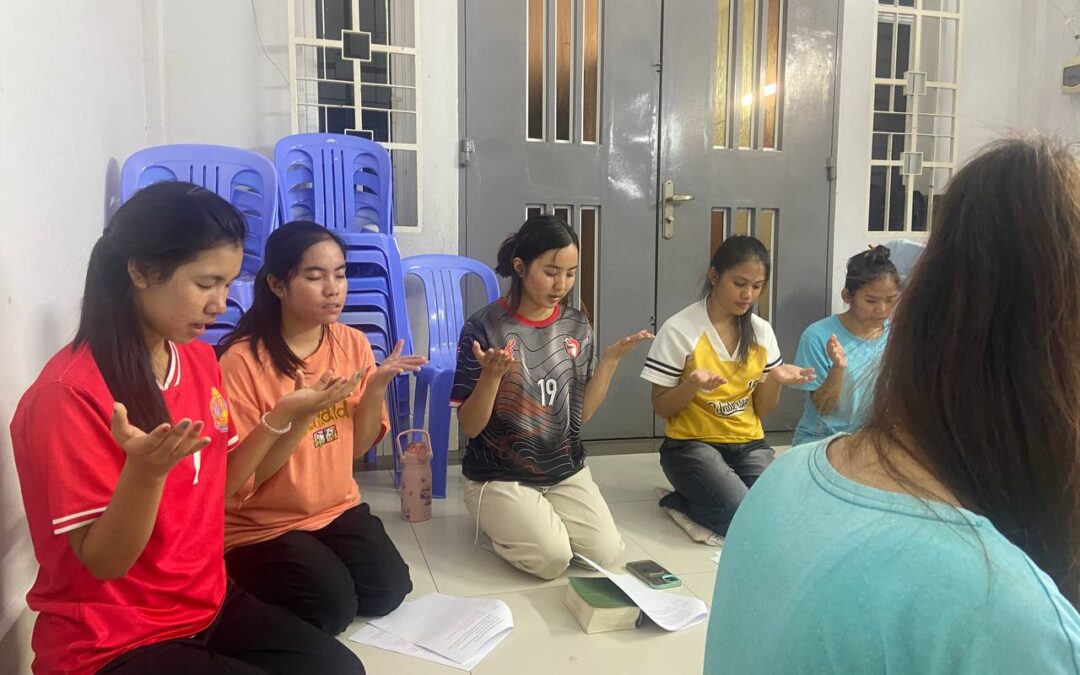
Thankfully, the BCP also has a service for Evening Prayer! This service fits our students’ rhythms a little better because most of the students arrive back to their dorms later in the evenings and they are able to close their days with communal worship with their fellow housemates living in the dorms. But why even consider something like this at all? Is Evening Prayer simply a service or thing that we or the students need to add onto their already busy lives so that they can be better Christians? Certainly not!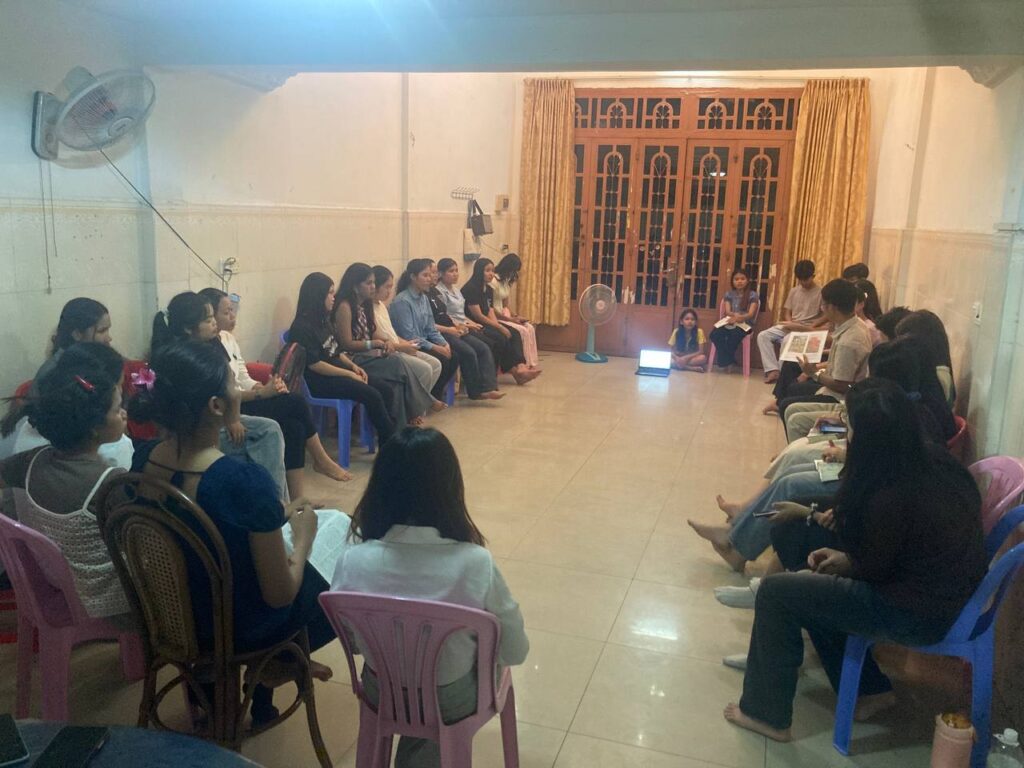
One of the biggest challenges for some of our students will ultimately be that they end up leaving our student dorms to go back to their province or village. Many of these students will be the first believer in their family or have no stable church community in their hometowns. One of the things we regularly discuss in our dorm leader meetings is how we can help students grow in their faith as young believers while also equipping them to have ownership over their faith after they graduate university. I shared with them a story from my own life: I became a Christian through the Cru movement in 2010 and was heavily involved during my time at university. While I was encouraged by my campus pastor to be an active member of our nearby church, looking back I never took ownership over my faith, but relied on my campus pastor and friends to spur my spiritual growth. When I graduated and my Cru community was dispersed into the world, I found it challenging to continue the rhythms I had while a student without the people and life I had known previously. I thought I was a great Christian, but I realized that I hadn’t taken ownership of any rhythms or tools I had been given to find and engage in a new Christian community in the place that God was trying to give to me.
‘One of the things we regularly discuss in our dorm leader meetings is how we can help students grow in their faith as young believers while also equipping them to have ownership over their faith after they graduate university.’
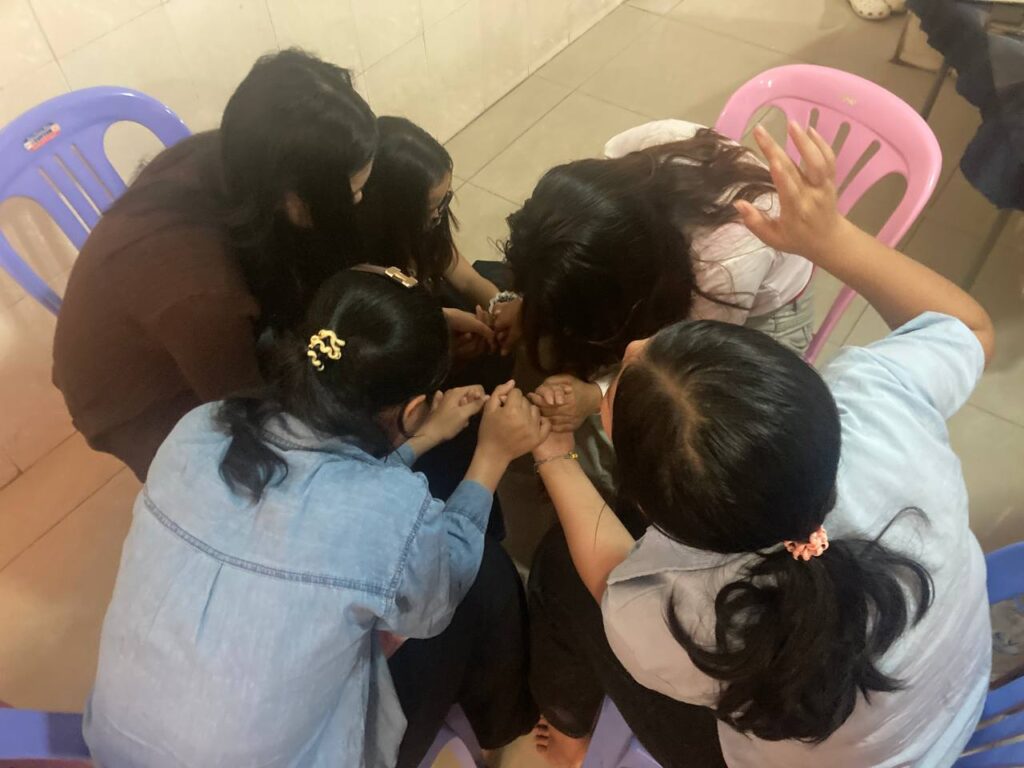
As I reflected on how impactful Morning Prayer is for my walk with Christ, I wondered if Evening Prayer could give our students a similar experience. The three dorm leaders and I talked about how we can equip our students to be faithful Christians when they leave our dorms, potentially have no believing community, and possibly no access to a stable church. After an initial Evening Prayer service with the dorm leaders, they were very excited to implement it in the dorms. By implementing spiritual rhythms in our student dorms, students who do not believe have an opportunity to experience Christ, and students who already believe have their faith strengthened within their believing community. Most importantly, it gives them a beautiful liturgy in which they are able to embody and experience genuine worship of the Lord, and which they can hopefully take with them when they leave our student dorms upon graduation. Many Cambodians do not simply become Christians upon hearing the Gospel. They often must live and practice what the faith asks of them before they are willing to commit to baptism or commit their lives to Christ. Life in the dorms, therefore, offers this opportunity to safely experience Christian fellowship in a believing community and experience the rhythms of the Church. The uniqueness of Anglicanism offers students an opportunity to experience the love of Christ grounded in Word and Sacrament.
‘Many Cambodians do not simply become Christians upon hearing the Gospel. They often must live and practice what the faith asks of them before they are willing to commit to baptism or commit their lives to Christ.’
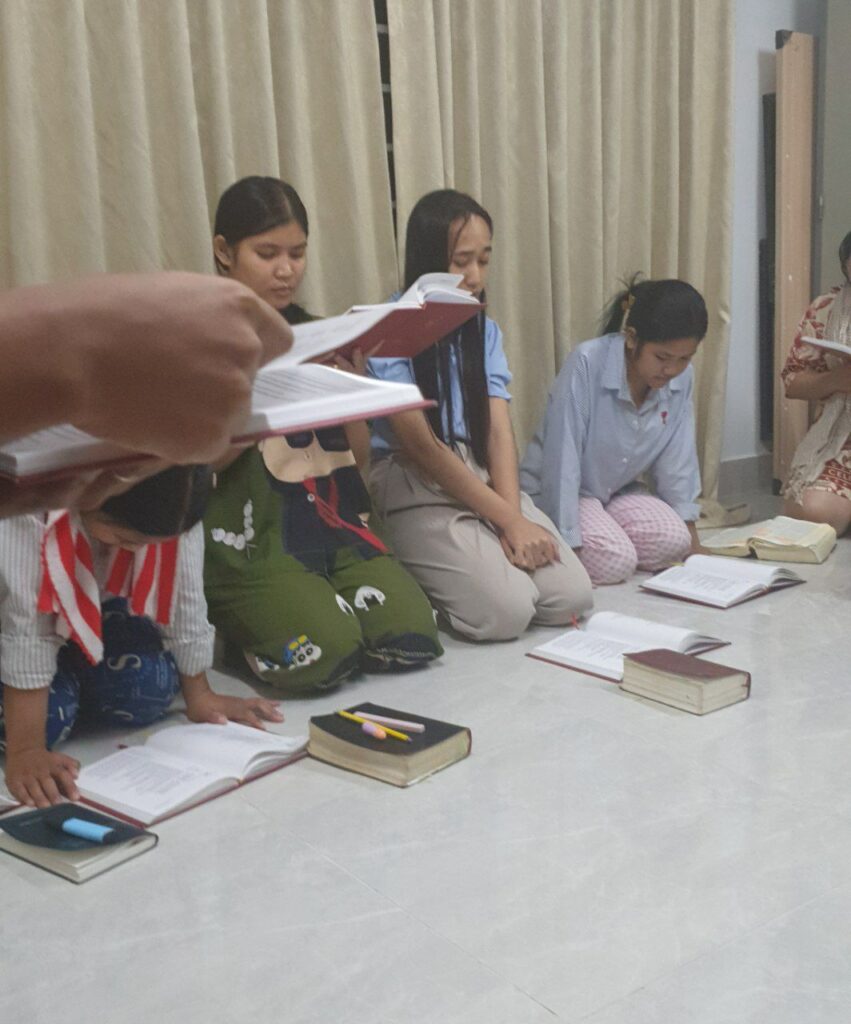
After practicing Evening Prayer in the dorms for several weeks, one student dorm leader offered this reflection on the communal impact that daily Evening Prayer brought about for their students:
“One of the things that we noticed was that many of the students made a real effort to join for Evening Prayer every evening even though they had other things to do in work and studies. While all parts of Evening Prayer were good, the most valuable part was afterwards. We saw that many of the students would not go immediately to their rooms, but they would ask each other about their lives, what was going on, what hardships they were facing, and then continue praying for one another. We were happy to see that the students were able to be more relaxed and engaging with one another through daily Evening Prayer, especially considering that it was optional for them to participate.”
A second student dorm leader commented on one way that practicing Evening Prayer was transformative for students’ worship:
“In the beginning, it was a bit strange for us to do Evening Prayer, especially kneeling during confession [during Lent] because we never kneel during confession even at church. But the more we did Evening Prayer, the more we saw that we were not just doing this by ourselves, but we were doing these things before God Almighty. Now, on Sundays I see several students kneeling during confession because of their experience kneeling and confessing every evening in the dorm. I think we will keep confession as a part of our worship and Bible studies. (Very recently this same dorm leader shared that Evening Prayer has been so transformative for their dorm, that they are continuing to do Evening Prayer daily, and individual students are stepping up to lead different sections and scripture reading, how amazing! Even on a recent retreat I had with this particular dorm leader, I asked, “what will the students do while you are away” and he replied that the students are comfortable to lead and follow Evening Prayer even while he is away. It is truly awe inspiring to see how small acts of faithfully following Christ can have deep impacts on those around us).”
Would you please pray for our students and dorm leaders as we make plans and seek to help these students grow in their walk with Christ? Would you also pray for the students who do not yet believe that they would experience the love of Christ through Bible studies, daily rhythms, and the sense of safety of the believing community? And would you pray for one student in particular who said to our dorm leaders earlier this year that they want to commit themselves to Christ, but are not yet ready to fully commit to becoming a Christian? Lastly, pray that our student dorms are safe places for students to grow in faith and love of God and neighbor.
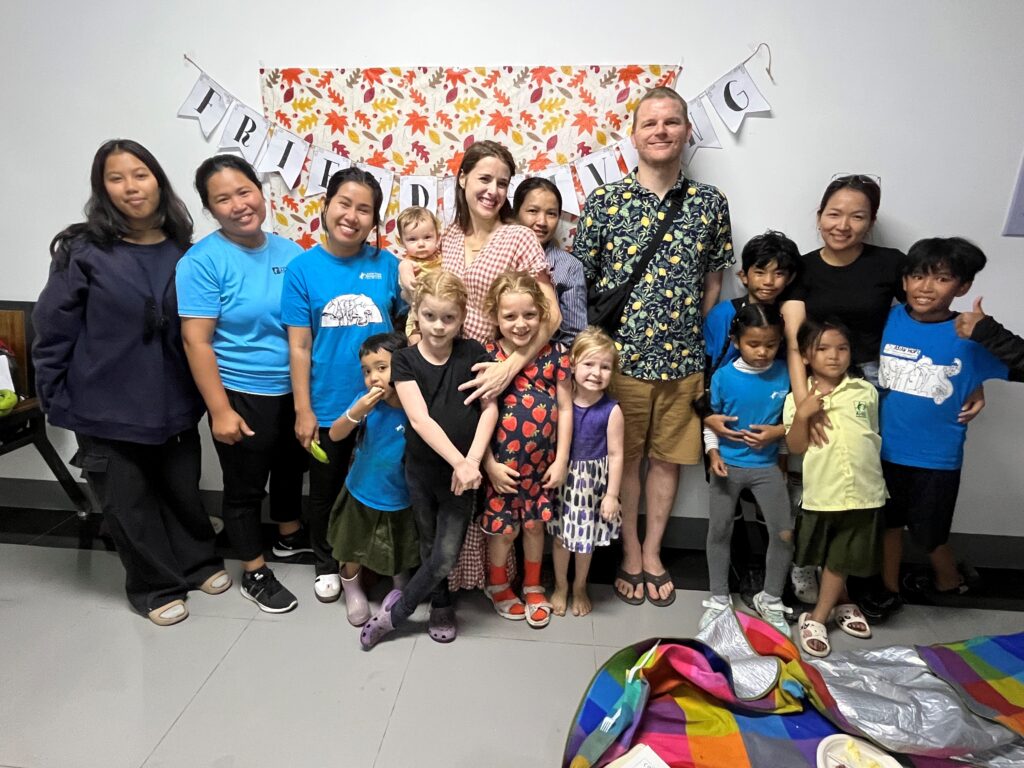
Anthony and Anna Pelloni serve as SAMS Missionaries at the multi-ethnic Church of Christ Our Peace in Phnom Penh, with a focus on reaching young students living in the dorms with the transforming Gospel of Jesus Christ. They feel very grateful to be serving in the Anglican Church in Cambodia and rely on support from faithful Senders through gifts and prayers. If you would like to support their ministry or hear more about their life in Cambodia they would love to connect with you via email here. Or you can read more about their ministry here.
by Brendan Kimbrough | Feb 26, 2026 | Africa, Discipleship, Health, SAMS Missionaries, Uganda, Water
Ugandan Healthcare Projects Advance thanks to Apprentices Guided by Good Leadership
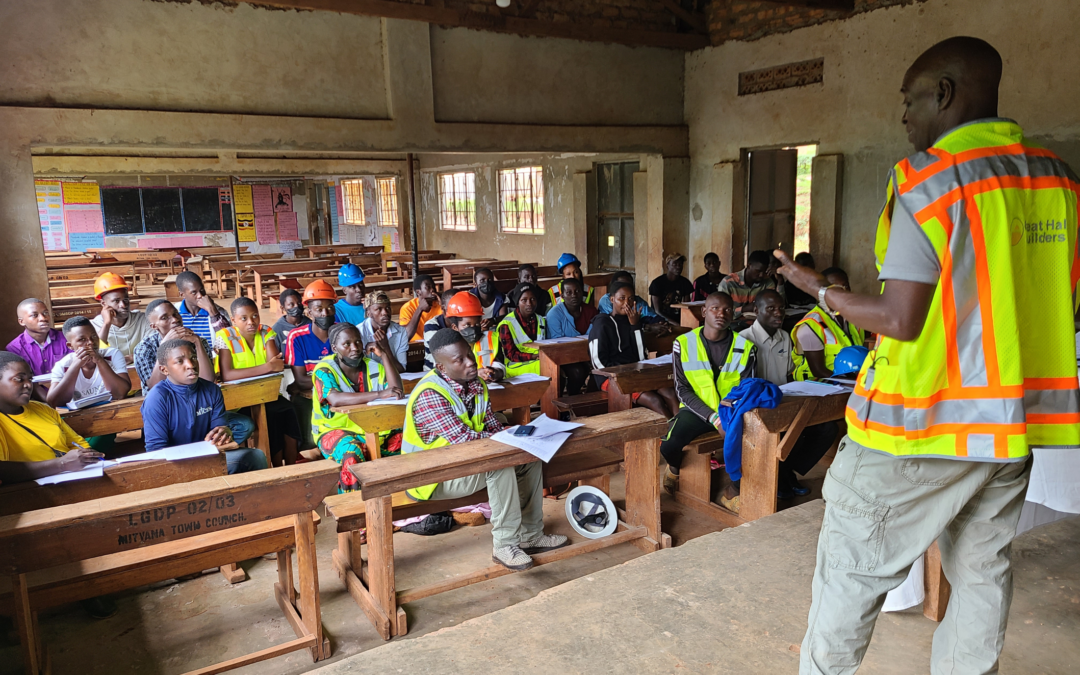
For the past nine years Patrick Lutalo, a Denver-based commercial carpenter and a SAMS Bridger, has spent many nights huddled over blueprints while on a video call with his construction workers and apprentices working in Uganda. This close coordination has been the key to his leading others in the work to construct the kind of healthcare facilities that are much needed in this rural part of sub-Saharan Africa. Patrick and his team of construction workers have been so busy building its meant that Patrick travels back to his native country up to three months out of the year. In partnership with the Church, Patrick’s organization has already completed a maternity clinic near Mityana, called the Naama Maternity Clinic, a much-needed facility in a country that annually tops the ranks with some of the highest birthrate populations in the world. In its first year of operation in 2022, the clinic had already helped mothers deliver over 400 children there, and today it is in constant use.
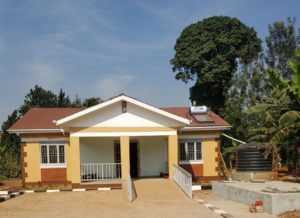
Naama Maternity Clinic was finished in 2022. It is in constant operation today.
Outpatient Healthcare Center
Today Patrick and his team are beginning the final phase of a building project to construct the 18,500 square foot, two-story Outpatient Healthcare Center in nearby Myanzi. It’s been a three-year project that Patrick and his team of workers plan to finish in December 2026. The ultimate goal of the facility is to serve the surrounding rural communities with outpatient care in this region of central Uganda currently with a population of over 100,000 people. The Anglican Diocese of Mityana is partnering with Uganda Christian University to staff the healthcare center once it’s completed with nurses and other healthcare workers. It will provide and enable much needed preventive healthcare and annual exams, women’s healthcare combined with public healthcare, radiological and lab services, as well as immunizations and disease research.
Water and power needs
Even though the plans are to begin occupancy of the Healthcare Center this December, water and electricity are crucial next steps for the Center to be fully operable. Patrick and his team are currently looking for those with expertise in establishing a well-water system as well as a power system for electrical generation. There is no current piped water supply anywhere near the healthcare center, but fortunately, the water table in this part of Uganda is very high and so the team doesn’t anticipate that finding water will be a problem, especially with the rivers and the Lake Wamala watershed close by. However, they are looking for someone with the resources and the expertise to construct a well water and filtration system to connect to the hospital’s tanks.
Additionally, the healthcare center will require either an off-grid standalone Solar Photovoltaic (PV) system with battery storage or a hybrid system that combines solar panels with a backup fuel-based generator in order to reduce the size and cost of the battery bank, ensuring continuous power during low sunlight periods. Patrick and the board members of Teach Men to Fish, the non-profit enabling these projects, are seeking resources and expertise to build and install this kind of standalone power system.
Apprentices Sustain the Projects
Over the past 30 years Uganda has placed much emphasis on healthcare and education across the entire country. This has significantly improved health outcomes for many people, and the young people of Uganda are better educated now than they have ever been. And yet this has created a problem with many well-educated young people available and desiring to work and support themselves, but who cannot find jobs. Uganda’s economy simply can’t supply the kind of labor demand needed to employ its young people, regardless of their education level.
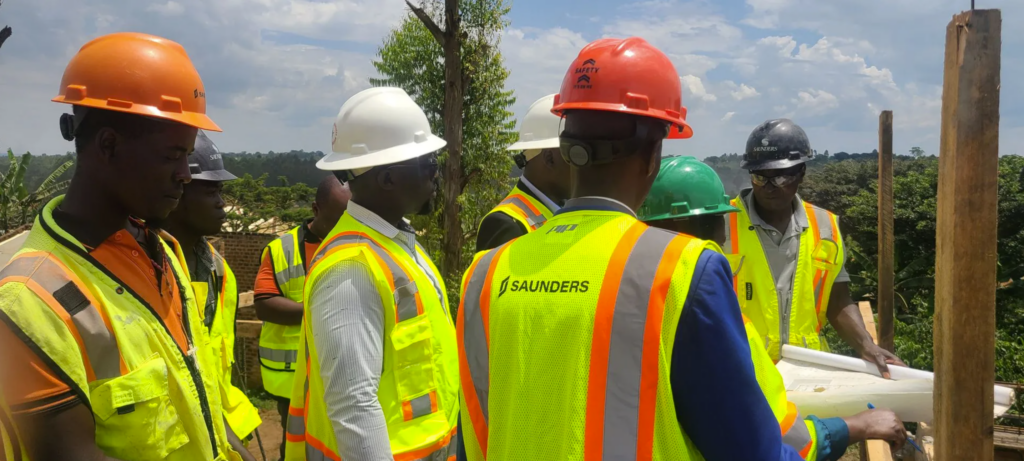
Patrick experienced this firsthand while in Uganda in 2017. He was worshipping at the Cathedral in Mityana one day and met some young people there. They were mostly teenagers with some who were in their 20’s who needed work. What they shared in common is that they hadn’t had the opportunity to go to school. Patrick listened to their stories and afterwards he asked himself, “What can I do to help? How can I begin to address this situation?” He also heard how many of these young men’s friends were migrating to urban areas in Uganda with no skills, but in search of work. Many were making the wrong choices and getting in trouble.
Patrick’s Call
Patrick realized that the Lord had blessed him with a family and a good job in the United States. He’d had an opportunity to go to school, acquire skills, and even apprentice in the U.S. Yet he had continued to travel back to his homeland to visit family and friends. One day while in Uganda he found himself in the town of Mityana where God began laying in front of him an opportunity to help those in need. God didn’t ask Patrick to start something he didn’t know how to do. He called him to start the same kind of relational apprentice program that brought young men into fellowship with one another centered on the Gospel and learning a trade together. He began the program in 2017 and designed it so that it took three years for the participants to complete. They began by learning the fundamentals: How to use a carpenter’s square and a tape measure, and they progressed from there learning how to use power tools, work with concrete, masonry, rebar, to conduct field surveys, read blueprints, render plaster and many other skills. They took field trips to building sites. In their third year they put their skills to the test by building the Naama Maternity Clinic, and with just apprentices and other workers and with Patrick travelling back and forth to train and oversee, they completed construction in 2021.
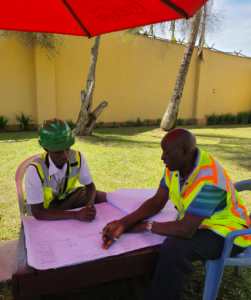
The fruit of all this vocational training is the Lord’s doing. The Diocese of Mityana benefits the community with new healthcare capacity. The people of the region benefit with better health outcomes. Healthcare professionals benefit from gainful employment by treating the sick. The young apprentices benefit by learning skills as part of a trade that will help them become self-sufficient. And Patrick – how does he benefit? Patrick says, “The Lord led me in all of this, and has surrounded me with people who have been willing to help me. It has been the highlight of my life. Hard work, travel, and many long hours, yes, but to see young people come alive to Jesus and to make fishers of men themselves while learning how to build with skill, integrity and hard work in supporting themselves and their families – that has brought me such joy and gratitude to God. All glory to him! He has been so, so good to me, and I know he has many, many more good things in store for his faithful people in Uganda.”
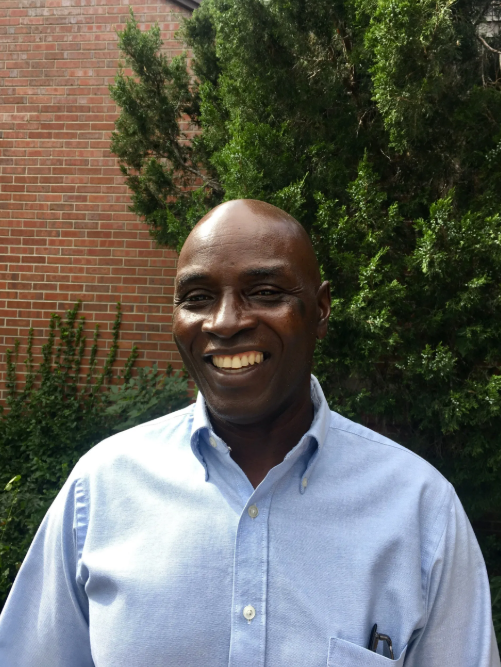 Patrick Lutalo is called to fulfill Jesus’ Great Commission by spiritually mentoring young people as they learn construction skills. He moved to the United States for higher education and began a career in the construction industry. As he reflected on the poverty and hopelessness of many youth in Uganda, God inspired him to share his skills in his home country in the context of Christian discipleship. With the support of his church family in Colorado, of which he has been a part since 1993, Patrick started the non-profit Teach Men to Fish. The program focuses on spiritual growth of young people to bless their community with hard work. As he equips young people to live a responsible life, he exhorts them to share with others instead of accumulating wealth. He does not want them to miss out on understanding the inheritance of the kingdom of God. Patrick travels to Uganda for three months annually. He is husband to Miriam and father to Edith, Jennifer, Abigail, and Isaac.
Learn more about Patrick
Teach Men to Fish website
Donate to help support healthcare and young apprentices in Uganda
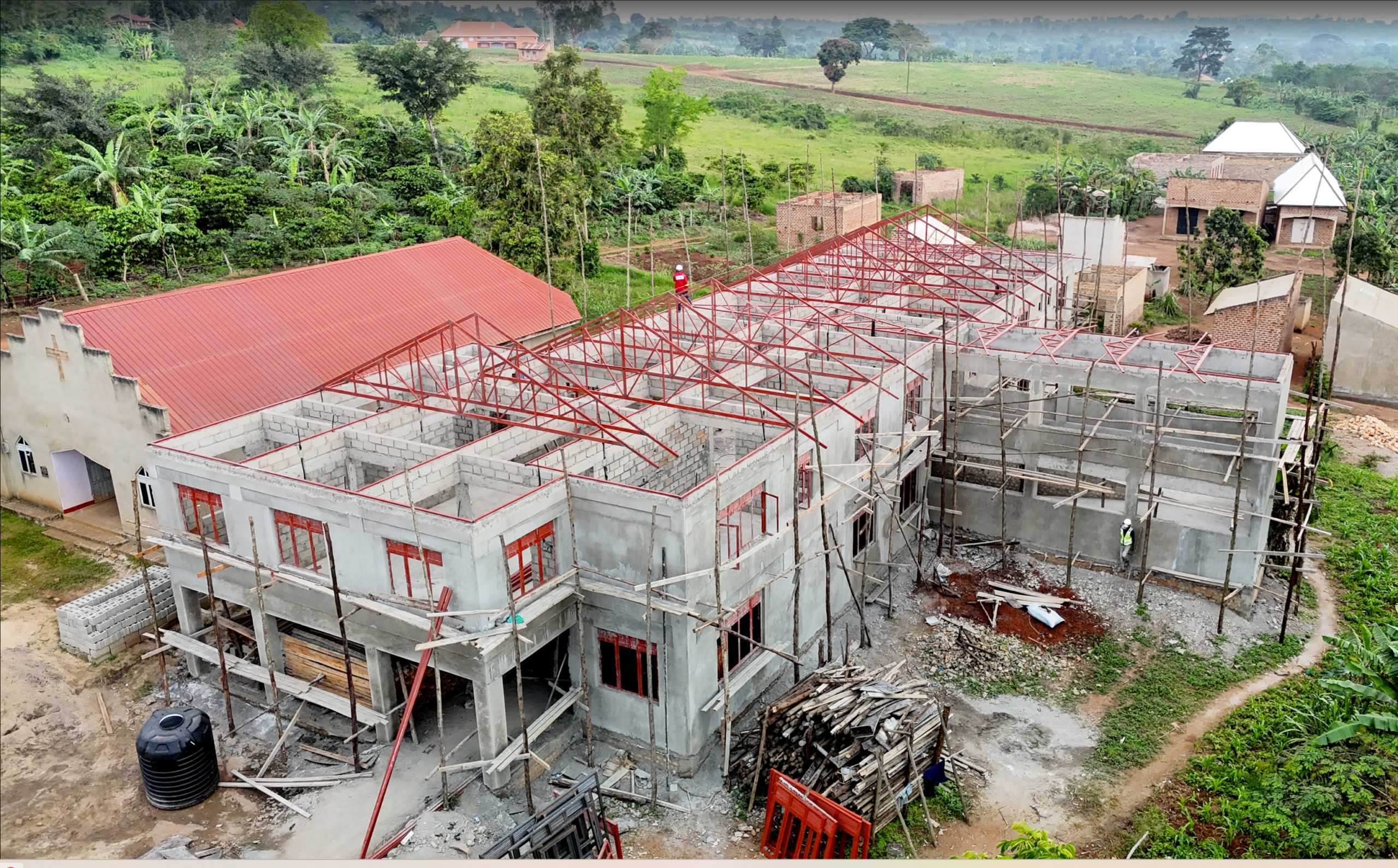
Exterior wall plastering, windows and roof truss construction underway last year (2025) of the Outpatient Healthcare Center
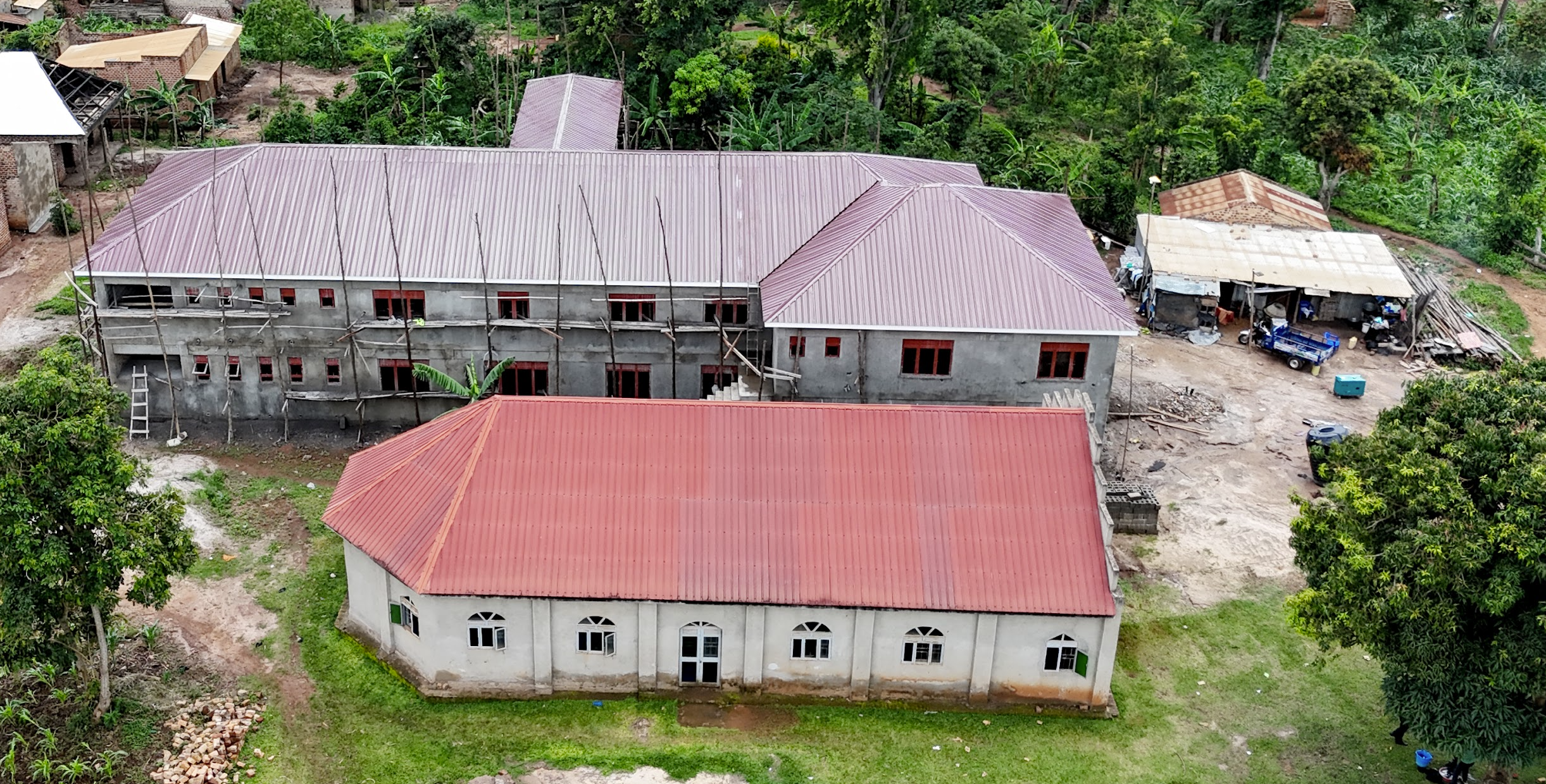
In October last year the Diocese, workers, community leaders, and people from the area celebrated the topping off ceremony when the final roof panel was placed. In 2026 workers are concentrating on all of the interior finishing work.
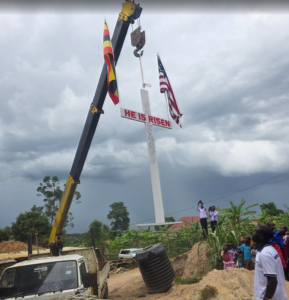
“Topping Off” ceremony October 2025 where the US and Ugandan flag and the cross of Christ are placed on the Healthcare Center
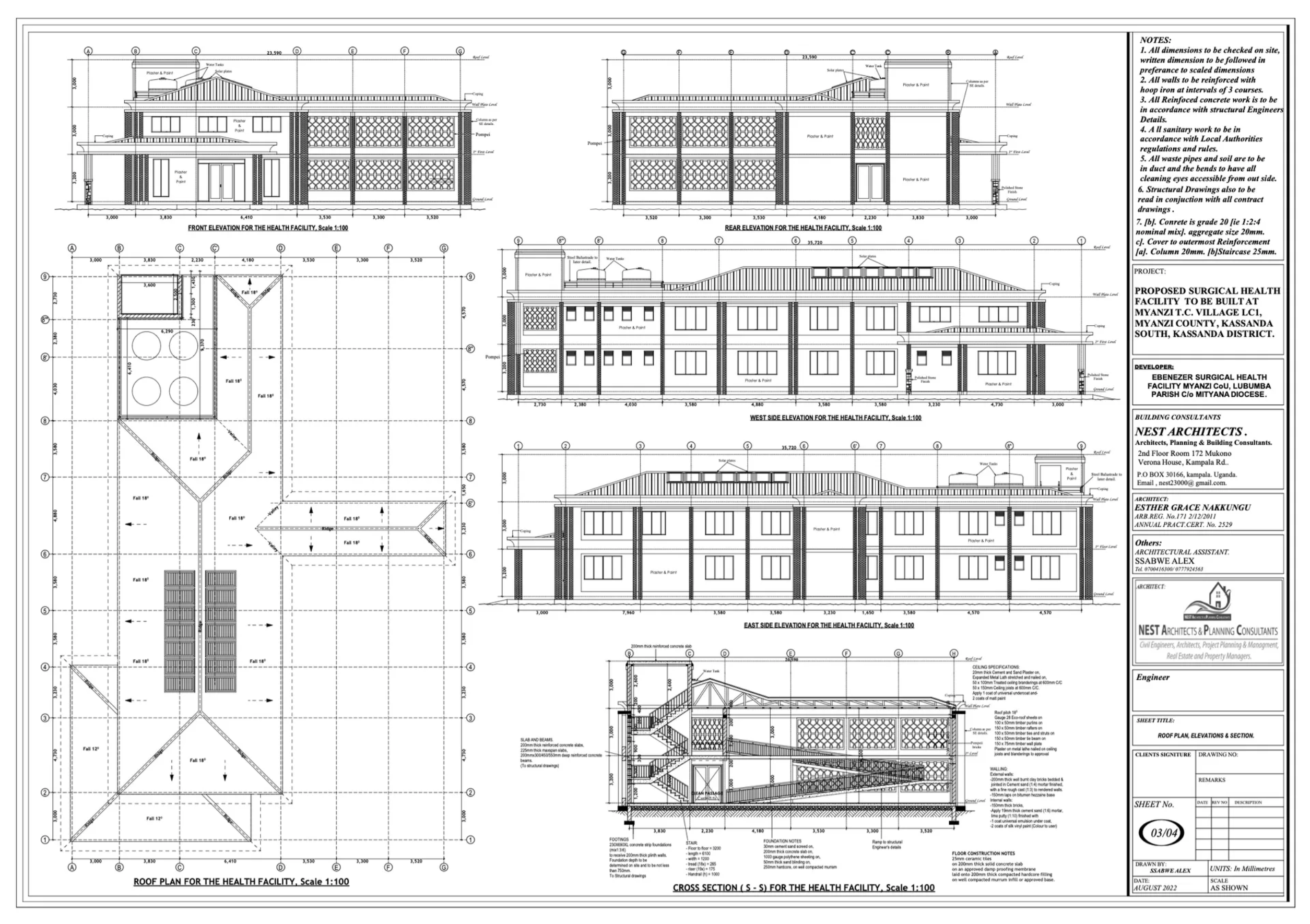
Architectural plans of the Outpatient Healthcare Center
by Brendan Kimbrough | Mar 14, 2024 | Discipleship, Netherlands, SAMS Missionaries
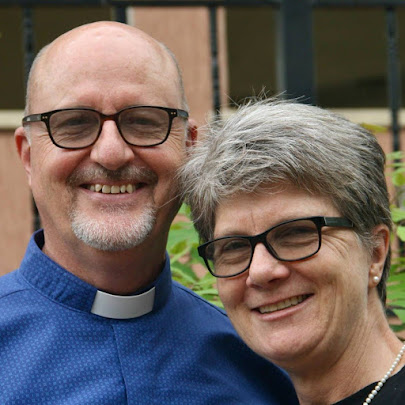 Johannes Vanderbijl is an ordained Anglican priest and SAMS Missionary serving along with his wife, Louise, in the Netherlands, at Christ Church, Heiloo. He has been earnestly writing over the last four years about the life of Simon Peter with two published books to date that have been well received: Breakfast on the Beach (Langham Publishing: 2021) and For the Life of the World (Langham Publishing: 2022). Both books focus on Peter’s ministry of making disciples using Jesus’ four-fold method of discipleship. The books are written chronologically, and Johann situates these early disciples’ lives in the real world, the day-to-day, nitty-gritty of their lived experience.
What follows is an interview with Johann Vanderbijl about his most recent book, a narrative commentary of Galatians, and how it and his other books relate to discipleship.
Johann, thank you for taking the time to discuss your upcoming book. You are focusing your first in a series of commentaries on the Apostle Paul and his Letter to the Galatians, but you have written it in a narrative style. Why did you choose to start with Galatians, and why a narrative style?
After writing in a narrative style about Simon Peter in my first two books, Langham asked if I would consider writing about Paul in the same manner. I’ll be honest – I’ve struggled with Paul all my life. I saw Paul as the John Wayne of the New Testament: a tough guy who never does anything wrong, a ‘cowboys-don’t-cry’ kind of person, whereas Peter was far more relatable to me—more expressive and emotional—hence why I felt I could write about Peter.
So, I thought, how am I going to approach this with Paul? As I was contemplating and praying, I had the idea: why not tell Paul’s story using his letters chronologically? Thus, I draw from what we are told about Paul in Acts and elsewhere, using anything that could describe Paul at that moment. I incorporate elements from his other epistles and utilize his own language as I compose these books. This volume is the first in a series of commentaries, and Galatians was his initial letter; hence, I chose to start with Galatians.
One aspect of my approach is to portray Paul’s childhood, drawing partly from speculation based on some of his previous statements—that he hailed from a family of Pharisees, came from Tarsus, and was taught by Gamaliel, etc. I piece these details together in a conversational form. Sometimes, for example, he converses with Barnabas, while at other times, I incorporate the leaders of the church in Antioch because they were sent out by the Church there. Therefore, the leaders respond to the news they received from the Galatians about the Jewish Christians who had gone there, demanding that they become Jews before becoming Christians. All of this is presented in a conversational style.
What were some of your key takeaways of Galatians?
I am currently writing on First and Second Thessalonians, which have more of a typical Greek style and structure, whereas Galatians feels like an explosion. It reads like a massive rant; Paul hardly greets them before exclaiming, ‘You foolish Galatians, who has bewitched you?!’ You can sense the emotion, making it a tough book to start with.
I also found that some parts of Galatians don’t flow smoothly because Paul jumps around in his writing. Consequently, I felt the need to fill in some gaps by explaining what he was saying, especially when there was an Old Testament background. In those instances, I would have another character say, “In other words, you are saying…” This approach mirrors other commentaries where a narrator would clarify statements. Since this is a narrative commentary, another character addresses Paul’s statements, shaping how I write it.
As I mentioned before, I always saw Paul as a kind of John Wayne, a super-masculine character. However, I’ve changed my perspective. While I still see him as masculine, of course, I now perceive a lot more emotion from him, especially as I read his other letters. He weeps over those who do not believe, he struggles and longs for Timothy and the Thessalonians. So, my opinion of him has evolved; I now see a much more tender side to this man. The anger he exhibits in Galatians stems from genuine concern for them. It’s essential to remember that Paul was an ancient Middle Eastern man who expressed emotions like rejoicing, and I try to reflect that cultural context appropriately in certain points of the letter.
A narrative style seems very accessible to everyday Christians. Did you have them in mind when you wrote this commentary?
The interesting thing is that when I began writing this, I had oral learners in mind. I thought of places like Gambela (before the Netherlands, Johann and Louise served in Gambela, Ethiopia, where Johann was Dean and Principal at St. Frumentius Anglican Theological College), and other remote areas in Africa. However, it turns out that young Americans have been deeply moved by my narrative books. Some even suggest that Americans are increasingly becoming oral learners, and there seems to be evidence for that.
Here in the Netherlands, people are also reading it because they enjoy stories – they read novels. Whether they believe it is another matter; they may not read the Bible at all, but they will read a story about Peter’s or Paul’s life and ministry.
Another audience I had in mind was those who would never travel to the Middle East. I think of Christians in South Sudan or Ethiopia who, despite their desire to better understand the Bible, are unlikely to travel to Israel, let alone Greece or Rome. Therefore, I wanted to depict Galatians in story form, with as much detail as possible. There are many aspects in the Gospels and the epistles that are specific to certain geographical locations and are taken for granted by Christian authors, making it difficult for someone sitting in Africa to fully grasp. That’s why I endeavor to paint a vivid picture of a particular setting or describe everyday elements like what they might have been drinking, the aroma of cooking, or the light from the burning oil lamp.
You’ve said before that one of your overarching aims in your writing is to help the church to be better disciple-makers. Why does that seem to be such a challenge now, do you think?
Part of the issue is that we’re accustomed to certain methods that no longer yield the same results. We rely too heavily on outdated approaches. The way people engage with truth has evolved. For example, street evangelism in the Netherlands isn’t effective anymore. Here, it’s more of a gradual process. You spend time with friends, discussing mundane topics like the weather or pets. Then, eventually, someone might inquire about your occupation, and that’s when the door opens slightly.
However, you don’t rush in; you proceed cautiously, gradually introducing discussions about faith through storytelling. Why? Because everyone can connect with stories, and it’s less intimidating. I share personal narratives interwoven with Jesus to create opportunities for deeper conversations. It’s about establishing rapport and slowly dismantling barriers. That’s essentially what I aim to achieve in my books and now with the Galatians commentary. They are approachable, readable, and as readers engage with them, they encounter truth in narrative form.
Another factor is the lack of familiarity with Scripture, which is why I write my books – to reconnect people with the Bible through storytelling. However, I believe the issue runs deeper. Many individuals decide to follow Jesus without truly grasping the implications. When we evangelize, our primary focus is often on winning souls, neglecting to convey the profound transformation that following Jesus entails. Jesus frequently emphasized the cost of discipleship to prospective followers. Starting the journey of discipleship on the wrong footing can make the entire journey much more challenging.
It is evident, Johann, that there is a common motivation between your writing and the time you spend with others, wouldn’t you say?
Whether it’s the preparation you invest in writing or spending time with others, it’s all part of a journey. Jesus spent at least three years walking with his disciples before the crucifixion, prompting us to ask: are we truly willing to invest in a small group of individuals until they can replicate our efforts? That’s the essence I glean from the Gospels. Jesus invested time in his disciples, gradually preparing them to carry on his work. It took three years before he felt confident leaving them, instructing them to teach others to do the same.
Paul exemplifies this approach as well. He traveled with disciples like Timothy and Silas, walking alongside them on their journey. Nowadays, however, it often feels more like a microwave process: quick and superficial. We focus on conversions, then pass new believers on to pastors, saying, “They’re your responsibility now.”
In my parish, I’m endeavoring to shift this mindset. I’m teaching parishioners that each of them is a disciple-maker, capable of ministering without constant reliance on the pastor. This aligns with Paul’s emphasis on pastors equipping members to do the work of ministry. The hierarchical model of a professional priesthood has, in many cases, hindered disciple-making. Ordinary Christians are God’s vessels for connecting with diverse individuals. Each person’s journey is unique, requiring tailored approaches to sharing the gospel.
I don’t consider myself special because of seminary training. Anyone can engage in disciple-making if they’re willing to learn how to share their story and the story of Jesus. Therefore, we prioritize training our members in storytelling. In my preaching, teaching, and writing, I strive to present the truth of the gospel through storytelling, encouraging people to walk with Jesus.
Johann, thank you for taking the time to sit down and talk.
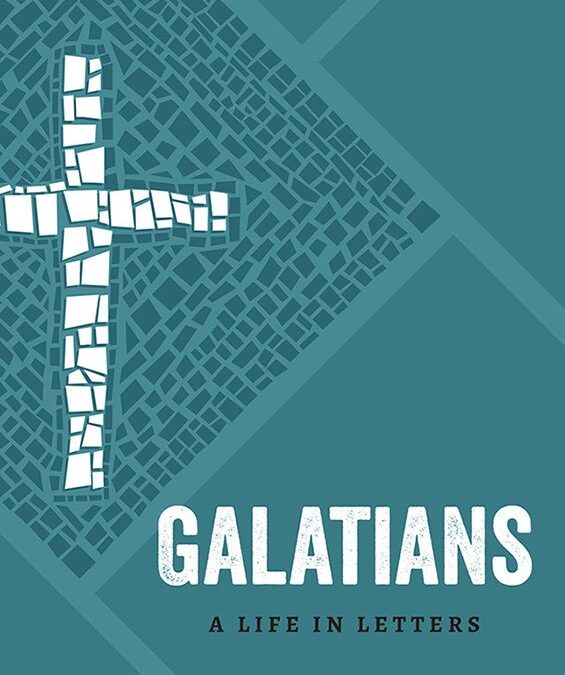
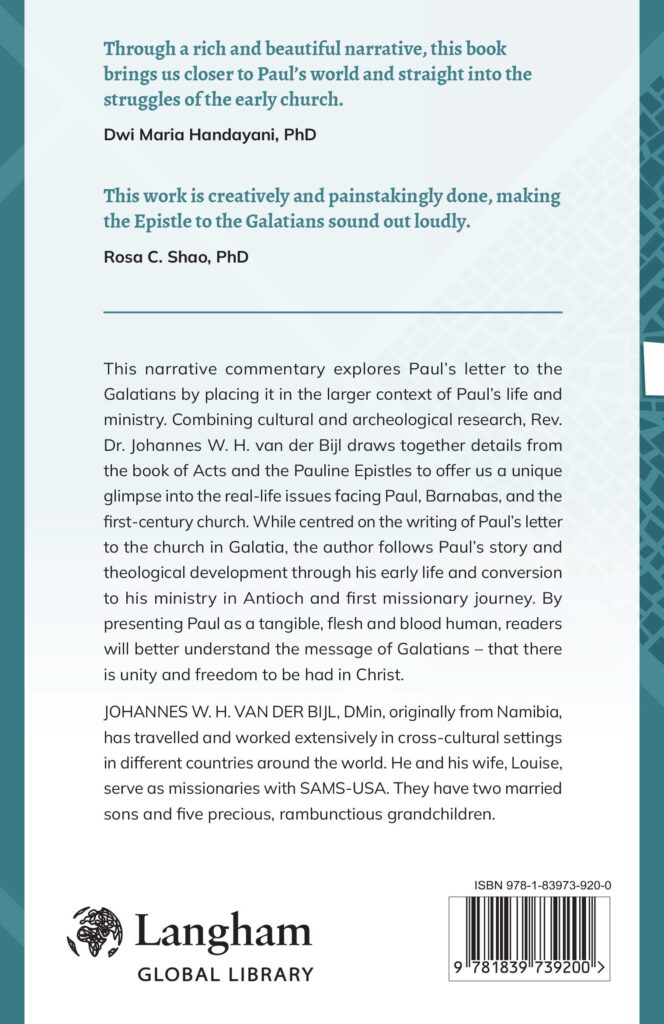
Galatians: A Life in Letters by Johannes W.H. van der Bijl, Langham Publishing. Available online through multiple sellers at the end of March.
Johannes and Louise van der Bijl Missionary profile
by Brendan Kimbrough | Oct 9, 2023 | Discipleship, Kenya, SAMS Missionaries
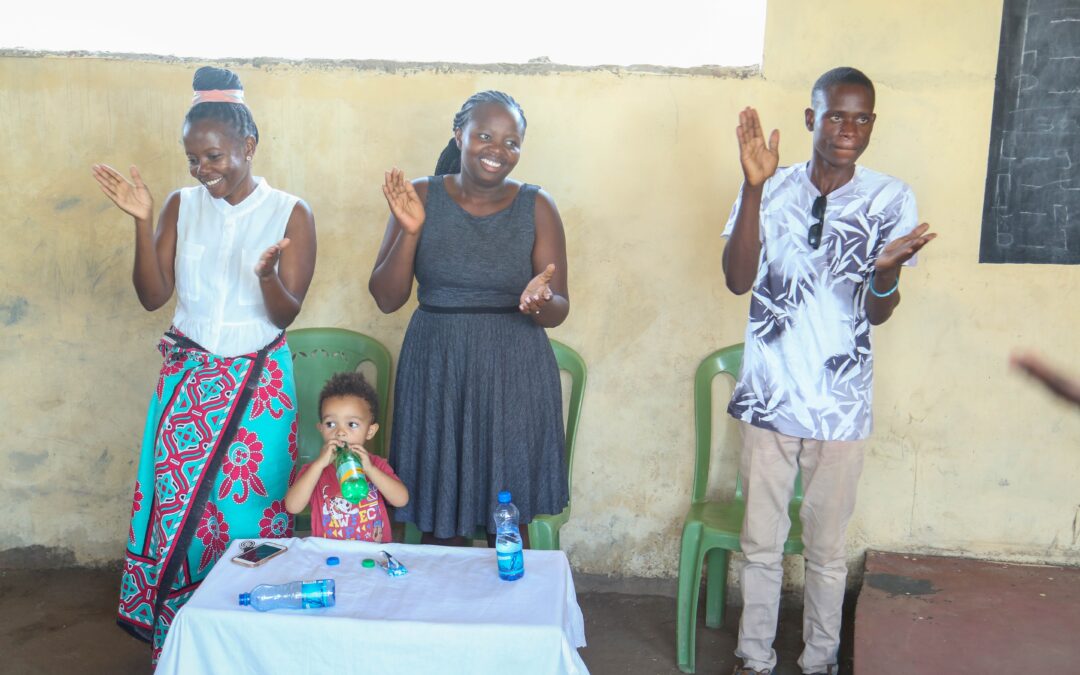
Lucy Chaves is a SAMS Associate Missionary serving mostly in western Kenya in conjunction with Kenya Connection, a ministry that she leads. She recently was in Kenya meeting with ministry partners in three areas: Siaya County the primary town within the Diocese of Maseno West, in Kilifi County among the Giriama people in an area that is predominantly Muslim, and in then in Nairobi.
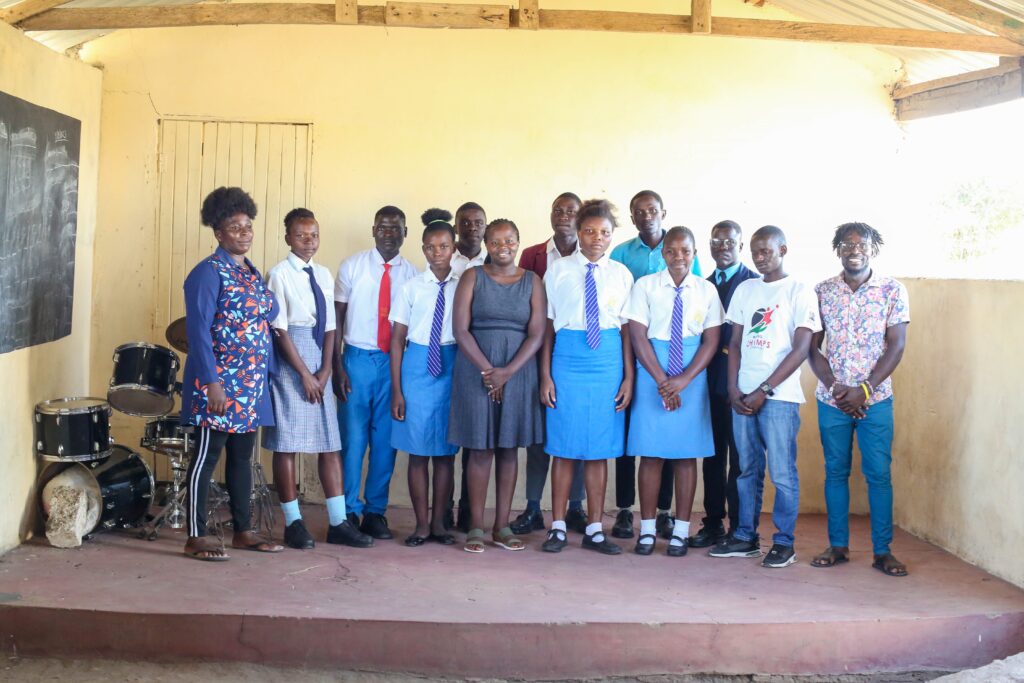
In Siaya County they adopted a local primary school that was founded by the Anglican Church. They worked with the parents of students and with the students themselves, encouraging them in the faith and in their studies. Two of their students have both qualified for government scholarships for college.
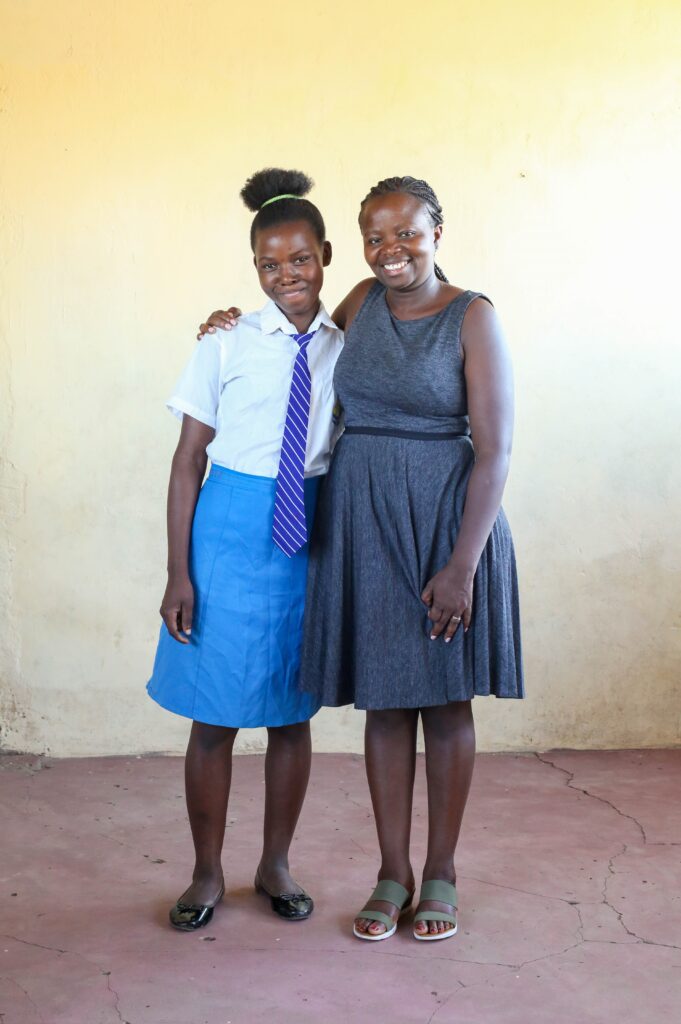
The Giriama parents in Kilifi County were very responsive to instruction and counseling in encouraging their children to seek Christ and excel in their studies. Most of our students in Kilifi are Muslim and the Kenya Connection team experienced the spirit of unity despite the different religious backgrounds. Parents were asked to express at least one thing that they appreciated about their child, which is not an easy thing to do, especially in a culture where feelings of love and gratitude are demonstrated rather than said. Thankfully, many parents rose up to the occasion and affirmed their children. The team is grateful for the partnership they have with Reverend Moses and Mrs. Jane Oduor, and their leadership and mentorship.
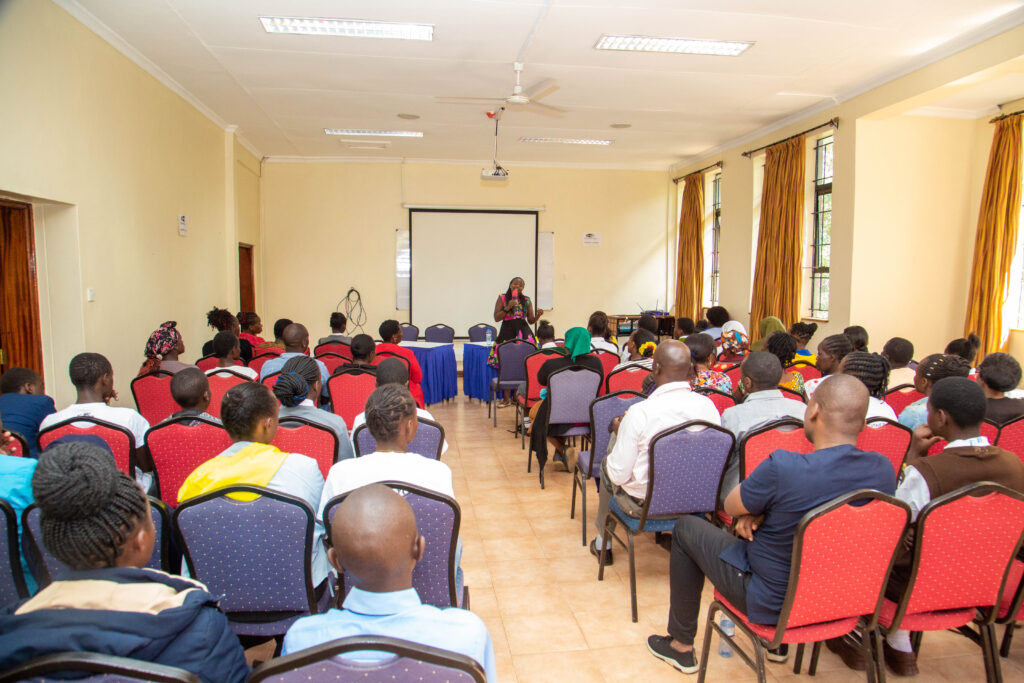
In the Nairobi, the Kenya Connection team has approximately 45 students in High School, and the team emphasizes discipleship and responsibility to the students, while encouraging the parents to be active and present in their children’s life. They host a six-month discipleship program for those who graduate from high school. The program also includes job skills training and a newly established apprenticeship program. Following this meeting, staff member Asherry Wesonga, dedicated his weekends to setting up discipleship/fellowship for the parents. We have formed a relationship with the C.S Lewis Institute and we have been allowed to use one of their resources, The Ufalme experience which was tailor-made for Kenyan audiences. This is a double blessing for us because our media team in Nairobi helped the C.S Lewis institute to film the Ufalme project.