…
SAMS-USA Ministry In
Africa
Interested in Ministry to Africa?
SAMS-USA missionaries partner with Anglican/Episcopal churches in this region to grow the Kingdom of God. We hope you will be encouraged or inspired by these stories and reports from current and former missionaries in the field. We also encourage you to consider becoming a sender to this part of the world.
Are you sensing a call to Africa? We'd love to have a conversation with you.
Four Funerals and a Wedding

Happy new year!
During the holidays in Uganda, messages fly fast and furious – wishing a Merry Christmas, a Happy New Year, and many other felicitations. Images and memes were thrown across WhatsApp and Facebook Messenger like confetti, thanks to cheap and easy bulk messaging.
However, last night, two of our graduates called to wish…
Talking about the…
Talking about the Opo…The Opo…
Bishop Grant and Doctor Wendy 2015-07-21 06:57:00
Talking about the Opo…

The Opo area small hunter-gatherer people group; only about 5,000 in the world. Eight years ago, one of our Nuer Anglican deacons, Gordon Roc, stripped off his clothes, and holding them high overhead, waded through the crocodile-infested river, more than a mile wide, separating the Opo from the rest of the world during the rainy season. He spoke to them about Jesus. The Opo were interested, but said to him, “We have just one question; if we become Christian, can we drink coffee?” Gordon was surprised when his reply, “Of course you can drink coffee,” was met with a joyful shout, “Then we will become Christian!!” (A few years earlier, some 7th Day Adventists had visited them and told them that Christians couldn’t drink coffee, to which the Opo replied, “Well then, forget Christianity!”).
The Opo quickly became one of our favorite people groups in the Gambella Region. We especially enjoyed the fresh perspectives on the faith that the Opo portrayed in drama. For example, their dramatic presentation of “I will make you fishers of men”, portrayed a fisherman who, after drawing in the fish with his net, then proceeded to club his fish on the head (which gave an entirely new slant on discipleship making).
The Opo had no written language until about 7 years ago. Now they have Morning Prayer, the Communion Service and part of the New Testament in their own language. On Easter day 2014 the Opo gathered to hear the first reading of their translation of the gospel of Mark – the service that day consisted of a reading of the whole gospel. “Now we know that God speaks our language!”, they said.
Until recently only two Opo women have attended our Mothers’ Union education program, with a third woman recently joining them to represent the 1,000 Opo refugees newly arrived from South Sudan. It was our privilege to join the Opo this year for Christmas, and we were astonished at the change the Mothers’ Union had made in this close knit community. As we entered the village, we noted with delight that several ‘tukals” (the small round mud and stick dwellings) had built little extensions on to their thatched or tarpaulin roofs. They were using these extensions as dish drying racks. Knowing that the introduction of water purification and dish drying racks had decreased by 90 percent the hospital admission rates for infant dehydration from diarrhea, (Africa’s number one killer of small children), the teaching of dish drying racks and water purification became the subject of our first teaching session in the Mothers’ Union education program
 |
| Opo Dish Drying Racks! |
As we came into the center of the village, we saw 3 jerry cans set up on poles. We had taught the women how to put taps into these easily available jerry cans. It had been the local practice to have one repeatedly refilled but unwashed water pot into which one communal cup was dipped and then passed from person to person (for example, from one person with a cough to the next person who may have diarrhea, etc). Now, clean water was put into the jerry cans, and cups washed in between use.
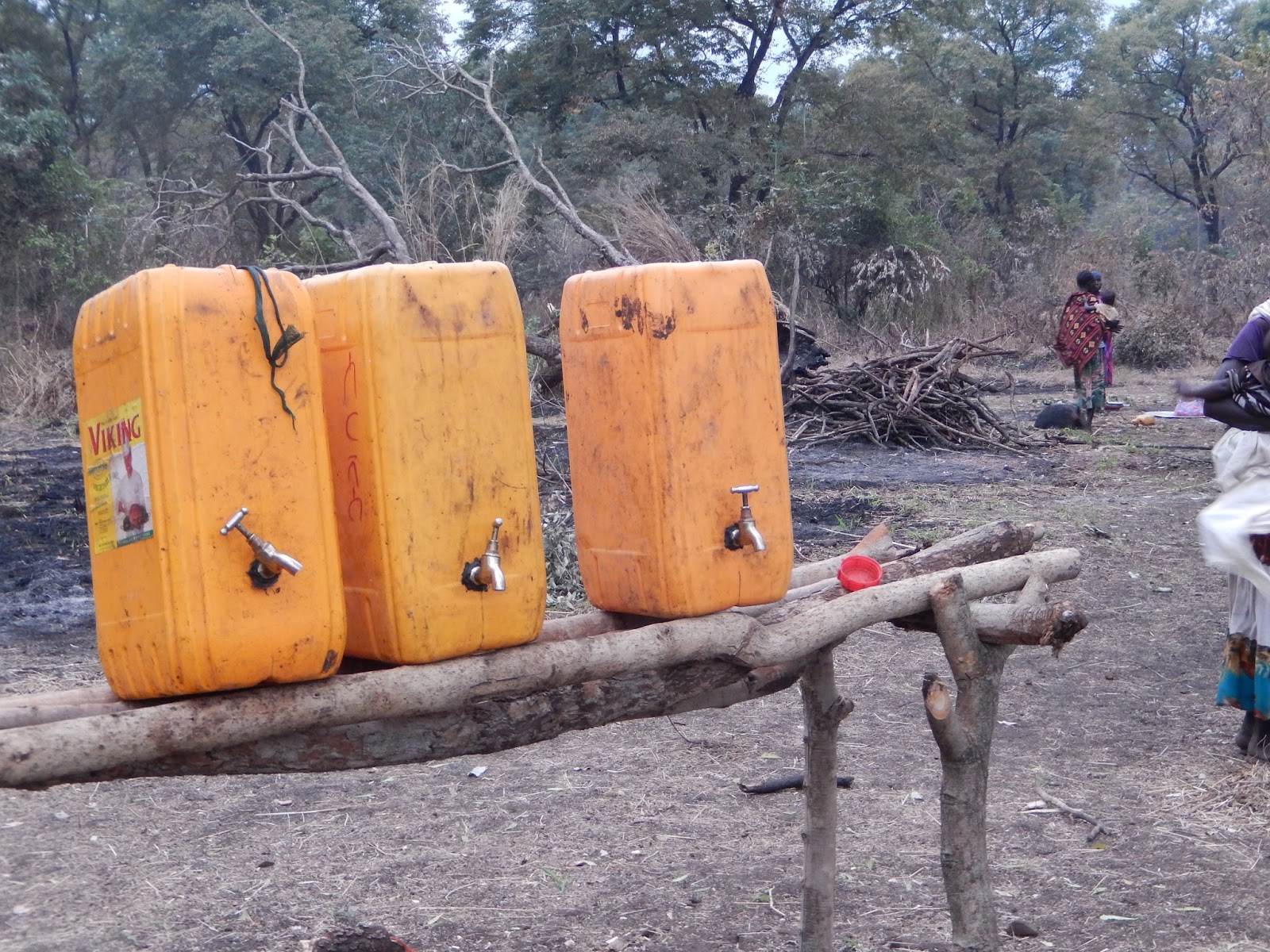 |
| Opo Clean Water Dispensers |
The next morning, to much general amusement, Wendy tried to help prepare Mapo, the traditional meal of maize which is ground by hand on large flat stones; (Hard labour, let me tell you, and all done before anything can be eaten in the morning). The night before, when we had been served Mapo for supper, we noticed that it was different than at previous visits. Now the large round ball of maize meal was bright green instead of white, and also, it tasted much better. In the morning it became clear – the women were adding Moringa leaves as they ground the maize and shaped it onto Mapo.
Malnutrition is a key factor in the unbelievably high rate of infant mortality in the Gambella region. Our community survey had shown that out of an average to 9 to 11 pregnancies per woman, only 2 to 4 children survived to age 5 years. Beans and lentils, which could be grown in other areas in Ethiopia, were, for a number of very good reasons, not readily acceptable to the Nilotic people groups of the Gambella region. Was there a culturally resonant source of nutrition that was available in our area?
 |
| Adding Nutrient-rich Moringa |
It turned out that Moringa was the answer. Moringa leaves are a wonderful source of vitamin C. And vitamin A. And vitamin E. And vitamin B – niacin, thiamin riboflavin, vitamin B6, and vitamin 12. And Folate, And Iron. And potassium, and calcium, and magnesium and all the essential amino acids (it is in fact a complete protein), as well as containing all the essential fatty acids, and a myriad of trace essential elements and minerals. Here was something that could completely eradicate malnutrition and it was growing wild (and free!) in our area. Plant, shrub and tree leaves had formed a traditional part of the diet of many of our people groups, some using Moringa from time to time without knowing about its tremendous benefits, others never having heard of it. Now our Mothers’ Union have learned how to plant, harvest and cook with Moringa, and were giving away seeds and seedlings in their local area teachings.
 |
| Reddish Hair – a sign of Iron Deficiency |
The best part about seeing the Opo cooking with Moringa was the appearance of their children. Not one of the Opo children had red hair, (a common sign of iron deficiency in dark skinned people), nor did any of the children have the distended bellies commonly seen with protein malnutrition.
As dictated by hospitality, of course the Opo did not want us to be left alone to sleep in our tents. Of course we would enjoy having the whole noisy community stay with us all night. In the morning, we were again delighted when, stepping out of our tent, we saw a whole forrest of mosquito-net ‘tents”, the nets ingeniously hung between two poles, each having a swinging cross bar for easy access to the mosquito safe interior.
The Opo also proudly showed us their one demonstration ‘safe cooking fire’ that they had constructed after their Mothers’ Union teaching session on burn treatment and prevention. A 70 percent decrease in infant toddler burns has been found in communities that simply put low mud walls on either side of the traditional cooking fires.
 |
| Opo’s Mosquito Net Community |
 |
| Safer Cooking Fires |
In the most recent training event, the theme had been empowerment. As the current Mothers’ Union teaching program comes to an end in September of 2016, we are busy planning and discussing how the Mothers’ Union might want to continue to grow and to serve in their communities.
 |
| Teaching Empowerment through Story |
The training of future clergy and current clergy and lay evangelists at the new St Frumentius’ Anglican Theological College in Gambella is moving from the planning stages to reality as we prepare to receive our first year’s students to be enrolled in September of this year. As we write, the second of two English Language Intensives is being held for candidates for admission into theological studies requiring a grasp of written English. Plans for teaching those gifted in ministry who do not have fluency in English is also underway. We are hoping that two of our Opo who have shown great potential both in helping with Bible translation and with Sunday worship and ministry will become part of St Frumentius’ first year class.
Please pray for the Opo with whom we have the privilege of sharing life and of sharing the love of Jesus.
|
~ Please Pray with us ~
~with thanksgiving for successful heart surgery for Sarah Lual. She is recovering well from this live-saving intervention. Thanks so much for your prayers
~ for 6 year old Wecca – still on the waiting list for his heart surgery.
Pray for protection from the irreversible lung damage that could result without speedy intervention
~ For the new refugees arriving from conflict zones in Bentiu and Malakal ~ for the refugees who have been newly moved from Leitchor to the new Jewi Refugee Camp ~ for St. Frumentius Anglican Theological College: ~ with thanksgiving for visiting teams for their work in teaching, in library cataloging, and in construction
|


That one time we made a volleyball court in block HH
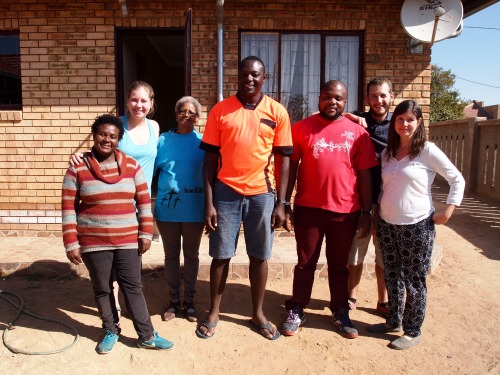
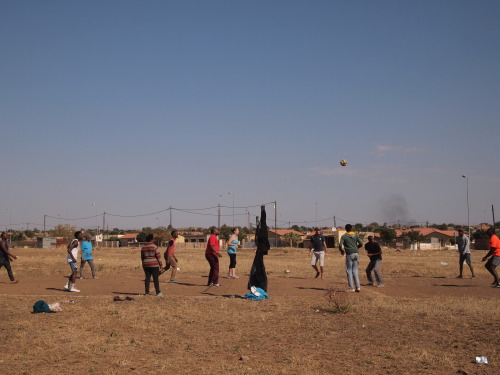
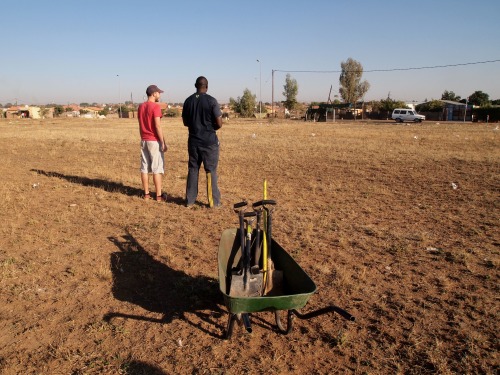
That one time we made a volleyball court in block HH
Kids club!
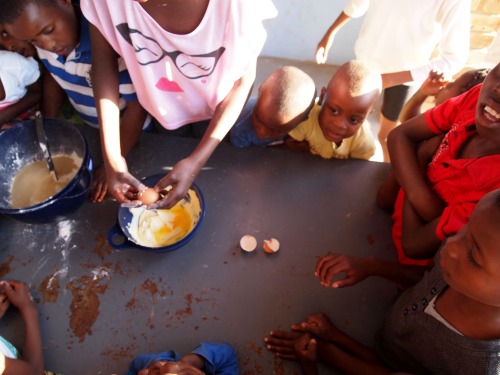
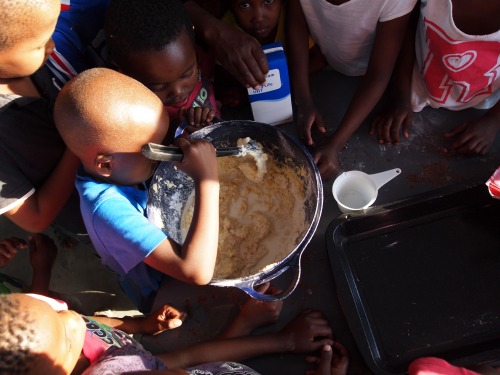
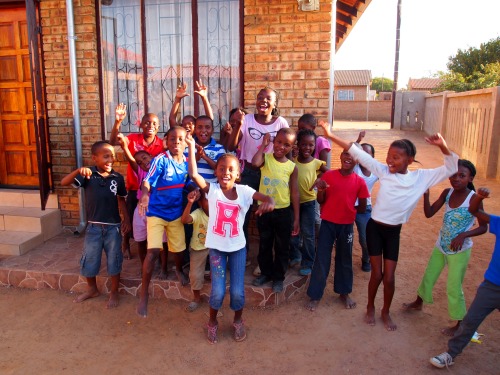
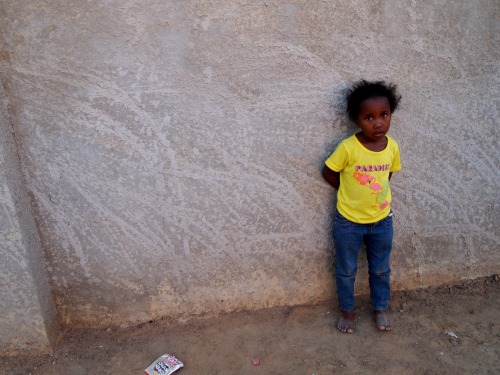
Kids club!
Jabulani is a large facility here in Sosh for orphans and…
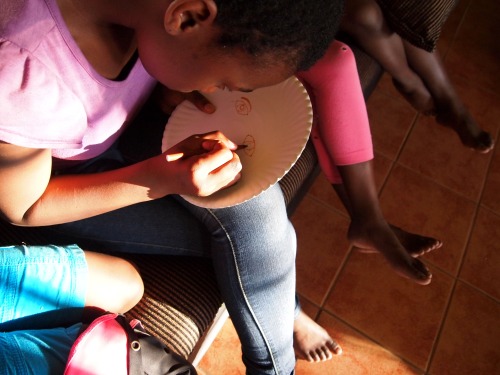
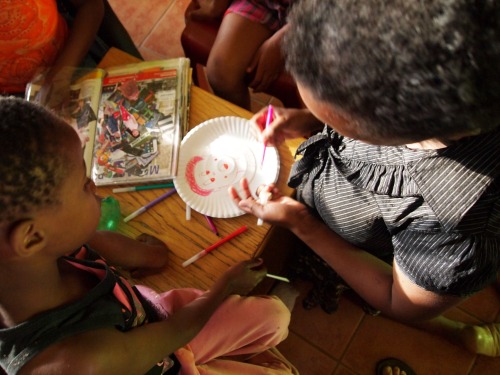
Jabulani is a large facility here in Sosh for orphans and children at risk. Every week on Wednesday, we have a small group with the girls. Lately we have been working on Emotional Awareness. In this exercise, the girls had to identify a difficult emotion on one side of the paper plate and draw an emotion that they would typically use to hide that emotion on the other side.
Ethiopian Martyrs
Ethiopian Martyrs
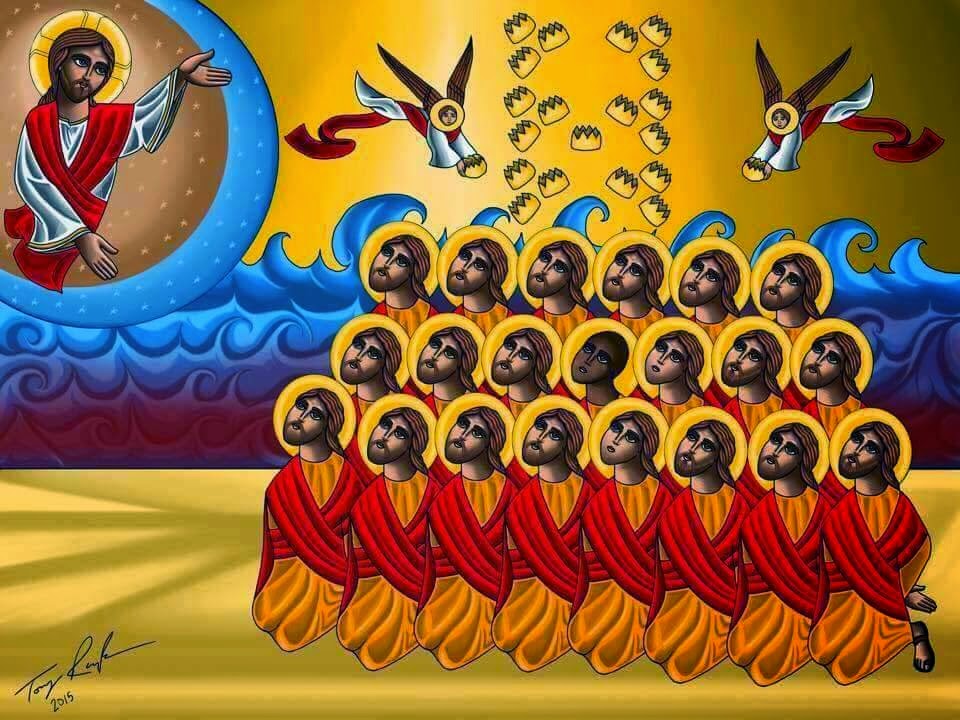 |
| A new Coptic icon of the 21 Egyptian Martyrs of Libya |
Ethiopian Martyrs
I have just learned the horrifying news that as many as twenty-eight Ethiopian Christians have been shot or beheaded in Libya by members of the terrorist group known as ISIS or ISIL. This alarming act of violence against those that ISIS calls “people of the cross” comes just two months after twenty-one other Christians – twenty Egyptians and one Ghanian, were beheaded on a Libyan beach.
It is too early to learn the names of these newest martyrs. It is also too early to know what churches they came from. (The Ethiopian Orthodox Church has more than 30 million members, but there are also members of many other churches in this country, including at least 15 million Protestant Christians.) Personal details about the men who have died may emerge. For now we can note the most important things to be said about these victims. Their names are known to God and they are written in the Lamb’s book of life (Rev 13:8). Their denominational affiliation is no longer of any importance: they are among the unnumbered throng from every nation, tribe, people and language gathered before the throne and the Lamb (Rev 7:9) who have come out of the great persecution (Rev 7:14) and have had every tear wiped away from their eyes (Rev 7:17).
The persecution of followers of Jesus is one of the terrible facts about today’s world. Although the popular imagination may still associate the persecution of Christians with the distant past (of the Roman Empire, for example), it is a reality that more Christians have died martyrs’ deaths in the last hundred years than in all the previous centuries of Christian history combined. We are living in a time when the words of Jesus “If they persecuted me, they will persecute you also,” (John 15:18) are being fulfilled on a more and more frequent basis.
How are we Christians (those of us in Ethiopia as well as around the world) to react to this most recent atrocity? First, we must look up to God in thanksgiving for the lives of these brothers who loved not their own lives, but followed Jesus in the way of the cross. Second, we must ask for the Holy Spirit to strengthen us to abandon the temptation to hate. Instead we must follow Jesus, who not only suffered death on the cross, but also prayed for his executioners to be forgiven. If we are turned to hatred, the terrorists have won. Finally, we must continue to reach out to a world desperate for the love of Jesus. Make no mistake, the terrorists who executed these martyrs of Ethiopia have exhibited the worst of human depravity, but they have also revealed their desperate need of a Saviour. The apostle Paul, a great persecutor of the church of God, was turned to love by his experience of meeting Christ on his way to the Syrian city of Damascus. May God use his church to so act and speak of and from the love of Christ that many former or potential persecutors may be turned and have their names written in the book of life.
+ Grant, The Horn of Africa
~ Please Pray with us ~
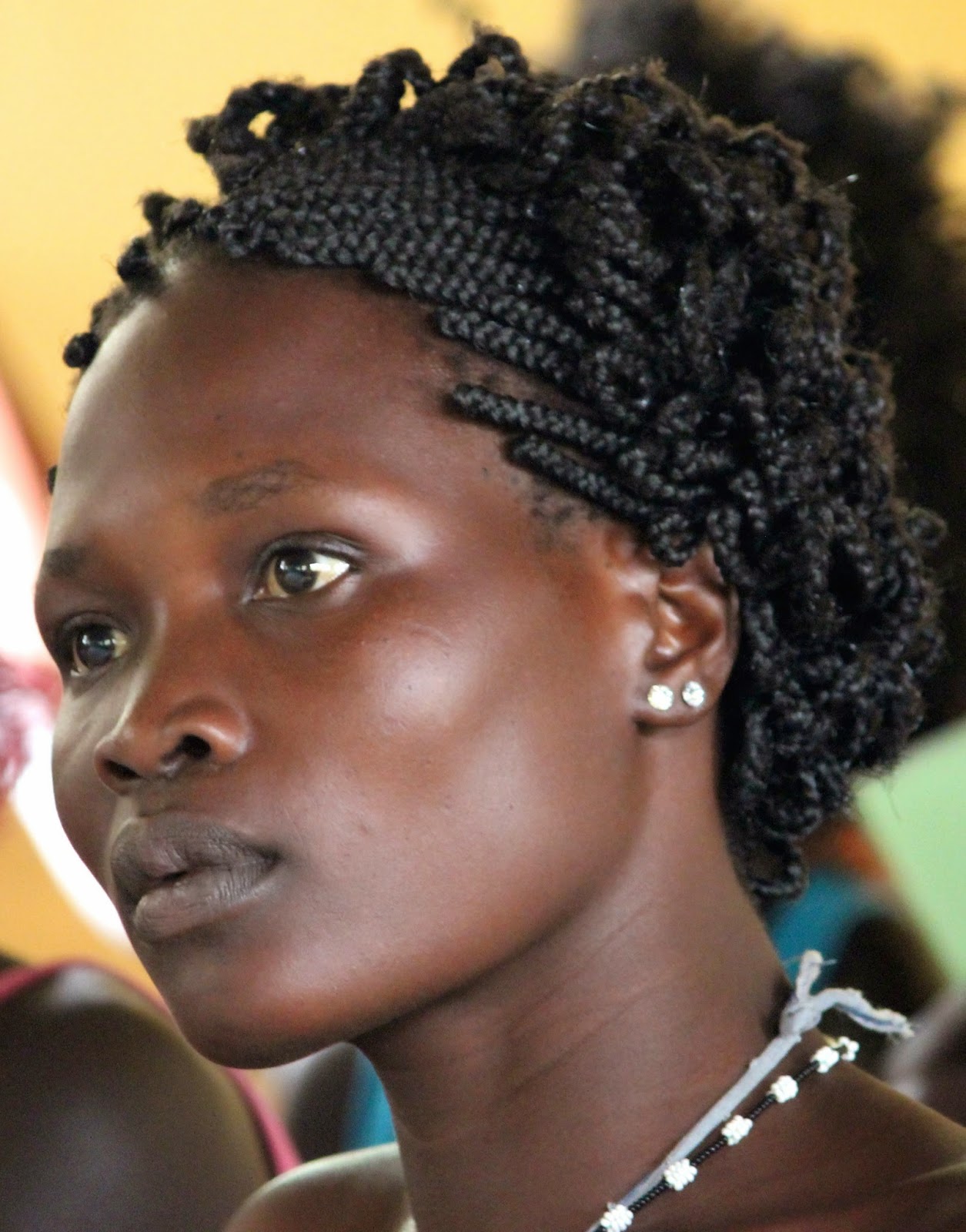
~ For our Mother’s Union Literacy trainers with thanksgiving for our recent training at Gambella Anglican Centre
~ For Little Wunwar, for recovery from a serious falling injury. Wunwar is the 4 year old son of our priest, Jeremiah, soon to become one of our faculty at the St Frumentius’ Anglican Theological College. Pray also for Wunwar’s mother Elizabeth for recovery from kidney problems.
~ For little Sarah Lual scheduled for open heart surgery June 15, 2015
~ For Wecca – For protection from Pulmonary Hypertension as he awaits heart surgery
~ For those grieving in Libya and in Ethiopia
~ For the St Frumentius Anglican Theological College
~ For Rosemary Burke, recently appointed Secretary General of the Anglican Church in Ethiopia